

Published by: Oravbiere Osayomore Promise.
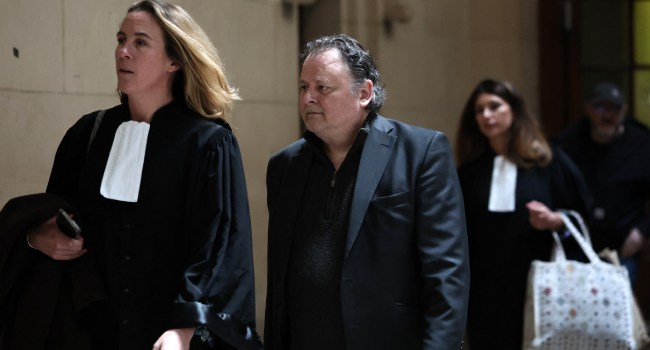
A French court on Friday increased the sentence of film director Christophe Ruggia to five years on appeal after finding him guilty of sexually abusing actor Adèle Haenel when she was a child, in a case that has become a defining moment in France’s reckoning with abuse allegations in the film industry. The ruling from the Paris Court of Appeal confirmed his responsibility for acts committed in the early 2000s, when Haenel was between 12 and 14 years old and Ruggia was in his late 30s. The court also maintained that he would serve part of the sentence under electronic monitoring, reflecting both custodial and suspended components of the judgment. The decision comes after an earlier conviction in 2025 that had imposed a slightly lighter penalty, and it underscores the judiciary’s view of the seriousness of the offences and their lasting psychological impact on the victim.
Ruggia, 61, had previously been convicted in 2025 after a trial that found he had abused Haenel during and after her involvement in his 2002 film “The Devils,” in which she played one of her earliest screen roles. The original judgment imposed a four-year sentence and required him to wear an electronic ankle bracelet for two years. The appeal hearing revisited both the severity of the sentence and the broader circumstances surrounding the abuse allegations, including testimony from the victim and supporting accounts from individuals who worked on the film set. The appellate court ultimately decided to increase the sentence to five years, with three years suspended, while maintaining conditions for supervised monitoring.
Haenel, now 37, became one of the most prominent voices in France’s #Metoo movement after publicly accusing Ruggia in 2019, an action that drew widespread attention to how sexual abuse allegations were handled within the French cultural industry. She was among the first high-profile actors in the country to directly challenge what she described as systemic silence around misconduct in cinema, later quitting the industry in protest following a major film awards ceremony in which she denounced the establishment’s response to such cases. Her decision was widely seen as a turning point in public debate in France, prompting renewed scrutiny of workplace culture in the entertainment sector and encouraging other survivors to speak out.
The case relates to Ruggia’s 2002 film “The Devils,” a drama involving an incestuous relationship between a brother and sister, which marked Haenel’s debut on screen. During production the film included scenes involving nudity and intimate portrayals of children which later became part of the scrutiny surrounding the director’s conduct. Investigators reported that members of the film crew had expressed unease at Ruggia’s behaviour on set raising questions about oversight during filming. After production ended Haenel has said she continued to visit Ruggia regularly for several years during which she alleged inappropriate physical contact. These allegations formed the basis of the prosecution’s case and were central to the court’s findings.
In its appeal ruling, the Paris Court of Appeal described the acts as “extremely serious” given the age of the victim at the time and the power imbalance between a child actor and an established director. The court also noted the long-term psychological consequences for Haenel stating that the impact of the abuse had been clearly demonstrated during proceedings. The decision reflects the judiciary’s consideration of both legal culpability and the broader harm associated with abuse of minors in positions of vulnerability within the entertainment industry. Legal observers say the case highlights the growing willingness of French courts to impose stricter penalties in historical sexual abuse cases linked to cultural institutions.
The case has become one of the most closely watched legal proceedings arising from France’s #Metoo movement which gained momentum later than in the United States but has increasingly shaped public discourse around abuse accountability and institutional silence. Haenel’s allegations against Ruggia were among the earliest high-profile cases to emerge in French cinema and contributed to broader debates about safeguarding minors on film sets and the responsibilities of directors and producers. Advocacy groups have argued that the case illustrates systemic failures in protecting child actors while also acknowledging that legal outcomes can take years to materialise due to statutes of limitation and evidentiary challenges.
Following the ruling attention has returned to the broader question of reform within the French film industry particularly regarding safeguarding protocols for minors and clearer reporting mechanisms for misconduct on set. The case has intensified calls from some industry stakeholders for mandatory supervision requirements independent monitoring during productions involving children and stricter enforcement of existing labour and child protection laws. While the court process focused on individual criminal responsibility commentators note that the wider implications extend to institutional accountability and cultural change within one of Europe’s most influential film industries. The decision is also likely to influence ongoing public debate about how legal systems handle historic allegations of sexual abuse especially where power imbalances and delayed reporting are central features of the case.
For Haenel the case has remained emblematic of her broader stance against silence in the film industry even as she has stepped away from acting in recent years. Her withdrawal from cinema following public disputes over industry recognition ceremonies was widely interpreted as a protest against what she viewed as inadequate institutional responses to abuse allegations. For Ruggia the final appellate ruling represents the culmination of a prolonged legal process spanning several years with the court reaffirming its earlier findings while increasing the custodial aspect of the sentence. The case is expected to remain a reference point in discussions about accountability in cultural sectors particularly in France where debates about artistic legacy and personal conduct often intersect.
Observers say outcome underscores survivor testimony in delayed reporting cases and shows appellate courts may adjust sentencing after convictions. It reflects pressure on cultural industries to address misconduct transparently. Ruling is likely to be cited in future French child protection and workplace abuse cases. Legal experts note decisions contribute to evolving standards of accountability within judiciary and reinforce time elapsed does not diminish responsibility in cases involving minors.
📩 Stone Reporters News | 🌍 stonereportersnews.com
✉️ info@stonereportersnews.com | 📘 Facebook: Stone Reporters News | 🐦 X (Twitter): @StoneReportNew | 📸 Instagram: @stonereportersnews
Add comment
Comments