

Reported by: Oahimire Omone Precious | Edited by: Pierre Antoine
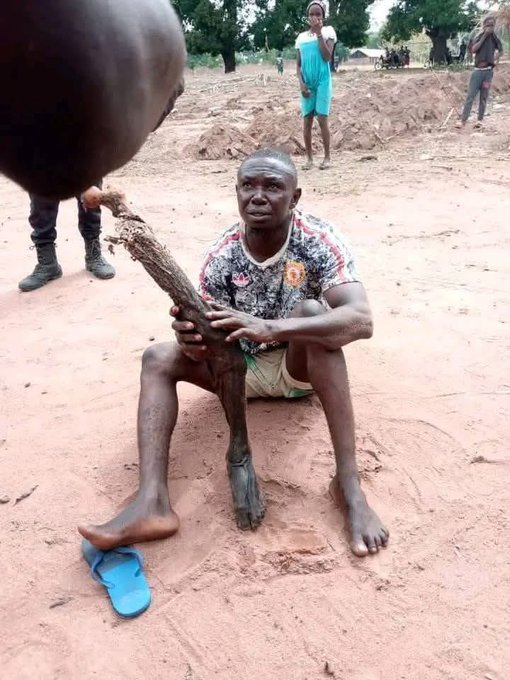
A mortician identified as Amaobi has been arrested in Buruku Local Government Area of Benue State after he was reportedly found using a human leg from a corpse in his custody as a walking stick, an incident that has triggered widespread shock and renewed scrutiny of mortuary management practices in parts of Nigeria.
According to local accounts, the incident occurred in the early hours of the morning in Agwabi community, where the mortician is said to be in charge of a local morgue facility. Residents reportedly became alarmed after observing the man walking openly in public with what appeared to be a human limb, an act described by witnesses as both disturbing and unprecedented in the area.
The situation escalated when Amaobi allegedly took the limb into a nearby retail shop while attempting to purchase items. Community members, already unsettled by the sight, gathered and confronted him, leading to his apprehension by local youths before security personnel were alerted.
Stone Reporters note that upon arrival, security operatives took the suspect into custody and began preliminary questioning. During interrogation, Amaobi reportedly admitted to using the body part but claimed that his actions were not intended to desecrate the dead. Instead, he described the act as a deliberate demonstration aimed at drawing public attention to challenges he said he was facing in managing the mortuary.
According to his statement, the mortician alleged that his facility has been holding more than 18 unidentified bodies, which he claimed were deposited after being killed during security operations in the area the previous year. He said he had struggled to get official support to evacuate or properly handle the remains, prompting him to resort to what he described as an “extreme form of protest” to attract attention from authorities.
Authorities have not independently verified the mortician’s claims regarding the number or origin of the bodies in his custody. However, the assertion has added another layer of concern to the case, raising questions about how unclaimed or unidentified corpses are managed, particularly in regions affected by violence or security operations.
The incident has also sparked debate about ethical standards and professional conduct within mortuary services. Handling of human remains is governed by strict cultural, legal and public health considerations in Nigeria, and any form of misuse or public exposure is generally regarded as a serious violation.
Residents of the community expressed outrage over the act, describing it as disrespectful to the deceased and deeply offensive to cultural norms. Some community members also raised concerns about the psychological state of the suspect, while others called for a thorough investigation to determine whether there were underlying systemic issues at the mortuary facility.
Security authorities have confirmed that the suspect has been transferred to the police station in Buruku Local Government headquarters for further investigation. Officials are expected to examine both the immediate incident and the broader claims made by the mortician regarding the conditions of the morgue and the presence of multiple bodies.
Stone Reporters note that Benue State has experienced repeated security challenges in recent years, including communal clashes and armed attacks, which have sometimes resulted in fatalities handled by local morgues. In such contexts, delays in identification, documentation, and proper burial of bodies can create logistical and humanitarian challenges for mortuary operators.
However, experts emphasise that even in difficult conditions, strict adherence to professional and ethical standards remains essential. The use of human remains for any purpose outside approved procedures is considered a grave violation and could attract serious legal consequences.
As investigations continue, authorities are expected to determine whether the mortician’s actions constitute criminal misconduct, public nuisance, or other offences under Nigerian law. They are also likely to assess the operational status of the mortuary, including compliance with health and safety regulations.
The outcome of the case may prompt wider regulatory attention on mortuary practices in rural and conflict-affected areas, particularly where facilities may be under-resourced or operating without adequate oversight.
For now, the incident has left the Agwabi community shaken, with many residents calling for accountability and assurances that such an occurrence will not be repeated.
📩 Stone Reporters News | 🌍 stonereportersnews.com
✉️ info@stonereportersnews.com | 📘 Facebook: Stone Reporters News | 🐦 X (Twitter): @StoneReportNew | 📸 Instagram: @stonereportersnews
Add comment
Comments