

Reported by: Ijeoma G | Edited by: Oravbiere Osayomore Promise.
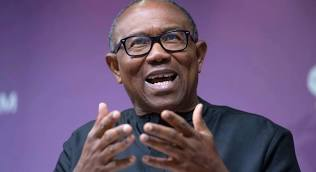
Former Anambra State governor and opposition figure Peter Obi has sparked fresh national debate after alleging that a staggering ₦34.44 trillion in federation revenue failed to reach Nigeria’s central account over a three-year period, describing the development as evidence of deep-rooted and systemic corruption within the country’s public finance structure.
In a statement issued on April 18, Obi cited findings drawn from recent fiscal data, including a report attributed to the World Bank, indicating that although Nigeria generated approximately ₦84 trillion in revenue between 2023 and 2025, a significant portion—about 41 percent—was deducted before reaching the Federation Account.
The Federation Account is the central revenue pool into which federally collected income is paid before being shared among the federal, state, and local governments. Obi’s claim that such a large sum never entered the account has intensified scrutiny of how public revenues are managed and distributed in Africa’s largest economy.
Describing the situation as deeply troubling, Obi argued that the scale of the deductions goes beyond routine administrative processes and points instead to what he described as institutionalised corruption. He said the missing ₦34.44 trillion is roughly equivalent to the combined capital expenditure budgets of Nigeria for 2024 and 2025, underscoring the magnitude of the alleged shortfall.
According to the figures referenced, federation revenue rose significantly over the three-year period, increasing from about ₦17.08 trillion in 2023 to ₦29.45 trillion in 2024 and ₦37.44 trillion in 2025. However, deductions from the revenue stream also increased sharply within the same period, accumulating to more than ₦34 trillion.
Economic analysts note that deductions from federation revenue can include statutory transfers, debt-related obligations, and funding allocations to government agencies before net revenue is distributed. However, the scale highlighted has triggered concerns about transparency and accountability in the management of public funds.
Obi framed his argument within a broader critique of Nigeria’s fiscal structure, stating that the country continues to record rising revenue figures without a corresponding improvement in infrastructure, healthcare, education, and general living conditions. He described this as a contradiction that raises fundamental questions about how public resources are being managed.
He also referenced historical financial controversies in Nigeria, suggesting that the current situation reflects a continuation of long-standing challenges in public finance oversight. According to him, previous reports of unaccounted revenues in past decades demonstrate that the problem is not new but persistent.
The World Bank report cited in discussions around the figures had earlier raised concerns about the growing proportion of revenue deductions, warning that such trends could reduce the fiscal space available to all tiers of government. Reduced allocations, according to analysts, directly affect the ability of governments to fund development projects and provide essential services.
Obi’s statement has generated significant public reaction, particularly across political and economic circles. Supporters of the former presidential candidate have called for a detailed independent investigation into the revenue figures and deductions, arguing that transparency is essential to restoring public confidence.
On the other hand, some economic observers have urged caution, noting that not all deductions necessarily indicate mismanagement or corruption. They explain that certain expenditures are legally deducted at source, including obligations such as debt servicing and statutory payments, though they agree that clearer disclosure is necessary to avoid misunderstanding.
The debate comes at a time when Nigeria is facing multiple economic pressures, including inflation, currency volatility, and rising public debt. These conditions have intensified scrutiny of government revenue generation and expenditure patterns, with citizens increasingly demanding accountability in the use of national resources.
Fiscal experts have emphasised the need for improved reporting systems and greater transparency in how deductions from federation revenue are calculated and applied. They argue that clearer documentation would help distinguish between legitimate expenditures and potentially questionable deductions.
While there has been no comprehensive official rebuttal addressing the specific figures raised by Obi, the issue is expected to attract attention from relevant government agencies and legislative bodies. Calls for audits or parliamentary review may emerge as pressure builds for clarification.
For many Nigerians, the allegations reinforce longstanding concerns about governance and financial accountability. The scale of the reported revenue gap has amplified debates about whether the country’s economic challenges stem more from revenue generation constraints or from inefficiencies and leakages in the system.
As discussions continue, attention is likely to focus on whether the claims will lead to formal investigations or policy reforms aimed at improving transparency in public finance management. The outcome could have significant implications for fiscal governance and public trust in economic institutions.
📩 Stone Reporters News | 🌍 stonereportersnews.com
✉️ info@stonereportersnews.com | 📘 Facebook: Stone Reporters News | 🐦 X (Twitter): @StoneReportNew | 📸 Instagram: @stonereportersnews
Add comment
Comments