

Reported by: Oahimire Omone Precious | Edited by: Oravbiere Osayomore Promise.
Authorities in Burkina Faso have dissolved 118 non-governmental organisations and civil society groups in a sweeping regulatory enforcement exercise carried out between April 15 and April 17, 2026, in what officials describe as a legal compliance operation under the country’s updated associations law introduced in 2025.
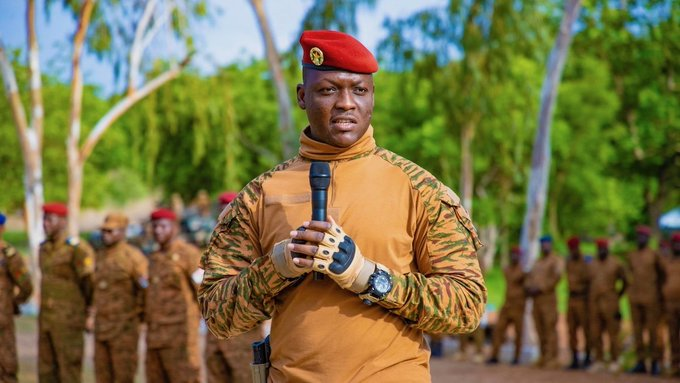
The decision, implemented under the administration of military leader Ibrahim Traoré, comes at a sensitive moment for the country, which continues to face an intensifying jihadist insurgency, widespread insecurity across rural regions, and growing strain on state capacity to manage humanitarian and governance challenges.
Government officials maintain that the action is administrative rather than political or security-related, stressing that it is aimed at enforcing compliance with legal requirements governing the registration, funding, and operation of associations within Burkina Faso. According to authorities, the affected organisations failed to meet obligations set out under the revised legal framework, which mandates stricter reporting, documentation, and regulatory oversight of all civil society entities operating in the country.
The enforcement action has resulted in the dissolution of 118 organisations operating across various sectors, including human rights advocacy, governance monitoring, humanitarian assistance, community development, and civic engagement initiatives. Many of these groups have historically played roles in supporting displaced populations, documenting abuses, and providing services in areas affected by armed conflict.
Officials have not released a full public registry of all affected organisations, but internal sources indicate that the closures span both national and locally based groups, including some that operate in regions heavily impacted by ongoing insecurity. The government has stated that organisations may reapply for authorisation if they comply fully with the updated legal requirements.
The move comes as Burkina Faso continues to grapple with a complex and evolving security landscape marked by persistent attacks from armed extremist groups linked to the wider Sahel insurgency. Large portions of the country, particularly in the north, east, and parts of the centre, remain affected by insecurity, with repeated incidents involving attacks on civilians, military positions, and local infrastructure.
The humanitarian situation has also deteriorated significantly in recent years, with millions of people displaced internally due to violence. Access to basic services such as healthcare, education, and food security has been severely disrupted in many areas, increasing reliance on humanitarian organisations and civil society groups.
In this context, civil society organisations have often filled critical gaps left by overstretched government institutions, particularly in delivering aid, documenting human rights conditions, and supporting vulnerable communities. The dissolution of a large number of such organisations has therefore raised concern among observers about potential impacts on service delivery and independent monitoring.
Amnesty International has strongly criticised the government’s decision, warning that it could significantly shrink civic space in Burkina Faso. The organisation argues that the mass deregistration of NGOs risks limiting independent oversight of human rights conditions and reducing the ability of affected communities to access essential support services.
Human rights advocates further caution that such broad regulatory measures may have a chilling effect on civic participation, discouraging organisations from engaging in advocacy or humanitarian work due to fear of administrative sanctions or closure. They also warn that in conflict-affected contexts, civil society often plays a crucial role in documenting abuses and supporting accountability mechanisms.
Government representatives, however, defend the move as part of a broader effort to strengthen institutional control and ensure transparency in the operations of non-state actors. They argue that the updated associations law was designed to improve oversight, prevent misuse of organisational structures, and ensure that all entities operating in Burkina Faso align with national priorities and legal standards.
Officials have emphasised that the regulatory framework requires NGOs to fully document their funding sources, operational activities, and governance structures, and that failure to comply can result in suspension or dissolution. They insist that the current action is consistent with enforcement procedures and not targeted at any specific category of organisation.
The decision comes at a time when Burkina Faso’s government is also dealing with ongoing military operations against armed groups, efforts to stabilise rural territories, and attempts to reorganise state institutions under transitional governance structures. The country has experienced multiple political transitions in recent years, with the current administration prioritising security consolidation and sovereignty-focused governance reforms.
Analysts note that the tightening of regulatory oversight over civil society aligns with broader trends in parts of the Sahel, where governments facing insurgencies have increasingly sought to assert stronger control over non-governmental actors. Supporters of such measures argue that enhanced regulation is necessary to prevent infiltration, ensure coordination of humanitarian efforts, and reduce external influence in sensitive security environments.
However, critics warn that excessive restrictions on civil society risk undermining humanitarian response capacity at a time when needs are increasing. They also caution that limiting independent organisations could reduce transparency in governance and weaken feedback mechanisms that help identify abuses or gaps in service delivery.
The timing of the dissolution has therefore intensified debate both within and outside Burkina Faso, particularly as international partners continue to support humanitarian operations in the country amid worsening displacement and insecurity. Questions are being raised about how the removal of over a hundred organisations will affect ongoing aid projects, monitoring initiatives, and community-based support systems.
As of now, the government has not indicated whether additional regulatory actions will follow, but officials have reiterated that all organisations operating in the country must comply fully with the law or risk similar consequences.
The situation remains under close observation by international organisations and diplomatic partners, as Burkina Faso continues to navigate the intersection of security challenges, governance reforms, and the role of civil society in a rapidly changing political environment.
📩 Stone Reporters News | 🌍 stonereportersnews.com
✉️ info@stonereportersnews.com | 📘 Facebook: Stone Reporters News | 🐦 X (Twitter): @StoneReportNew | 📸 Instagram: @stonereportersnews
Add comment
Comments