

Reported by: Ijeoma G | Edited by: Oravbiere Osayomore Promise.
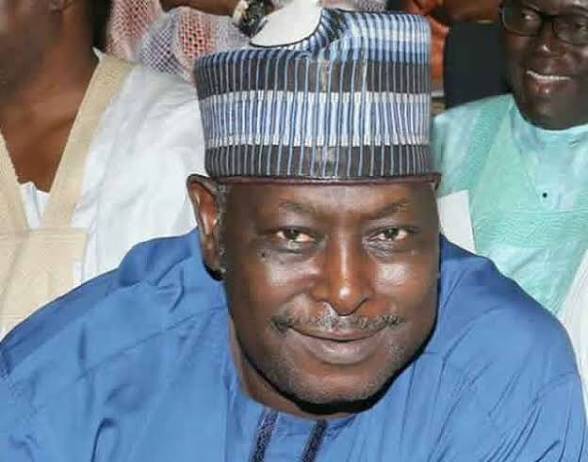
ABUJA — Former Secretary to the Government of the Federation (SGF), Babachir David Lawal, has launched a strong criticism of President Bola Ahmed Tinubu’s administration, describing the current economic hardship and insecurity in Nigeria as unbearable and warning that the situation is worsening under the present government.
Lawal, who has increasingly emerged as one of the most vocal critics of the ruling All Progressives Congress (APC) since his departure from government, argued that the policies of the Tinubu administration have deepened poverty, worsened inflation, and left many Nigerians struggling to survive. He said the removal of fuel subsidy, currency instability, and rising food prices have combined to create what he described as an “intolerable cost of living crisis” affecting both urban and rural populations.
Speaking in a recent televised interview, Lawal insisted that the government has failed in its most basic responsibility of protecting citizens and improving welfare. He accused the administration of focusing on political optics rather than addressing the real challenges facing the country. According to him, the economic reforms being implemented have not translated into improved living conditions for ordinary Nigerians, but instead have triggered widespread hardship across multiple sectors of the economy.
On insecurity, the former SGF expressed alarm over continued attacks in various parts of the country, particularly in rural communities where farmers and residents face frequent violence from armed groups. He claimed that the security architecture of the country has weakened significantly, leading to loss of lives, displacement of communities, and growing fear among citizens. In earlier remarks, he had accused the government of lacking sufficient commitment to the fight against insecurity and suggested that security forces were being overstretched and under-equipped.
Lawal’s criticism also extended to what he described as a breakdown in governance priorities. He argued that while the administration continues to announce reforms and appointments, these actions have not addressed the core issues of unemployment, inflation, and declining purchasing power. He further maintained that Nigerians are bearing the consequences of policy decisions without seeing corresponding improvements in infrastructure, food security, or social welfare.
In his political analysis, Lawal has also consistently positioned himself as part of a broader opposition push ahead of the 2027 general elections. He has alleged that dissatisfaction within the ruling party itself is growing, claiming that some influential political actors are quietly aligning with opposition coalitions as a response to internal disagreements and governance concerns.
The Tinubu administration and the APC have repeatedly dismissed Lawal’s remarks, accusing him of political bitterness and personal grievances following his exit from government. Party officials have argued that his criticisms are inconsistent and driven by past political disagreements rather than objective assessment of national progress.
Despite the pushback, Lawal has maintained his position that Nigeria is heading in the wrong direction under the current leadership. He has argued that economic reforms, though necessary in principle, must be accompanied by effective social protection systems to cushion citizens from hardship. Without such measures, he warned, the burden on households will continue to rise, potentially increasing public discontent.
The broader context of Lawal’s criticism reflects growing national debate over the impact of economic reforms introduced since 2023. The removal of fuel subsidies and the unification of foreign exchange rates have been widely described by analysts as necessary but painful steps, contributing to inflationary pressures and higher transportation and food costs. However, government officials insist these reforms are essential for long-term stability and economic recovery.
Insecurity remains another central concern, with ongoing attacks in several regions reinforcing public anxiety about safety and governance capacity. While the government has pledged reforms in the security sector, critics argue that results have been slow and uneven.
Lawal’s comments add to a rising chorus of political voices questioning the effectiveness of current policies and the direction of national leadership. As Nigeria approaches another election cycle, such criticisms are expected to intensify, particularly around issues of economic hardship, governance performance, and national security.
For now, the debate continues to reflect a country grappling with competing narratives: one side defending difficult reforms as necessary for long-term recovery, and the other warning that immediate suffering is becoming too severe for many citizens to endure.
📩 Stone Reporters News | 🌍 stonereportersnews.com
✉️ info@stonereportersnews.com | 📘 Facebook: Stone Reporters News | 🐦 X (Twitter): @StoneReportNew | 📸 Instagram: @stonereportersnews
Add comment
Comments