

Reported by: Oahimire Omone Precious | Edited by: Oravbiere Osayomore Promise.
Nigeria’s Supreme Court has adjourned one of the country’s most politically sensitive traditional leadership disputes for nearly a year, fixing April 19, 2027, as the next hearing date in the protracted Kano Emirate case, a development that extends uncertainty around one of northern Nigeria’s most influential royal institutions.
The apex court convened its first substantive hearing on April 20, 2026, where legal representatives for all parties presented preliminary arguments. However, rather than proceeding into full deliberations, the court opted for a long adjournment, effectively prolonging the legal stalemate surrounding the Kano Emirate crisis.
The dispute centres on the controversial restructuring and subsequent reversal of the Kano Emirate system, a deeply rooted traditional institution with significant cultural and political influence in Nigeria’s north. The legal battle has drawn sustained national attention due to its intersection with governance, constitutional law, and political dynamics in Kano State, one of the country’s most populous and politically strategic regions.
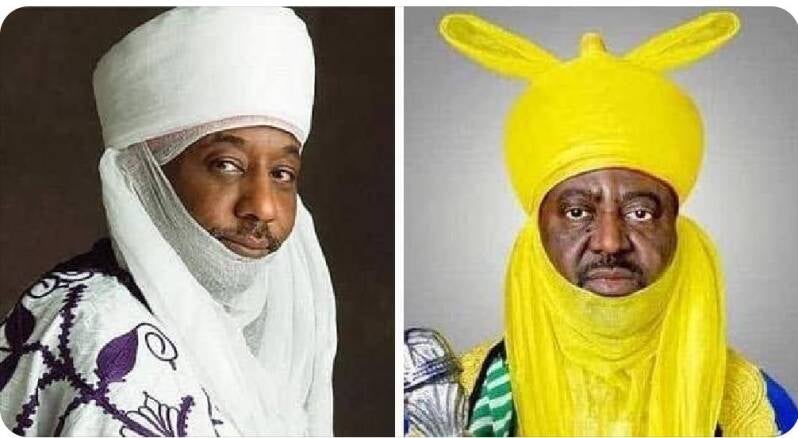
At the core of the crisis is the reinstatement of Muhammadu Sanusi II as Emir of Kano in May 2024 by the Kano State Government led by Governor Abba Kabir Yusuf. Sanusi, a former Governor of the Central Bank of Nigeria, had been dethroned in 2020 following reforms introduced by the previous administration, which split the historic emirate into multiple smaller emirates.
The 2024 legislative reversal dissolved the additional emirates and restored the traditional single-emir structure, paving the way for Sanusi’s return. However, the move immediately triggered legal challenges from rival claimants and stakeholders, particularly those aligned with Aminu Ado Bayero, who had occupied the throne following Sanusi’s removal.
Opponents of the reinstatement argued that the process violated legal and procedural requirements, leading to a series of court actions that quickly escalated through Nigeria’s judicial system. Early rulings from the Federal High Court in Kano invalidated aspects of the state government’s actions, declaring the reinstatement process unlawful.
The Court of Appeal later overturned that position, ruling that the Federal High Court lacked jurisdiction over chieftaincy matters, which are generally considered the preserve of state courts. The appellate court ordered a fresh hearing, further complicating the already layered legal battle.
Dissatisfied parties subsequently approached the Supreme Court, seeking a definitive resolution. In the interim, appellate rulings and injunctions have maintained a delicate status quo, preventing irreversible actions while the matter awaits final determination.
The Supreme Court had been expected by many legal observers to move swiftly toward a conclusive judgment in 2026, particularly given the national significance of the dispute. The decision to adjourn proceedings until April 2027 has therefore come as a notable development, extending the timeline considerably.
Legal analysts suggest the delay underscores the complexity of the issues before the court. The case raises fundamental questions about the limits of state authority over traditional institutions, the role of courts in chieftaincy disputes, and the interaction between statutory law and customary governance systems.
Beyond its legal dimensions, the Kano Emirate dispute carries significant political weight. Kano State remains a key electoral stronghold in Nigeria, and the emirate has historically played an influential role in shaping public sentiment and political alignment across the region.
Sanusi’s reinstatement has been interpreted by supporters as a restoration of tradition and continuity, while critics argue it reflects political intervention in a revered institution. His prominence as a public figure, known for outspoken views on economic and governance issues, has further heightened interest in the outcome of the case.
The prolonged litigation has also had implications for stability and administration within Kano. With competing claims to legitimacy and authority, the situation has required careful management by both government and security agencies to maintain public order and prevent escalation.
Traditional leaders and community stakeholders have continued to call for a resolution that preserves the dignity and unity of the emirate. However, the extended judicial process means that clarity on the leadership question will remain out of reach for the foreseeable future.
Reactions to the Supreme Court’s adjournment have been mixed. Some legal experts view the decision as a prudent step, allowing the court adequate time to thoroughly consider the far-reaching implications of its eventual ruling. Others argue that the delay risks prolonging uncertainty in a matter that has already tested institutional stability.
For residents of Kano and observers across Nigeria, the emirate remains more than a ceremonial institution. It is a symbol of heritage, authority, and continuity, deeply embedded in the social and political fabric of the region.
As the case returns to the Supreme Court’s docket for April 2027, attention will remain firmly fixed on what is expected to be a landmark judgment. The outcome is likely to set an important precedent for similar disputes involving traditional institutions across the country.
Until then, the Kano Emirate saga stands as a vivid illustration of the complex interplay between law, tradition, and politics in modern Nigeria, with the final chapter now postponed, but far from written.
📩 Stone Reporters News | 🌍 stonereportersnews.com
✉️ info@stonereportersnews.com | 📘 Facebook: Stone Reporters News | 🐦 X (Twitter): @StoneReportNew | 📸 Instagram: @stonereportersnews
Add comment
Comments