

Reported by: Ijeoma G | Edited by: Oravbiere Osayomore Promise.
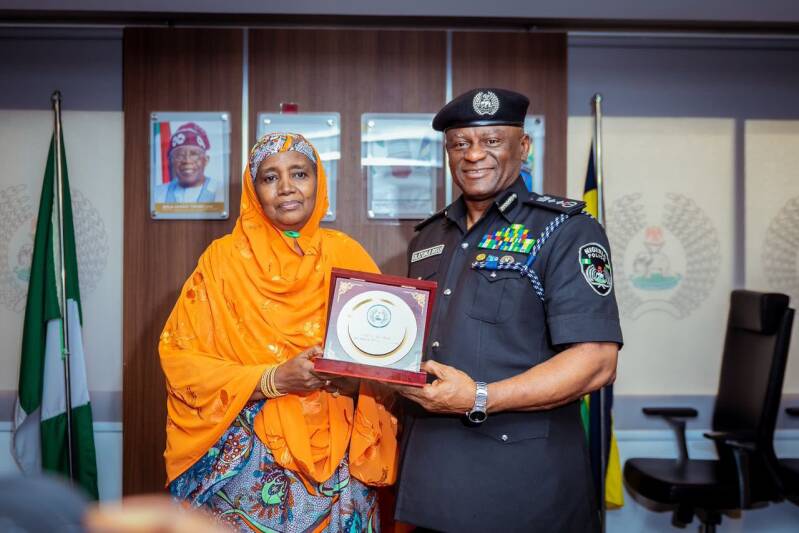
The Inspector General of Police, IGP Olatunji Rilwan Disu, has pledged the full operational and intelligence capabilities of the Nigeria Police Force to support the National Agency for the Prohibition of Trafficking in Persons (NAPTIP) in its expanded mandate to combat human trafficking and other organized crimes. The commitment was made on Tuesday, April 21, 2026, when the Director General of NAPTIP, Binta Adamu Bello, led a high level delegation on a courtesy visit to the Force Headquarters in Abuja. The meeting, which included top directors from NAPTIP, focused on deepening collaboration through joint operations, technical assistance, and intelligence sharing, marking a significant escalation in the fight against crimes that exploit the most vulnerable members of society.
During the visit, the NAPTIP DG congratulated IGP Disu on his leadership and expressed appreciation for the police force’s sustained support. She formally requested enhanced collaboration, particularly in specialized technical assistance and joint operational frameworks, to strengthen NAPTIP’s capacity to address its expanding mandate. The agency, which was originally established to prohibit and prosecute human trafficking, has seen its responsibilities grow to include the enforcement of laws against violence against persons, child labour, and other related offences. This expanded mandate requires greater coordination with law enforcement agencies, especially the police, which often serves as the first point of contact for victims and the primary agency for arresting suspects.
In his response, IGP Disu reaffirmed the commitment of the Nigeria Police Force to supporting NAPTIP’s operations, assuring that the force would deploy its full operational and intelligence capabilities to strengthen the agency’s mandate. He emphasized a shift toward intelligence-led strategies, including enhanced joint operations, deployment of liaison officers, and real time intelligence sharing to effectively dismantle organized crime networks. The IGP further pledged the technical support of the Intelligence Response Team (IRT) and the NPF National Cybercrime Centre (NPF-NCCC), alongside targeted capacity building initiatives and specialized training for NAPTIP personnel within police training institutions. The IRT, known for its success in high profile kidnapping and banditry cases, will now be available to support NAPTIP in tracking trafficking syndicates that often operate across state lines and international borders.
The partnership comes at a critical time for Nigeria, which is both a source, transit, and destination country for human trafficking. According to the 2025 Trafficking in Persons Report by the US State Department, Nigeria remains on the Tier 2 Watch List, indicating that the government has not fully met the minimum standards for the elimination of trafficking. The report noted that while Nigerian authorities have made some progress, including prosecutions and victim identification, significant gaps remain, particularly in the areas of victim protection and the conviction of complicit officials. The enhanced police support for NAPTIP is expected to address some of these gaps by improving the quality of investigations and the rate of successful prosecutions.
The IGP also stressed that regular strategic briefings would be institutionalized to monitor progress and sustain momentum. He noted that the strengthened partnership reflects a firm, zero tolerance stance against human trafficking and related crimes, ensuring that perpetrators have no safe haven within Nigeria. The police force’s National Cybercrime Centre is particularly relevant, as traffickers increasingly use digital platforms to recruit victims, launder proceeds, and coordinate operations. The centre’s ability to trace online transactions, track digital footprints, and recover electronic evidence will be critical in building watertight cases against trafficking networks.
Human rights organizations have welcomed the development, though some have expressed cautious optimism. The Women’s Rights and Health Project (WRAHP) noted that previous pledges of collaboration between law enforcement agencies have not always translated into tangible results. However, the specific mention of the IRT and the Cybercrime Centre suggests a more targeted and resource backed commitment. The group also called for the inclusion of victim support services in the partnership, noting that many trafficking survivors face stigma, lack of shelter, and limited access to legal aid. NAPTIP has indicated that it is working with the police to develop protocols for the sensitive handling of victims during investigations, including the provision of female officers and psychologists during interviews.
The delegation from NAPTIP included Hassan Tahir (Special Adviser to the DG), Hakeem Lawal (Director of ICT), Mohammed Tamim (Director of Finance and Administration), Aondona Ortese (Director of Investigation), Emuesiriere Rebecca (Director of Violence Against Persons and Human Development), and Nneka A. Ajie (Director of Legal and Prosecution). The presence of the Director of ICT and the Director of Investigation underscores the technical nature of the requested assistance. NAPTIP has been investing in digital case management systems and forensic tools, but the agency lacks the scale and reach of the police force, which has offices in every local government area and specialized units at the federal level.
As the partnership moves from policy to practice, the IGP has directed that liaison officers be appointed at both the national and zonal levels to facilitate seamless communication between the police and NAPTIP. The first joint operation under the new framework is expected to target human trafficking hotspots in Edo and Delta states, which have been identified as major sources of irregular migration to Europe. The police have also committed to providing security for NAPTIP officials during field operations, a critical need given the increasing violence against anti trafficking activists. With the IGP’s pledge now on record, the ball is in the court of both agencies to deliver results. The fight against human trafficking is a long and difficult one, but with the combined resources of the Nigeria Police Force and NAPTIP, there is renewed hope that the traffickers will finally be brought to justice.
📩 Stone Reporters News | 🌍 stonereportersnews.com
✉️ info@stonereportersnews.com | 📘 Facebook: Stone Reporters News | 🐦 X (Twitter): @StoneReportNew | 📸 Instagram: @stonereportersnews
Add comment
Comments