

Reported by: Ijeoma G | Edited by: Oravbiere Osayomore Promise.
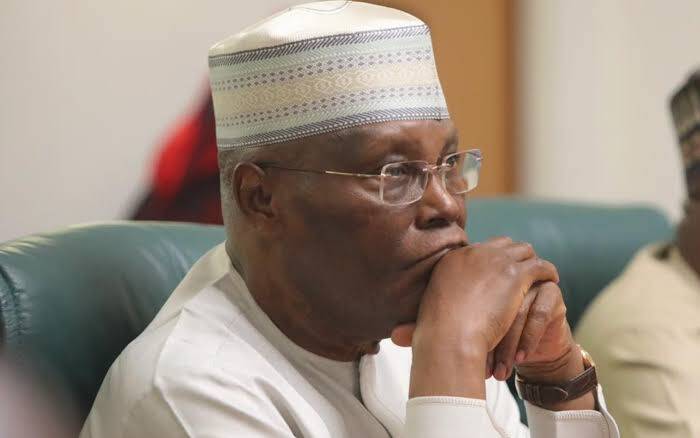
Former Vice President Atiku Abubakar has issued a stark warning over a provision in Nigeria’s Electoral Act that allows returning officers to count ballot papers without official markings, describing it as a “grave and dangerous ambiguity” that could undermine the 2027 general elections. In a statement signed by his Senior Special Assistant on Public Communication, Phrank Shaibu, Atiku specifically raised alarm over Section 63 of the Act, which gives electoral officials the discretion to accept or reject ballot papers that lack an official mark from the Independent National Electoral Commission (INEC). The former vice president, who is a chieftain of the African Democratic Congress, argued that such discretionary power introduces unacceptable subjectivity into the electoral process and could be exploited to compromise the will of the people. “This is not a minor technical issue—it is a direct threat to electoral integrity,” Atiku declared. He stressed that any legal provision that permits discretion in determining the validity of ballot papers creates a loophole that invites manipulation, dispute, and ultimately chaos. “A democracy cannot survive on ambiguity. A ballot must either meet the standard or it does not. The moment you leave such a critical decision to subjective judgment, you invite manipulation, dispute, and ultimately, chaos,” he said.
Atiku acknowledged that the provision may have been conceived to prevent voter disenfranchisement, particularly in cases where ballots might be accidentally unmarked. However, he argued that its current framing is dangerously open-ended and capable of undermining public trust in the entire electoral system. “At a time when Nigerians are demanding transparency and credibility, it is reckless to retain a clause that weakens confidence in the very foundation of democracy—the vote,” he added. He noted with concern that this provision is not new but a legacy loophole carried over from previous electoral laws into the current Act without sufficient safeguards. “Rather than close known gaps in our electoral framework, the amendment regrettably preserved a provision that still leaves room for subjective interpretation at a critical stage of the process,” Atiku said.
The former vice president, therefore, called on the National Assembly to urgently amend the Electoral Act to eliminate any room for discretion in ballot validation and to establish clear, non-negotiable standards that protect the integrity of every vote. He also urged INEC to tighten its operational guidelines to ensure that electoral officers are not placed in positions where personal judgment could override verifiable standards. Furthermore, Atiku appealed to the international community, election observers, and democratic partners to pay close attention to Nigeria’s electoral legal framework, noting that the credibility of future elections depends as much on the law as on the process. “The world is watching. Nigeria must not send a signal that its electoral system can be bent by interpretation,” he cautioned.
Atiku expressed deep disappointment that such a controversial provision has survived multiple legislative revisions, stressing that lawmakers ought to have exercised greater diligence in safeguarding the sanctity of the ballot. “The leadership of the National Assembly should have been more cautionary than casual in handling provisions that touch the very heart of our democracy. A ballot paper is not an ordinary piece of paper—it is a legal instrument whose authenticity is central to the credibility of the entire electoral process,” he said. He further held that the responsibility does not end with the legislature, pointing to the role of the executive in ensuring that laws passed meet the highest standards of integrity. “The President, Bola Ahmed Tinubu, also bears a duty to subject every critical legislation to rigorous scrutiny before appending his signature. Leadership demands vigilance. The document he assented to ought to have passed the most stringent integrity test,” Atiku added. He stressed that where gaps are identified in laws governing elections, they must be corrected decisively and without delay. “This is not about blame—it is about responsibility. And this provision must be corrected to restore public confidence and protect the sanctity of the vote,” he said.
The former vice president’s intervention comes just weeks after President Bola Tinubu signed the Electoral Act 2026 (Amendment) into law on February 18, 2026, at the Presidential Villa in Abuja, an event attended by principal officers of the National Assembly. The amendment was passed just days after INEC released the timetable for the 2027 general elections. Atiku’s warning has been echoed by other election observers and former electoral officials. Mike Igini, a former INEC Resident Electoral Commissioner, has also raised alarms over what he described as “dangerous” provisions in the Electoral Act, warning that they could open the door to ballot manipulation. In an interview with Pulse Nigeria, Igini argued that Section 63 has reintroduced a very dangerous element into the electoral process: a ballot paper used for an election that does not bear INEC’s official mark could still be counted at the discretion of a returning officer.
Atiku’s statement comes at a critical time as Nigeria prepares for the 2027 general elections, which are expected to be highly competitive. The opposition has coalesced around the African Democratic Congress (ADC), where Atiku is a leading figure, while the ruling All Progressives Congress (APC) has already finalized its primary schedule. The integrity of the electoral process has been a recurring theme in Nigeria’s political discourse, with the 2023 elections still fresh in the public memory following allegations of irregularities and widespread voter disenfranchisement. The current controversy over Section 63 has added a new layer of urgency to calls for electoral reform, as political stakeholders and civil society organizations worry that the discretionary power granted to returning officers could become a tool for manipulation in the hands of partisan officials. Atiku’s warning serves as a clarion call for immediate legislative action to close the loophole before the 2027 polls. Whether the National Assembly will heed his call remains to be seen, but the former vice president has made it clear that the future of Nigeria’s democracy depends on it. “Democracy thrives on certainty, not discretion—and Nigeria cannot afford anything less,” he concluded.
📩 Stone Reporters News | 🌍 stonereportersnews.com
✉️ info@stonereportersnews.com | 📘 Facebook: Stone Reporters News | 🐦 X (Twitter): @StoneReportNew | 📸 Instagram: @stonereportersnews
Add comment
Comments