

Published by Oravbiere Osayomore Promise.
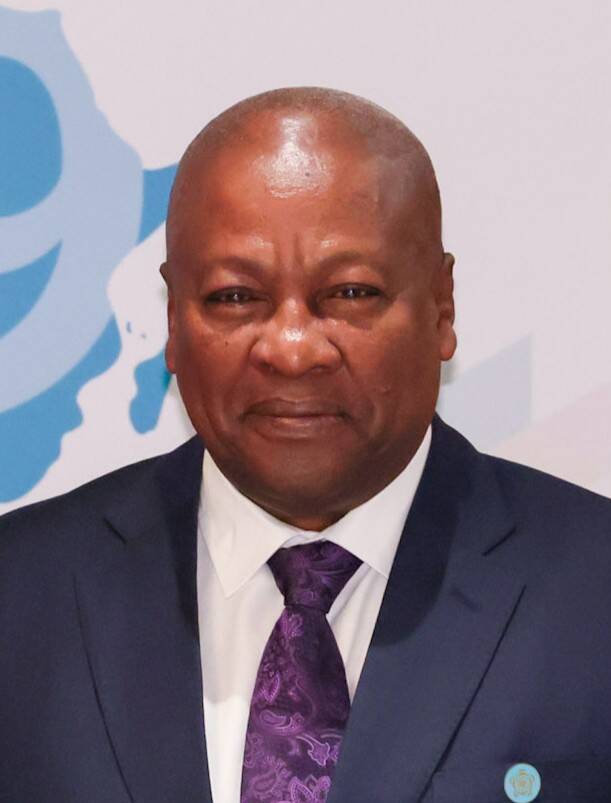
The world has spent the past week laughing at Ghana’s President John Dramani Mahama for his offhand remark about “side chicks” benefiting from government contracts. But buried beneath the viral memes and the heated social media debates lies a far more serious statement that every major news outlet has completely ignored. At the same Kwahu Business Forum where he made the now‑infamous joke, Mahama issued a stark warning about Nigeria’s economic fragility and the catastrophic migration crisis that could follow if Africa’s largest economy collapses. “If Nigeria does well, Ghana does well,” Mahama told a room filled with business leaders and entrepreneurs. Then he delivered the line that should have been the headline: “When you have cousins, 250 million of them, you want them to do well, so that one million of them don’t come drifting towards a small country like Ghana.”
Those words were not a casual aside. They were a calculated admission by a sitting president that Ghana’s stability is directly tied to the health of Nigeria’s economy. Mahama understands that a prolonged economic downturn in Nigeria would not stay within Nigeria’s borders. It would send waves of desperate people across the porous western border, overwhelming Ghana’s infrastructure, housing, healthcare, and job markets. The President’s choice of the word “drifting” was deliberate. It evokes not an organised migration but a slow, relentless, and uncontrollable movement of people fleeing hunger, unemployment, and violence. Ghana, a nation of just over 33 million people, would be hard‑pressed to absorb even a fraction of the 250 million “cousins” Mahama referenced.
What makes Mahama’s warning particularly significant is his personal stake in Nigeria’s wellbeing. During the same forum, he revealed that his stepmother, the woman who raised him, is from Offa in Kwara State. He also disclosed that the Olofa of Offa had conferred on him a chieftaincy title, making him the Aare Atolase of Offa Kingdom. “I consider it my hometown here in Nigeria,” Mahama said. That personal connection is not merely sentimental. It gives him an intimate understanding of Nigeria’s internal politics, ethnic dynamics, and economic vulnerabilities. He is not a distant observer. He is a man with family ties to the very region that could become a flashpoint for mass emigration. When he speaks about Nigeria’s economic management, he speaks as someone who would personally feel the consequences of failure.
The “side chick” comment, therefore, was not a crude joke. It was a carefully constructed illustration of a much larger economic argument about how money circulates through informal economies. Mahama was explaining that when the Ghanaian government pays contractors on time, that money flows not only to construction companies but also to car dealers, hairdressers, dressmakers, jewellery shops, and handbag sellers. He used the provocative phrase to grab attention, and it worked. But the underlying point is that government spending creates a cascade of economic activity that reaches even the most vulnerable workers. In the Nigerian context, the opposite is also true. When government contracts are delayed or corrupted, that cascade stops, and the people at the bottom suffer first and worst. That suffering, Mahama implied, is what pushes people to leave.
The President’s warning is not hypothetical. Ghana has already experienced small‑scale waves of Nigerian migration during previous economic crises. In 2016, when Nigeria entered a recession, Ghana saw a noticeable uptick in Nigerian professionals, students, and traders arriving in Accra and Kumasi. The current economic situation in Nigeria is far more dire. With inflation running high, the naira under persistent pressure, and the removal of fuel subsidies still sending shockwaves through households, many Nigerians are already looking for escape routes. Mahama is simply stating aloud what Ghanaian immigration officials already know: a full‑scale Nigerian economic collapse would create a humanitarian and security challenge that Ghana is not equipped to handle.
The reaction to Mahama’s speech has been revealing. Nigerian social media users focused almost exclusively on the “side chick” comment, either laughing at the President’s humour or condemning him for normalising extra‑marital relationships. Ghanaian commentators were similarly distracted. Opposition politicians in Ghana, particularly from the New Patriotic Party, seized on the remark as evidence of Mahama’s lack of presidential decorum. Not a single major outlet in either country dedicated more than a passing sentence to Mahama’s warning about Nigerian refugees. That collective oversight is itself a story. It suggests that both nations would rather laugh at a joke than confront a looming crisis.
Mahama’s personal Nigerian heritage adds a layer of diplomatic delicacy to his warning. He is not an outsider criticising Nigeria. He is a son of Offa, a titled chief, a man who has broken bread with Nigerian leaders and understands the weight of their decisions. When he says that one million Nigerians could “drift” towards Ghana, he is not fear‑mongering. He is speaking from a place of genuine concern for both countries. He knows that a stable, prosperous Nigeria is not just good for Nigerians; it is essential for Ghana’s survival. And he knows that the current trajectory of economic reform in Nigeria, while perhaps necessary, carries enormous risks for the entire West African sub‑region.
The silence from Nigerian officialdom on Mahama’s warning is also telling. President Bola Tinubu’s administration has not responded to the Ghanaian leader’s comments. That silence may be diplomatic prudence, but it could also be interpreted as an unwillingness to engage with an uncomfortable truth. If Nigeria’s economy continues to struggle, and if the promised dividends of reform do not materialise before the 2027 elections, the country could face not only internal unrest but also a brain drain of historic proportions. And Ghana, along with other West African neighbours, will be on the front line of that exodus.
Mahama’s speech at the Kwahu Business Forum was not a comedy routine. It was a masterclass in political communication. He used humour to deliver a warning that no one wanted to hear. He made people laugh so that they would listen. And then he told them the truth: that Ghana’s fate is tied to Nigeria’s, and that if Nigeria falls, Ghana will be flooded. The world laughed at the joke. But the joke is on anyone who missed the warning. The next time one million Nigerians come “drifting” towards Ghana, no one will be laughing. They will be counting the cost of a crisis that was predicted, in public, by a president who had the courage to say what no one else would.
📩 Stone Reporters News | 🌍 stonereportersnews.com
✉️ info@stonereportersnews.com | 📘 Facebook: Stone Reporters News | 🐦 X (Twitter): @StoneReportNew | 📸 Instagram: @stonereportersnews
Add comment
Comments