

Published by Oravbiere Osayomore Promise.
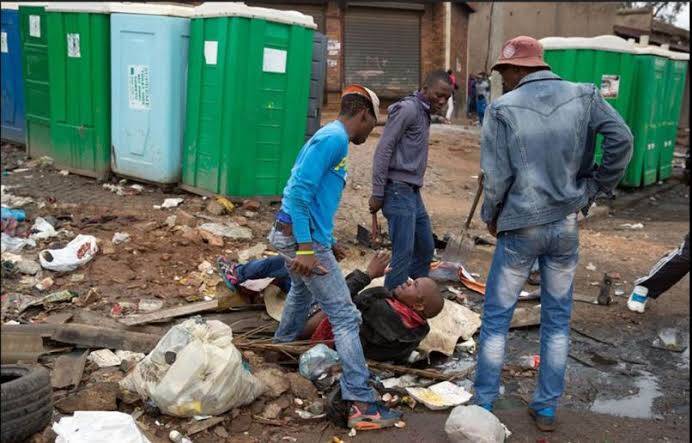
The Government of Ghana has summoned South Africa’s Acting High Commissioner in Accra, Thando Dalamba, over a series of xenophobic incidents targeting foreign nationals, including Ghanaians, in South Africa. The move, which marks the strongest diplomatic protest from Accra in several years, follows the circulation of viral videos showing Ghanaians and other African migrants being verbally harassed and physically intimidated. Foreign Affairs Minister Samuel Okudzeto Ablakwa, who personally conveyed Ghana’s formal protest during the meeting on April 23, 2026, described the attacks as “a profound betrayal” of the historic bonds between the two countries. He specifically recalled Ghana’s role in sheltering South African freedom fighters during apartheid, including issuing Ghanaian passports to stateless anti‑apartheid activists. “It is a profound betrayal to see that we will be described as unwelcome… citizens who are going about their lawful duties subjected to such naked hatred and baseless xenophobia,” Ablakwa said in a separate address.
Central to Ghana’s concern is an incident in KwaZulu‑Natal province in which a legal Ghanaian resident was confronted, asked to produce proof of his immigration status, and ordered to “go back and fix his country.” The Ghanaian foreign minister told Dalamba that such conduct is unacceptable, violates the rights of law‑abiding individuals, and threatens the spirit of African solidarity. He noted that follow‑up reports suggest tensions are rising, with some foreign nationals, including Ghanaians, being advised to remain indoors for their safety. Although no deaths have been recorded in the current wave, Ablakwa warned that similar episodes in the past have led to loss of lives and destruction of property. “We are not dealing with isolated acts,” he said. “This is a pattern that undermines the dignity of every African.”
The summons followed a high‑level telephone conversation between Ablakwa and his South African counterpart, Ronald Lamola, earlier in the week. According to the Ghanaian minister, Lamola expressed empathy for the victims and promised a full‑scale investigation into the incidents. The South African government also indicated it would hold a briefing with African ambassadors in Pretoria to address the escalating situation. Lamola acknowledged that “this is not the Africa we want,” and that the authorities are committed to protecting the rights of all lawfully resident foreign nationals, while holding perpetrators accountable.
Ablakwa’s protest also came with a forceful reminder of Ghana’s historic support for South Africa’s liberation struggle. He detailed how Ghana hosted exiled freedom fighters, funded scholarships, and extended financial and logistical support to the African National Congress (ANC) during the darkest days of apartheid. “We issued Ghanaian passports to South Africans in exile, enabling them to travel when they were stateless,” Ablakwa stressed, citing Nelson Mandela’s own acknowledgment of Ghana’s role in his autobiography, Long Walk to Freedom. The minister described the current wave of xenophobia as a “betrayal of the sacrifices made by Ghanaian taxpayers in the spirit of African solidarity.” He added that the timing is particularly painful, coming after the recent UN resolution backed by 123 countries recognising the trans‑Atlantic slave trade as a historical crime against humanity. “Against this background of global acknowledgment, the emergence of xenophobic violence among ourselves is deeply depressing,” he said.
The diplomatic intervention has drawn support from other quarters. Dominic Oduro‑Antwi, President of the Global Africa Trade Advisory Chamber, condemned the attacks as “unacceptable and damaging to Africa’s unity agenda,” while the Deputy Chairperson of the Ghanaian community in South Africa, Tina Buxton, revealed that many Ghanaian migrants are increasingly willing to return home but are constrained by economic pressures. “The majority of Ghanaians would love to come back home, but they are coping because things are not easy in Ghana either,” Buxton told local media. The Ghanaian government has since confirmed that its High Commission in Pretoria has located the main victim featured in the viral videos and is providing him with consular support. “He is doing very well. No Ghanaian life has been lost,” Ablakwa said, appealing for calm and for citizens to trust in the government’s capacity to protect them.
The incident has also prompted a broader protest from other West African nations. Foreign Ministers of Ghana and Sierra Leone issued a joint statement condemning the violence and calling for decisive action by South African authorities. The statement stressed that “unprovoked attacks on law‑abiding individuals are contrary to the principles of African unity” and urged respect for the rights of all migrants across the continent. Meanwhile, South African police have confirmed that they are investigating the viral footage and have warned against vigilante actions, noting that only mandated law enforcement officials have the authority to stop or detain undocumented individuals. Police in KwaZulu‑Natal, where the initial confrontation occurred, have also stepped up patrols in areas identified as hotspots for anti‑immigrant activity.
South Africa’s unemployment rate, which currently hovers above 30 percent, has often been cited as a trigger for periodic xenophobic outbursts. According to official statistics from 2022, the country hosts about 2.4 million foreign‑born people, representing roughly 4 percent of the population. While the majority of these migrants come from within Africa, economic frustrations and competition for scarce jobs have repeatedly led to the targeting of foreign nationals. In response to the latest violence, President Cyril Ramaphosa has reportedly pledged to address the situation and called on his compatriots to respect the rights and dignity of all Africans living in South Africa. However, Ablakwa’s tone suggested that words alone may no longer be enough. “We need more than expressions of empathy,” he said, “We need immediate and effective measures to guarantee the safety of our citizens.”
As the diplomatic pressure mounts, the Ghanaian government has lodged a formal protest and demanded firm assurances that such incidents will not recur. The Ministry of Foreign Affairs in Accra says it will continue to engage the South African authorities at the highest levels until the safety of Ghanaian nationals is fully guaranteed. Ablakwa’s closing remarks at the summons were both a warning and an appeal: “May these regrettable incidents never quench our Pan‑African love and solidarity. The overwhelming majority of Africans are united by an unbreakable bond; we shall not be divided by the hatred of a few fringe elements.”
📩 Stone Reporters News | 🌍 stonereportersnews.com
✉️ info@stonereportersnews.com | 📘 Facebook: Stone Reporters News | 🐦 X (Twitter): @StoneReportNew | 📸 Instagram: @stonereportersnews
Add comment
Comments