

Reported by: Ijeoma G | Edited by: Oravbiere Osayomore Promise.
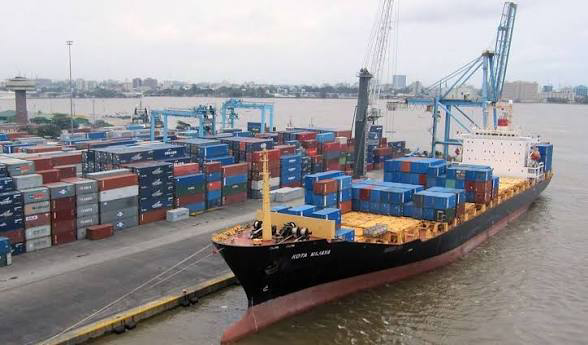
In a major push to reverse the steady haemorrhage of Nigerian-bound cargo to neighbouring African countries, the Federal Government has completed approvals, certifications and compliance processes for five proposed deep seaport projects across the country. The Managing Director of the Nigerian Ports Authority, Dr. Abubakar Dantsoho, made the announcement on Thursday, May 21, 2026, at the close of a three‑day meeting of the Port Management Association of West and Central Africa, which brought together port chiefs and policymakers from 22 countries in Lagos.
Addressing delegates at the meeting, Dantsoho listed the approved projects as the Badagry Deep Sea Port in Lagos State, the Olokola Deep Sea Port in Ondo State, the Ibom Deep Sea Port in Akwa Ibom State, the Bakassi Deep Sea Port in Cross River State and the Bonny Deep Sea Port in Rivers State. Dantsoho, who also serves as President of PMAWCA, explained that while negotiations with investors remain ongoing due to the substantial financial commitments required for such projects, the government had already cleared the necessary regulatory and administrative hurdles for implementation. “In terms of approvals, certifications and compliance issues, we have taken care of five different deep‑sea ports in Nigeria,” Dantsoho told the gathering.
The five ports, located in three of Nigeria’s six geopolitical zones, are designed to anchor the country’s long‑term strategy of reclaiming more than 70 per cent of Nigerian‑bound cargo currently being transported to and processed in other African countries, primarily Benin, Togo and Ghana. According to Dantsoho, Nigeria currently accounts for over 70 per cent of cargo traffic in the West and Central African sub‑region, while landlocked countries such as Niger, Chad, Mali and Burkina Faso depend partly on Nigerian ports for international trade access. However, years of congestion, manual processes and infrastructure strain at Apapa and Tin Can Island ports have weakened Nigeria’s relative competitiveness, pushing a significant volume of Nigerian‑bound cargo to ports in Cotonou and Lomé, where clearance is faster and logistics costs are lower.
Nigeria’s response is a multi‑pronged reform agenda that includes channel deepening, terminal upgrades, digitalisation and the construction of entirely new port infrastructure. At the centre of the digital push is the National Single Window platform, which the government is deploying to consolidate regulatory agencies into a unified digital system for cargo clearance. Although the platform encountered early technical problems that stalled port operations in its first six weeks of going live, officials argue that it remains a critical tool for reducing the manual procedures and bureaucratic friction that have historically driven cargo away. Speaking at the same meeting, the Minister of Marine and Blue Economy, Adegboyega Oyetola, noted that the administration of President Bola Ahmed Tinubu remained focused on overhauling the nation’s port system through infrastructure renewal, digital transformation and improved operational efficiency. “These efforts have contributed to improved cargo evacuation, reduced vessel waiting time, greater operational efficiency, and a more predictable business environment for port users and investors,” Oyetola said.
Among the five approved projects, the Olokola Deep Sea Port stands out for its scale and the private sector firepower behind it. Located within the Olokola Free Trade Zone, which straddles Ogun Waterside Local Government Area of Ogun State and stretches eastward towards Ilaje Local Government Area of Ondo State, the proposed 10,000‑hectare industrial enclave is part of Aliko Dangote’s plan to strengthen Africa’s maritime trade capacity. In the days leading up to the federal approval, Dangote Industries officials visited host communities in Ogun and Ondo states to engage and sensitise local leaders, securing their consent to begin surveys, household enumeration and compensation negotiations. The project is designed to support exports of fertiliser, petrochemicals, refined fuel and future liquefied natural gas shipments, positioning Nigeria as a major gateway for regional and global trade.
In Akwa Ibom State, the Ibom Deep Seaport has been in planning for over 20 years, and Governor Umo Eno has described the project as a marathon, not a sprint. After receiving a comprehensive feasibility report in April 2026, Eno’s administration has taken several concrete steps, including funding a full feasibility study, preparing investor fact sheets, constructing access roads, conducting geophysical and geotechnical studies, and establishing a project office in the state. The governor has also linked his administration’s alignment with the Federal Government to the advancement of the seaport, noting that a closer partnership with the centre is crucial for accelerating progress.
In Cross River State, the Bakassi Deep Seaport has been described as a flagship initiative designed to reposition the state as a major hub in Nigeria and the West African sub‑region. With an estimated depth of 18 metres, the port will accommodate large vessels directly, eliminating the need for transshipment and enhancing trade linkages with neighbouring countries such as Cameroon, Chad and Niger, while reducing pressure on existing ports. The project will be supported by a 275‑kilometre evacuation corridor incorporating road and rail infrastructure, and will leverage opportunities under the African Continental Free Trade Area to attract foreign direct investment. The state projects that the seaport could generate up to N40 billion monthly in its early years.
The Bonny Deep Sea Port in Rivers State, though less prominent in recent public discourse, has also received the required approvals and is expected to complement existing facilities in the oil‑rich Niger Delta.
The flurry of approvals and project announcements comes against the backdrop of an estimated $27 billion worth of port‑related investments either underway or recently announced across West and Central Africa, spanning projects in Guinea, Côte d’Ivoire, Senegal and Ghana, as well as Nigeria’s own Lekki Deep Sea Port, which was completed in 2023. Most of these projects remain in various stages of construction or expansion, but collectively they point to a gradual increase in regional handling capacity and a shift in the competitive dynamics of West African maritime trade. Dr. Adegboyega Oyetola, speaking at the PMAWCA meeting, noted that the gathering provided a roadmap for improving the competitiveness and future readiness of ports in the region. He pointed to the Lekki Deep Sea Port as an example of what strategic investment, innovation and public‑private partnerships can achieve in Africa’s maritime industry, and added that increasing investments by African business leaders, including recent expansion plans announced by Aliko Dangote and the Dangote Group, reflected growing confidence in Africa’s maritime economy and regional integration efforts.
Yet the road to full operation for the five approved ports remains long. Dantsoho himself acknowledged that negotiations with investors are ongoing, and that the financing requirements for such projects are “huge”. The PMAWCA president stressed that ports across the sub‑region must undergo aggressive modernisation to remain competitive with other global maritime hubs, warning that delays in infrastructure renewal could leave Africa behind in global shipping and trade. The government is pursuing a combination of short‑, medium‑ and long‑term strategies to improve port efficiency, including the rehabilitation of existing ports, the deployment of technology‑driven systems and the development of new deep‑sea infrastructure.
The completion of certification and compliance processes for the five deep seaports represents a significant step forward in Nigeria’s efforts to recapture its lost cargo and reassert its maritime dominance in the region. But the real test will be whether the government can translate these regulatory milestones into shovels in the ground, berths at the quayside and, ultimately, cargo flowing back to Nigerian shores from the ports of Cotonou and Lomé.
📩 Stone Reporters News | 🌍 stonereportersnews.com
✉️ info@stonereportersnews.com | 📘 Facebook: Stone Reporters News | 🐦 X (Twitter): @StoneReportNew | 📸 Instagram: @stonereportersnews
Add comment
Comments