

Reported by: Oahimire Omone Precious | Edited by: Pierre Antoine
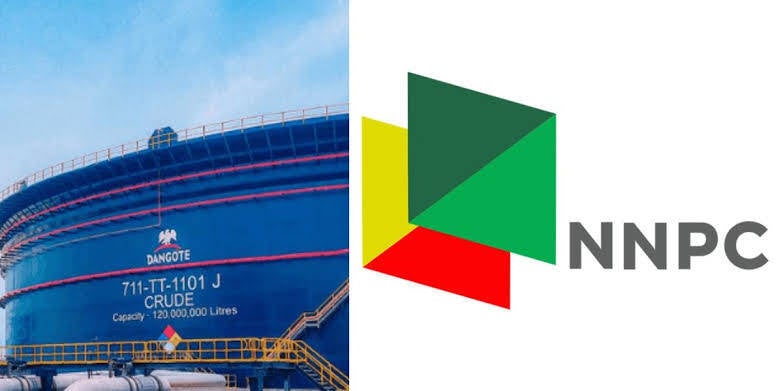
The Nigerian National Petroleum Company Limited (NNPC Ltd) has formally opposed a lawsuit filed by Dangote Petroleum Refinery seeking to invalidate fuel import licences issued to petroleum marketers and oil trading companies in Nigeria, warning that restricting imports could create a monopoly in the downstream petroleum sector and expose the country to fuel supply disruptions.
The legal dispute is currently before the Federal High Court in Lagos and has become one of the most closely watched battles in Nigeria’s oil and gas industry because it directly concerns control of petrol supply in Africa’s largest oil-producing nation.
According to court filings reported by Reuters on Friday, May 22, 2026, NNPC argued that Dangote Petroleum Refinery’s request to void or restrict fuel import permits granted to marketers and fuel traders could threaten Nigeria’s energy security and destabilise petrol availability across the country.
The refinery, owned by Nigerian billionaire businessman Aliko Dangote, had filed the lawsuit in April 2026 against the Attorney General of the Federation and the Nigerian Midstream and Downstream Petroleum Regulatory Authority (NMDPRA). Court documents showed that the refinery is challenging the continued issuance of petrol import licences to NNPC and several private marketers.
Dangote refinery argued that the licences violate provisions of Nigeria’s Petroleum Industry Act (PIA), insisting that imported petrol should only be allowed when local production cannot meet national demand.
The refinery further claimed that continued fuel imports undermine local refining investments and weaken the purpose for which the massive Lekki refinery project was established.
The case followed the decision by the NMDPRA earlier in May 2026 to issue fresh import permits to six companies for the importation of about 720,000 metric tonnes of Premium Motor Spirit (PMS), commonly known as petrol.
The companies issued licences were identified as NIPCO, AA Rano, Matrix Energy, Shafa, Pinnacle Oil, and Bono Energy. According to reports, the approved allocations included 120,000 metric tonnes each for NIPCO, Shafa, and Pinnacle Oil; 150,000 metric tonnes each for AA Rano and Matrix Energy; and 60,000 metric tonnes for Bono Energy.
Dangote refinery’s legal action specifically sought an order of the Federal High Court setting aside the import permits issued or renewed by the NMDPRA. The refinery argued that the licences contradicted an earlier court directive to maintain the status quo pending the determination of the matter.
In response, NNPC filed a defence opposing the suit and warned that Nigeria could face serious consequences if imports were restricted to favour a single refinery.
According to Reuters, NNPC argued that the Petroleum Industry Act does not prohibit the issuance of fuel import licences and that the law allows regulators to issue permits to companies with refining capacity or established petroleum trading operations.
The state oil company also challenged Dangote refinery’s claims that it can fully satisfy Nigeria’s domestic petrol demand, describing such assertions as unverified.
NNPC warned in court filings that granting Dangote refinery’s request could expose Nigeria to “supply insecurity, monopoly control, price instability and national energy risk.”
The Nigerian Midstream and Downstream Petroleum Regulatory Authority also joined the legal battle and defended the legality of the import licences issued to marketers.
Petroleum marketers and depot owners equally opposed Dangote refinery’s lawsuit, arguing that the continued availability of import licences is necessary to maintain competition and avoid fuel shortages.
The Depot and Petroleum Products Marketers Association of Nigeria (DAPPMAN) issued a strong response to the lawsuit on May 18, 2026, warning against any attempt to create monopoly conditions within the downstream oil sector.
DAPPMAN stated that the import licences issued by the NMDPRA were lawful instruments under the Petroleum Industry Act and were necessary to guarantee national fuel supply security.
The association further disclosed that it had begun consultations with legal advisers and affected member companies to defend the licences and protect investments already made by downstream operators.
The dispute comes nearly two years after the Dangote refinery began fuel production in Nigeria. The refinery, located in Lekki, Lagos State, was officially commissioned on May 22, 2023, before commencing phased operations in January 2024. Petrol production began in September 2024.
With a refining capacity of about 650,000 barrels per day, the refinery is regarded as the largest single-train refinery in the world and was constructed at an estimated cost exceeding $19 billion.
The refinery was expected to significantly reduce Nigeria’s dependence on imported refined petroleum products after decades of fuel importation despite the country being one of Africa’s largest crude oil producers.
Nigeria had for years relied heavily on imported petrol due to the poor performance and repeated shutdowns of government-owned refineries in Port Harcourt, Kaduna, and Warri operated by NNPC. Reports over the years indicated that billions of dollars were spent on refinery rehabilitation projects with limited success.
The current legal confrontation is not the first between Dangote refinery and fuel marketers. In 2025, Dangote refinery filed a similar lawsuit against NNPC and petroleum marketers over fuel import licences but later withdrew the case after intervention by the Federal Government.
During recent public appearances, Aliko Dangote repeatedly argued that Nigeria should stop importing petrol once local refining capacity becomes sufficient. In an interview referenced in court reports, Dangote stated that the refinery had already processed crude oil above its official installed capacity.
The legal dispute has reopened broader national debates over fuel import dependence, market competition, domestic refining policy, and fears of monopoly control within Nigeria’s downstream petroleum industry.
As of Friday, May 22, 2026, the Federal High Court in Lagos had not issued a final ruling on the matter, while proceedings in the case are expected to continue in the coming weeks.
📩 Stone Reporters News | 🌍 stonereportersnews.com
✉️ info@stonereportersnews.com | 📘 Facebook: Stone Reporters News | 🐦 X (Twitter): @StoneReportNew | 📸 Instagram: @stonereportersnews
Add comment
Comments