

Reported by: Oahimire Omone Precious | Edited by: Oravbiere Osayomore Promise.
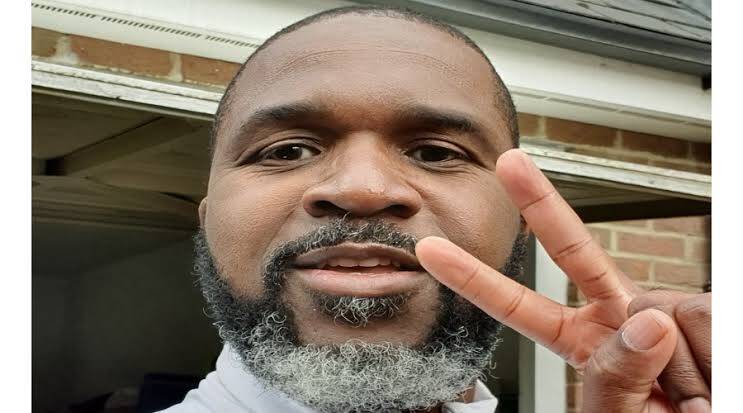
A bold political statement has ignited fresh debate across Nigeria after media personality Sola Kuti drew a controversial parallel between former presidential candidate Peter Obi and the late former President Muhammadu Buhari, arguing that Nigeria’s problems are not a matter of who leads but a reflection of deep‑seated flaws within the country’s political structure. Speaking during a conversation about Nigerian politics, Kuti warned that Nigerians may be setting themselves up for disappointment by placing the same kind of lofty expectations on Obi that they once placed on Buhari.
Recalling the wave of public enthusiasm that accompanied Buhari’s emergence in 2015, Kuti noted that many citizens were convinced the retired general would root out corruption and steer the nation in the right direction – expectations that his administration ultimately fell short of. In his view, Obi risks becoming a similar story, not necessarily because of personal failings, but because the system itself is the obstacle. Kuti argued that even a leader with the best of intentions would find themselves hemmed in by powerful vested interests and entrenched structures that resist meaningful change. He used Buhari as a case in point, noting that despite being widely regarded as a man of principle, the former president left office without achieving any significant reforms – a fact Kuti found telling about the nature of the system rather than the man.
Kuti’s central message was that Nigeria’s governance crisis is structural in nature. Until the system itself is overhauled, he suggested, swapping one leader for another will do little to produce the transformation that ordinary Nigerians are hoping for. His remarks come at a time when the country is grappling with a stubborn cost‑of‑living crisis, a spate of mass abductions, and deepening distrust in political institutions – a context that has made many citizens increasingly receptive to messages of systemic change.
The comparison between Obi and Buhari is not entirely new. In 2023, former presidential spokesman Ahmad Bashir Garba argued that Peter Obi’s supporters displayed the same “cult‑like” devotion that Buhari’s followers once exhibited. At the time, Garba warned that this level of emotional attachment could lead to disappointment if Obi’s performance fell short of expectations. Other commentators, such as Yusuf Omotayo, have argued that Obi’s lofty ideas would work only in a thriving environment, and that Nigeria’s multidimensional problems have no “fix‑all remedy”. More recently, a former aide to President Buhari, Ahmad, described Obi as “a good person” but warned that the people around him would never allow him to achieve his dream.
Kuti’s intervention, however, goes further by locating the failure not in individual personalities but in the political architecture itself. He insisted that even a “saint” would be corrupted by the system unless the system is changed. The argument has drawn both praise and criticism on social media. While some users applauded Kuti for diagnosing the root cause of Nigeria’s stagnation, others accused him of cynicism and of dismissing the possibility of change through leadership. “Saying Obi is like Buhari is a stretch. One was a military dictator with no economic vision; the other is a businessman who has demonstrated fiscal discipline,” one X user wrote. Another countered: “Buhari was also hailed as a man of integrity before he became president. The point is that the system makes heroes out of ordinary men and then destroys them.”
As the 2027 election cycle gathers momentum, Kuti’s warning has added a sobering note to the enthusiasm that still surrounds Peter Obi’s candidacy. The former Anambra governor, who has now secured the presidential ticket of the Nigeria Democratic Congress (NDC) and chosen former Kano State governor Rabiu Kwankwaso as his running mate, continues to draw large crowds and intense social media engagement. But Kuti’s message is a reminder that in Nigeria’s political landscape, hope has often been followed by disillusionment – and that without fundamental reform, the cycle may simply repeat itself.
📩 Stone Reporters News | 🌍 stonereportersnews.com
✉️ info@stonereportersnews.com
📘 Facebook: Stone Reporters News
🐦 X (Twitter): @StoneReportNew
📸 Instagram: @stonereportersnews
Add comment
Comments