

Reported by: Oahimire Omone Precious | Edited by: Oravbiere Osayomore Promise.
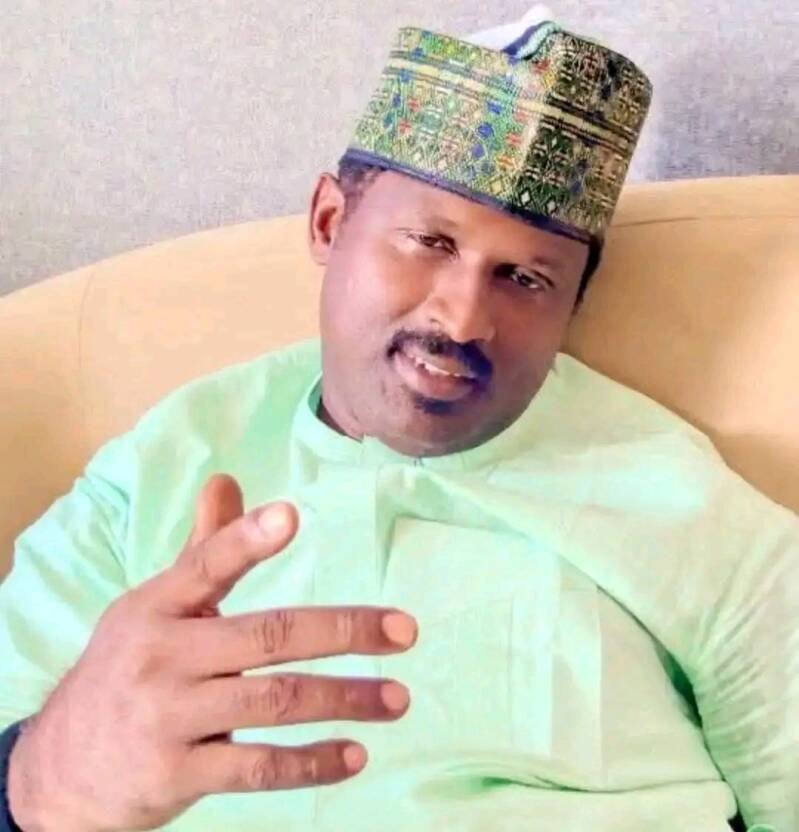
A northern Nigerian analyst, Safari Abdulkadir Namer Jega, has issued a sharp rebuke to the national reaction that has followed the abduction of 46 pupils and teachers from three schools in Oriire Local Government Area of Oyo State, accusing many Nigerians of decades‑long hypocrisy and a lack of civic empathy toward victims of insecurity in the North. In a statement shared online on Wednesday, 3 June 2026, Jega argued that while the country is now expressing outrage over the Oyo abduction, similar tragedies have been occurring in northern states for years with little more than passive acknowledgment from other regions.
“The school incident in Oyo State made me realize the level of hypocrisy and lack of civility among many Nigerians that has persisted for decades,” Jega wrote. “For years, Northerners have suffered repeated attacks like this. Just recently, 40 innocent students were kidnapped in Maiduguri. Before that, similar incidents happened in Kaduna, Katsina, Zamfara, Kebbi, Sokoto, and parts of Niger State. Yet we often pretend it doesn’t matter because it’s ‘their state’ or ‘their region,’ forgetting that we are all Nigerians.”
Jega, whose statement has been widely shared on social media, recalled that on the same day as the Oyo attack – 15 May 2026 – suspected Boko Haram insurgents abducted at least 40 pupils from a school in Mussa village, Askira‑Uba Local Government Area of Borno State. That incident, he noted, did not trigger the same level of national outcry. He pointed to a long list of mass abductions and deadly attacks across the North‑West and North‑East, including mass kidnappings in Kaduna, Katsina, Zamfara, Kebbi, Sokoto and Niger states, some of which saw hundreds of children taken and held for months.
The Oyo abduction, which occurred on 15 May 2026, saw about 12 armed men on motorcycles, dressed in military camouflage, simultaneously attack Baptist Nursery and Primary School, Yawota; Community Grammar School, Ahoro‑Esinele; and L.A. Primary School, Esiele. The assailants shot sporadically, killing an assistant headmaster, Mr. Joel Adesiyan, and a commercial motorcyclist, before forcing 39 pupils and seven teachers into the bush. A mathematics teacher, Mr. Michael Oyedokun, was later beheaded in a viral video that sparked national revulsion. The victims, who include a two‑year‑old toddler, Christianah Akanbi, remain in captivity as of 3 June 2026. The abduction has triggered nationwide protests, an indefinite strike by the Nigeria Union of Teachers (NUT) in Oyo State, and a flurry of political commentary.
Jega insisted that the crisis is not about religion or ethnicity. “None of the issues I’ve mentioned has anything to do with religion or tribe,” he wrote. “Crime is crime, no matter where it occurs.” He warned that unless Nigerians unite to fight insecurity, banditry, corruption and bad leadership, the situation will only worsen. “If we cannot unite as a nation to fight insecurity, banditry, corruption, and bad leadership, then this is only the beginning,” he said. He ended his statement with a plea: “Bring back all our students and other kidnapped victims in Nigeria.”
The analyst’s remarks have resonated with many northern Nigerians who feel that the country’s attention to insecurity has long been skewed by regional bias. Some southern Nigerians responded by acknowledging the validity of his point, while others argued that the Oyo abduction has galvanised the nation precisely because it has finally broken the psychological barrier that the South‑West was immune to such attacks. Regardless of the perspective, Jega’s statement has added a new dimension to the national conversation: that the pain of mass abduction is not new, but the collective outrage may finally be.
As of Wednesday evening, the 46 victims of the Oyo abduction remained in captivity, along with scores of other kidnapped Nigerians across the North. Jega’s warning that “this is only the beginning” hangs over a nation that has, for too long, watched horror unfold in one region while feeling safe in another. The question now is whether the Oyo tragedy will serve as a turning point or yet another example of the selective empathy that Jega has so forcefully condemned.
📩 Stone Reporters News | 🌍 stonereportersnews.com
✉️ info@stonereportersnews.com
📘 Facebook: Stone Reporters News
🐦 X (Twitter): @StoneReportNew
📸 Instagram: @stonereportersnews
Add comment
Comments