

Reported by: Ijeoma G | Edited by: Oravbiere Osayomore Promise.
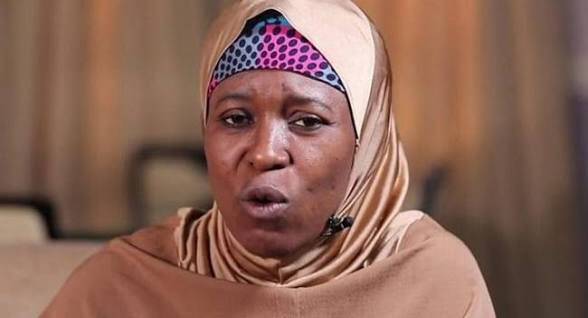
The prominent human rights activist and political ally of former Anambra governor Peter Obi has formally withdrawn from the race for the Nigeria Democratic Congress (NDC) senatorial ticket in the Federal Capital Territory, ending a whirlwind 29‑day campaign that began with her dramatic defection from the African Democratic Congress (ADC) on 6 May 2026. In a lengthy statement and a series of viral confrontations with party officials, Aisha Yesufu blamed the party leadership for failing to honour its publicly stated rules, while stressing that her decision not to seek further redress in court should not be mistaken for acceptance of a process she called “subverted”. Hours after announcing that she would not challenge the outcome, Yesufu embarked on a thank‑you tour across the six area councils of the FCT – Kwali, Abaji, Gwagwalada, AMAC, Bwari and Kuje – urging her supporters to remain united behind the broader opposition coalition of Obi and Rabiu Kwankwaso, and warning that a fragmented opposition would ruin the chances of meaningful political change in 2027.
Yesufu’s withdrawal brought to an end a brief but intense senatorial bid that began immediately after she left the ADC. In a post on her X handle on 6 May, she explained that her decision to follow Obi to the NDC was rooted in a “deeper understanding” of the political moment and a promise to honour her word. “When I give my word, I keep it,” she wrote. “My decision to support HE Peter Obi first led me to the ADC. To continue to honour the promise, I am joining the NDC. This time, I am joining the NDC not just as a member but also as one running for the FCT Senatorial seat.” She said she had “tidied up all my obligations to the ADC, ensuring a clean transition” and expressed gratitude for the opportunity to have served in various party capacities.
But the optimism of her entry quickly gave way to disillusionment. Within weeks, Yesufu alleged that the party’s leadership had abandoned procedures that had been communicated through official channels. In a viral video seen on 3 June, she was shown confronting NDC leaders – including National Secretary Barr. Ikenna Morgan Enekweizu – over what she described as a manipulated selection process for the FCT senatorial ticket. “The National Secretary did not have what it took to vote for every local government, then he shouldn’t have put out a statement to the world that he was going to do that,” Yesufu said in the clip. “If we do something, we must stand by our word. It is official, it is outside, it is on our official channels.”
She told the party officials that she had repeatedly been told she “can’t relate to this party” – a charge she said left her baffled. “Who does that? My name has been dragged all over the place,” she said. She insisted that she was prepared to accept defeat if the process had been transparent. “At the end of all those times, I said I’m ready. If I lost, I lost,” she said. However, she claimed that the NDC’s FCT senatorial primary was effectively decided behind closed doors: the exercise was repeatedly postponed, venues were changed at short notice, procedures earlier communicated to aspirants were altered, and a delegate‑based system was eventually introduced instead of the direct primary process originally expected at local government headquarters.
Despite her anger, Yesufu announced that she would not seek to overturn the result in court. “I ran to win. But when the process was subverted, I made a choice: I would not exhaust myself in a grievance process designed to wear people down,” she said. She has not publicly named the candidate who the party intends to field for the FCT seat, nor has the NDC officially declared a winner of the primary. However, multiple sources and media reports indicated that the party had favoured another aspirant and that Yesufu’s late entry into the NDC – less than a month before the primary – counted against her.
On the same day she released her statement, Yesufu launched a multi‑city tour of the FCT’s six area councils, a series of meetings she called a “thank‑you visit” to supporters, party officials, stakeholders and residents. In each location she reiterated that her movement had always been bigger than any individual ambition, and she used the platform to explicitly call for opposition unity. “The movement has always been larger than any individual ambition,” she told gatherings in Kwali, Abaji and Gwagwalada. “The ultimate objective remains the pursuit of good governance and the creation of opportunities that will improve the lives of Nigerians.” She noted that despite the controversy over the senatorial ticket, the support she continues to receive from ordinary citizens remained a source of encouragement. Some of her supporters, she acknowledged, were deeply frustrated by the party’s handling of the nomination process, but she urged them not to lose faith. “The quest for good governance transcends individual political ambitions,” she told them, and charged her supporters, organised under the banner “SAY Nation”, to channel their energy toward the Obi‑Kwankwaso ticket.
Her withdrawal did not, however, pass without a sharp exchange with the FCT Minister, Nyesom Wike. Reacting to Yesufu’s earlier dismissal of him as “an appointee” who she had “no business with”, Wike mocked her failure to secure the NDC ticket. “You speak grammar, speak grammar. Ordinary primary of NDC, not APC or PDP, just ordinary NDC, what happened? She didn’t make it,” he said at a luncheon in Port Harcourt. Yesufu fired back the same day, accusing Wike of also losing primaries in 2022 and of allegedly “lobbying for running mate and still was not chosen, then ran to do boi boi for a fellow man like him”. The exchange laid bare the high political stakes in the FCT, where the minister wields considerable influence over local politics and the NDC struggles to establish itself as a credible opposition platform.
At the NDC’s second National Executive Committee (NEC) meeting held in Abuja on the same day as Yesufu’s withdrawal, the party’s National Leader, Senator Seriake Dickson, declared that the NDC had moved beyond its fragile beginnings and was firmly on course to becoming a dominant national political force. He acknowledged that the party had been “written off before we even started”, but insisted that its survival and rapid expansion proved otherwise. Peter Obi, addressing the NEC, delivered what observers described as a reality check, warning that the NDC must avoid the mistakes of established political parties that remain disconnected from citizens. “This party is barely months old, yet we have moved through conventions and primaries in a way that even long‑established parties struggle with,” Obi said. “That tells us one thing: we must be prepared for sacrifice.”
For Yesufu, the sacrifice was her own senatorial ambition. But her message – that a fragmented opposition is a weak opposition – is likely to resonate beyond her own supporters. As she told the crowds in the six area councils: “Nigeria will be OK.” The question is whether the NDC, and the broader opposition coalition it anchors, can absorb the internal stresses of its rapid expansion and still present a united front in 2027.
📩 Stone Reporters News | 🌍 stonereportersnews.com
✉️ info@stonereportersnews.com
📘 Facebook: Stone Reporters News
🐦 X (Twitter): @StoneReportNew
📸 Instagram: @stonereportersnews
Add comment
Comments