

Reported by: Ijeoma G | Edited by: Oravbiere Osayomore Promise.
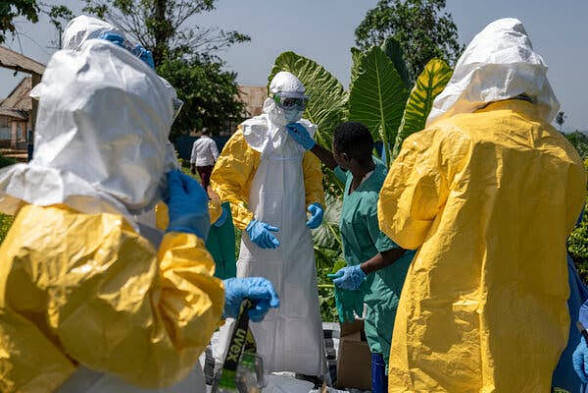
The World Health Organization has issued a grave epidemiological warning from its headquarters in Geneva, Switzerland, confirming that a highly lethal and unusually elusive outbreak of Ebola disease has escalated dramatically across the eastern provinces of the Democratic Republic of the Congo. In an official high-level press briefing, international health administrators revealed that the number of laboratory-confirmed infections in the Central African nation has surged rapidly to 344 cases. Even more concerning to global epidemiologists is the accompanying mortality rate, with 60 fatalities now officially recorded within the country, highlighting the immense difficulties local healthcare workers face in trying to contain the highly infectious pathogen under extreme environmental conditions.
The current public health emergency, which represents the 17th documented Ebola outbreak in the Democratic Republic of the Congo since the notorious viral hemorrhagic fever was first identified near the Ebola River in 1976, presents an extraordinary medical crisis for global science. Unlike previous epidemics that were driven by the well-studied Zaire strain of the virus, intensive genetic sequencing from the national laboratory infrastructure has confirmed that this particular crisis is caused entirely by the rare Bundibugyo species of the Ebola virus. The emergence of the Bundibugyo strain has essentially stripped away the world's standard medical armor, as there are currently absolutely no licensed vaccines, approved therapeutics, or specialized pharmaceutical treatments capable of neutralizing this specific version of the pathogen.
Compounding the biological threat is a severe diagnostic crisis that allowed the virus to circulate invisibly within vulnerable local communities for months. Health experts investigating the origins of the transmission chains discovered that the standard, most commonly distributed diagnostic tests utilized by frontline medical centers are completely incapable of detecting the Bundibugyo strain, meaning that hundreds of patients were misdiagnosed during the early phases of the spread. This diagnostic blind spot created a massive backlog of unconfirmed cases and allowed the epidemic to gain a massive head start, with the World Health Organization estimating that undetected community transmission may have quietly commenced as early as January 2026 before an official public health emergency was formally declared on May 15.
The geographic footprint of the epidemic has quickly expanded across three major administrative territories in the eastern region of the Democratic Republic of the Congo, placing massive pressure on fragile local healthcare networks. Confirmed cases have been identified across 24 distinct health zones spanning the highly volatile provinces of Ituri, North Kivu, and South Kivu. Ituri Province remains the primary hotspot and epicenter of the current crisis, with its densely populated regional capital of Bunia recording the highest density of active transmissions. The virus has also breached major urban corridors, with frontline treatment units in regional cities like Beni, Goma, and Bukavu scrambling to isolate a continuous influx of symptomatic patients showing classic signs of hemorrhagic distress.
In response to the rapid escalation, an aggressive international mobilization has been launched to build emergency medical infrastructure from scratch. Working in close coordination with the Congolese ministry of health, emergency response teams have successfully constructed and opened three specialized, 80-bed Ebola treatment centers in the heart of Bunia to manage the patient surge. Additional emergency treatment outposts are currently being deployed to remote mining communities like Mongbwalu and Rwampara to provide localized critical care. Global health officials emphasized that despite the absolute lack of specialized antiviral drugs, early supportive medical care—including aggressive intravenous rehydration, electrolyte stabilization, and symptom management—can successfully save lives, as evidenced by six documented patient recoveries in the country.
The operational terrain, however, remains exceptionally hostile, as eastern Congo is currently plagued by protracted humanitarian crises, mass civilian displacement, and active conflict involving various armed militia groups. These volatile security conditions have severely crippled the vital process of contact tracing, which requires health workers to systematically monitor anyone exposed to an infected individual. According to internal data released by global response coordinators, emergency teams are currently tracking only about 45 percent of known contacts within the active hot zones. Health administrators warned that to effectively break the chains of transmission and get ahead of the outbreak, contact tracing numbers must immediately be pushed past the 90 percent threshold, a feat that remains nearly impossible without secure access to rural settlements.
The crisis has also evolved into a serious regional threat, officially breaching international borders and triggering emergency protocols in neighboring East African nations. The World Health Organization confirmed that the outbreak has successfully spilled into neighboring Uganda, where 15 cases have been laboratory-confirmed, including one fatality. The cross-border spread includes a highly complex epidemiological case involving a Congolese resident who traveled through the United Arab Emirates before arriving in Uganda, prompting a frantic multi-national contact tracing operation involving authorities in Abu Dhabi and Kampala. Furthermore, the international reach of the virus was underscored when an American medical professional who contracted the disease while working in a remote Congolese clinic was medically evacuated via a specialized containment aircraft to Germany for high-security intensive care.
Amid the mounting cross-border anxieties, the global health agency has strongly condemned the immediate imposition of blanket international travel bans by several foreign governments. Health officials argued that blocking all commercial flights and sealing borders does not stop the microscopic movement of a virus but instead severely disrupts critical humanitarian supply chains, blocks the delivery of essential laboratory reagents, and prevents international medical experts from reaching the frontline. Instead of isolationist policies, international guidelines recommend strict exit screening protocols at all primary airports, maritime ports, and land border crossings to identify symptomatic travelers while keeping vital trade corridors open for the survival of the local economy.
Beyond the logistical and geopolitical hurdles, health teams are facing a deep wall of community mistrust and deep-seated local skepticism regarding the true nature of the disease. During high-level field visits to the affected health zones in Ituri Province, emergency responders reported that several traditional leaders and community elders openly expressed their belief that the Ebola outbreak is entirely fictional or a politically motivated fabrication. This widespread community resistance has fueled hostility toward medical interventions, led to sporadic physical attacks against newly constructed isolation tents, and caused many infected individuals to hide within their homes rather than seeking professional medical help, further accelerating the unseen community spread.
To sustain the global response over the crucial upcoming phase, international health leaders announced that the emergency operations will require a minimum funding injection of 115 million dollars over the next three months alone. Currently, only about 35 percent of this vital financial target has been successfully raised from global donors, prompting plans for a major joint fundraising and operational relaunch alongside the Africa Centres for Disease Control and Prevention. Health authorities emphasized that while stopping the current transmission chains is the immediate priority, the long-term goal must focus on rebuilding the underlying healthcare architecture of the Congo to ensure that vulnerable communities do not survive the horrors of a rare Ebola strain only to succumb to highly preventable diseases like malaria, malnutrition, or pneumonia.
📩 Stone Reporters News | 🌍 stonereportersnews.com ✉️ info@stonereportersnews.com | 📘 Facebook: Stone Reporters News | 🐦 X (Twitter): @StoneReportNew | 📸 Instagram: @stonereportersnews
Add comment
Comments