

Reported by: Ijeoma G | Edited by: Oravbiere Osayomore Promise.
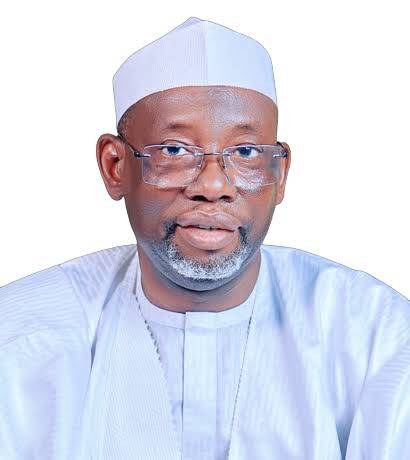
The internal crisis rocking the ruling All Progressives Congress in Jigawa State has deepened following aggressive structural adjustments made by the state executive power structure. In a swift political maneuver that highlights the rising tension within the regional administration, the Jigawa State Governor, Umar Namadi, has officially approved the immediate suspension of one of his special assistants while concurrently lifting the suspension of another. This dual administrative directive comes on the heels of major factional friction within the local grassroots machinery, signaling an intensive effort by the state leadership to consolidate authority and enforce total discipline among political appointees as rival political camps scramble for influence ahead of future electoral cycles.
The administrative shake-up was formally communicated through an official government statement issued in Dutse, the state capital, on Thursday, June 4, 2026. Signed by the Secretary to the State Government, Bala Ibrahim, and distributed to journalists by the media officer of the secretariat, Isma’ila Dutse, the directive made it clear that the decisions carry immediate legal weight. According to the document, the governor approved the indefinite suspension of Sule A. Musa, who until his sudden removal served as the Special Assistant on Education Monitoring for the Auyo Local Government Area. In his official capacity, Musa was heavily tasked with inspecting localized educational infrastructure, checking teacher absenteeism, and delivering direct field compliance reports to the state capital.
While the state administration chose not to disclose the specific official reasons behind the immediate removal of Musa, political observers have strongly linked the decision to a wider ongoing purge of suspected dissident elements within the local government structure. The sudden vacancy created in the education sector has been widely interpreted as a direct warning to other political appointees who might be wavering in their institutional loyalty to the governor. The strategic timing of the announcement underscores the determination of the state house to weed out administrative friction point men who fail to adhere strictly to the centralized directives issued by the executive branch.
In sharp contrast to the punitive action taken against the education aide, the state government used the very same press release to announce a major political lifeline for another embattled official. Governor Namadi officially lifted the suspension previously imposed on Basiru Abdullahi, a well-known grassroots mobilizer popularly referred to by his political moniker Optimistic. Abdullahi has been fully restored to his executive position as the Special Assistant to the Governor on Health Monitoring for the Kafin Hausa Local Government Area. Abdullahi, who had been sidelined from active duty earlier in the year under highly controversial circumstances, was directed to resume his monitoring responsibilities over primary healthcare clinics and regional immunization campaigns immediately.
The reinstatement of Abdullahi is viewed by regional insiders as a calculated gesture aimed at reconciling aggrieved political factions within the Hadejia constituency zone. By bringing a popular operative back into the administrative fold, the governor is seen as executing a balancing act, rewarding loyalist elements while systematically isolating perceived troublemakers. This dual mechanism of punishment and pardon demonstrates the complex political math being deployed by the current Jigawa State leadership to stabilize its base of support and prevent full-scale defection to opposition camps.
The broader political atmosphere across Jigawa State has remained exceptionally volatile following the recent primary elections conducted by the All Progressives Congress. The internal party selection processes left a trail of deep resentment after several high-profile incumbent lawmakers failed to secure their return tickets, altering the balance of power. Most notably, the intense struggle for the Hadejia, Auyo, and Kafin Hausa Federal Constituency seat has triggered a domino effect of internal recriminations. Just days prior to this latest cabinet reshuffle, the state chapter of the All Progressives Congress took the drastic step of suspending Ibrahim Kamfani Auyo, a sitting member of the House of Representatives, alongside six key local government party executives over allegations of anti-party activities.
This spiraling crisis has forced the governor to adopt an aggressive stance toward his sprawling network of political aides, leading to multiple waves of purges. Earlier in the week, precisely on Monday, June 1, 2026, Governor Namadi ordered the indefinite suspension of four senior political aides, including his Senior Special Assistant on Flood Control, Abbas Makama, alongside specialized assistants overseeing entrepreneurship, basic education, and cluster farming. The administrative bleeding continued into Tuesday when the Ministry for Local Government and Community Development announced the indefinite suspension of three special advisers and two supervisory councillors within the Auyo Local Government Council, fully stripping them of their official portfolios.
The rapid succession of these suspensions demonstrates how deeply the fallout from the party primaries has penetrated the grassroots administrative framework of Jigawa State. In many Nigerian states, local government supervisors and special assistants double as key political organizers during major mobilization drives, making their absolute loyalty a matter of survival for any incumbent governor. The fact that the bulk of these administrative suspensions have been concentrated within the Auyo and Hadejia axis reveals the geographical epicenter of the political rebellion currently threatening the cohesion of the ruling party.
Despite the obvious correlation between the political purges and the administrative changes, state officials have consistently maintained neutrality in their public comments, refusing to explicitly tie the suspensions to internal party warfare. Journalists who attempted to contact the newly suspended education aide, Sule A. Musa, for his perspective reported that his official telephone lines remained entirely unreachable. This wall of silence from both the government and the affected individuals highlights the delicate nature of the situation, as all parties involved await further legal and political developments behind closed doors.
As the dust settles over the latest round of cabinet adjustments, political analysts expect further realignments within the Jigawa State government. The coming months will determine whether Governor Namadi's strategy of utilizing severe administrative penalties alongside targeted reinstatements will successfully quell the raging internal rebellion, or if the deeply entrenched grievances from the primary elections will eventually fracture the All Progressives Congress beyond repair ahead of the next major general elections.
📩 Stone Reporters News | 🌍 stonereportersnews.com ✉️ info@stonereportersnews.com | 📘 Facebook: Stone Reporters News | 🐦 X (Twitter): @StoneReportNew | 📸 Instagram: @stonereportersnews
Add comment
Comments