

Reported by: Ijeoma G | Edited by: Oravbiere Osayomore Promise.
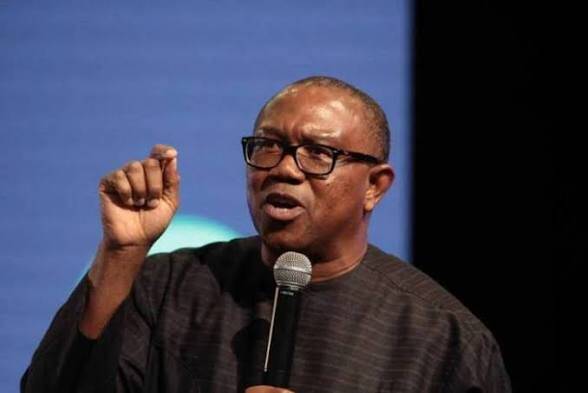
ABUJA, Nigeria – The presidential candidate of the Nigeria Democratic Congress (NDC), Peter Obi, has issued a passionate call to Nigerian youths to “take back your country,” warning that the nation has become dangerously desensitised to a security crisis that once united citizens and attracted global outrage. Obi made the call on Friday, June 5, 2026, in a statement posted on his verified X handle, in which he decried the rising wave of school abductions and the apparent normalisation of failure under the current administration. The former Anambra State governor drew a stark comparison between the global movement sparked by the 2014 Chibok schoolgirls’ abduction and the muted response to repeated mass kidnappings today.
“The abduction of the Chibok girls in 2014 triggered a global movement. One school abduction was enough to unite Nigerians, attract international attention, and place enormous pressure on the government through the #BringBackOurGirls campaign,” Obi wrote. “Yet, what has happened since then should trouble every Nigerian.” He cited data showing a troubling acceleration in school kidnappings: “Under President Buhari’s eight years in office, Nigeria witnessed about ten school abductions. Under President Tinubu’s administration, in just three years, we have already recorded over ten school abductions.” The NDC flagbearer questioned whether Nigerians have grown so accustomed to insecurity that tragedies once shocking to the national conscience are now treated as routine. “Despite these repeated tragedies, there has been neither sustained national outrage nor significant international attention comparable to what followed Chibok. This raises an important question: have we become so accustomed to insecurity that what once shocked our national conscience is now treated as normal?”
Obi’s statement comes amid a surge in mass abductions across the country. On May 15, 2026, coordinated school raids in Oriire, Oyo State, and Mussa town, Borno State, saw dozens of schoolchildren and teachers captured, with at least one teacher executed. Two days before Obi’s statement, on June 3, heavily armed men raided university residences in Zamfara State to abduct six students, while gunmen in Ibadan kidnapped the younger sister of a former minister along with her 12‑year‑old twin sons. In Oyo State, abductors holding dozens of pupils and teachers have reportedly demanded N1 billion, two Hilux vehicles, the release of imprisoned associates, and even the implementation of Sharia law in the South‑Western state. Obi has previously appealed directly to the abductors, urging them to “release these children for the sake of our shared humanity”.
Beyond the grim statistics, Obi accused political leaders of prioritising electoral calculations over the urgent needs of suffering citizens. “At a time when millions of Nigerians are grappling with insecurity, poverty, and hardship, it is deeply troubling that those in power appear more focused on political calculations and preparations for the next election than on addressing the urgent challenges confronting our people,” he said. He noted that persistent insecurity, economic hardship, and leadership failure have damaged Nigeria’s reputation internationally, leading some observers to label the country a “Now Disgraced Nation.” While rejecting such extreme characterisations, Obi acknowledged that Nigeria’s global standing has suffered. “The answer is not denial, propaganda, or political distraction. The answer is leadership that is competent, compassionate, accountable, and genuinely committed to the welfare and security of the Nigerian people,” he declared.
The NDC presidential candidate directed his strongest words at young Nigerians, whom he urged not to become indifferent to the country’s decline. “The Nigerian youth must not become indifferent. We must all refuse to normalise failure. Young Nigerians — Take back your country!” Obi wrote. He ended the statement with his recurring message of hope: “A New Nigeria is Possible”. The call to action has resonated across social media, with supporters amplifying the hashtag #TakeBackYourCountry. However, Obi has simultaneously warned youths against ethnic and religious division, urging them not to be manipulated into narratives that undermine national unity. In a separate statement on June 4, he defended Pastor Enoch Adeboye, describing the 84‑year‑old cleric as a respected leader who has preached peace, while insisting that young Nigerians must shoulder the responsibility of nation‑building rather than delegating it to elderly figures.
Reactions to Obi’s statement have been mixed. Some civil society groups praised his courage in speaking truth to power, while political analysts noted that his claim of “over ten school abductions” under Tinubu’s three years lacks precise independent verification but reflects a widely held perception of worsening insecurity. The presidency has not issued an official response to Obi’s allegations as of Friday evening. Meanwhile, security agencies continue search‑and‑rescue operations for the abducted Oyo schoolchildren, whose families have waited for nearly three weeks. For millions of Nigerian youths, Obi’s words pose a stark choice: accept a grim new normal, or rise to reclaim a country many fear is slipping away.
📩 Stone Reporters News | 🌍 stonereportersnews.com ✉️ info@stonereportersnews.com | 📘 Facebook: Stone Reporters News | 🐦 X (Twitter): @StoneReportNew | 📸 Instagram: @stonereportersnews
Add comment
Comments