

Published by Oravbiere Osayomore Promise.
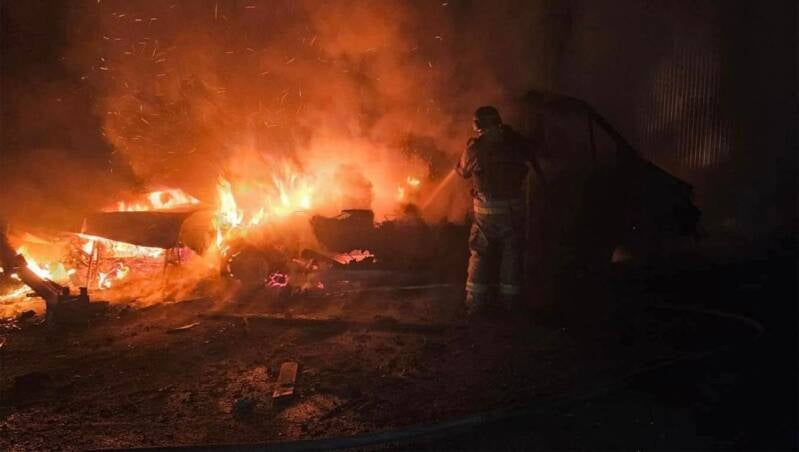
ZAPORIZHZHIA, Ukraine – A Russian drone strike on an industrial facility in the southeastern city of Zaporizhzhia killed two employees in the early hours of Saturday, June 6, 2026, as Moscow launched a massive overnight assault involving 272 unmanned aerial vehicles across Ukraine. The attack marked the latest escalation in Russia's intensifying aerial campaign against Ukrainian civilian infrastructure, with Ukrainian air defenses intercepting 249 of the incoming drones.
Regional Governor Ivan Fedorov confirmed the casualties in a statement on Telegram, reporting that the bodies of two workers were discovered on the grounds of an affected enterprise following early morning explosions. Emergency crews responding to the scene found the victims amid the wreckage of the targeted facility, which Fedorov described as part of the city's critical and industrial infrastructure.
The Zaporizhzhia strike was part of a broader Russian offensive that commenced on the evening of Friday, June 5, with drone launch sites operating from multiple directions inside Russia, including Oryol, Kursk, Bryansk, Primorsko-Akhtarsk, and Millerovo, as well as from Gvardiyske in Russian‑occupied Crimea. According to a detailed update from the Ukrainian Air Force, the Russian military deployed a varied mix of equipment: Shahed loitering munitions, including jet‑powered variants, Gerber and Italmas UAVs, Banderol loitering munitions, and Parodiya decoy drones designed to simulate larger targets on radar screens.
The attack required a complex Ukrainian defensive effort involving fighter aviation, anti‑aircraft missile troops, mobile fire groups, and electronic warfare units. While Ukrainian forces successfully intercepted or suppressed 249 of the 272 hostile drones, 19 strike drones breached defensive umbrellas to hit targets across 11 distinct locations. Falling debris from intercepted drones caused additional damage in 13 other areas.
The two fatalities in Zaporizhzhia were not the only ones reported on Saturday. In the northern Sumy region, a 77-year-old woman was killed when a Russian strike drone destroyed her home in the Khutir‑Mychailivska community of Shostka district. A separate morning bombardment combining drones and guided aerial bombs targeted the Vorozhba community, killing a male civilian on the grounds of his personal property. The Sumy Regional Prosecutor's Office initiated a pre‑trial investigation under Article 438 of the Criminal Code of Ukraine, which governs violations of the laws and customs of war resulting in premeditated murder.
In the Kharkiv region, a 51-year-old man riding a scooter to buy groceries along a highway between the settlements of Prudyanka and Slatyne was killed by a Russian FPV drone at approximately 6:00 a.m. local time. Vyacheslav Zadorenko, head of the Derhachi Municipal Military Administration, confirmed that the drone intercepted the victim's scooter and detonated directly on him. In the Donetsk region, an explosive drone detonated adjacent to a residential home in Kramatorsk, killing a 50-year‑old male resident.
The southern Kherson region also suffered multiple casualties from Russian artillery and drone attacks. A drone strike critically wounded an unidentified man in the Dniprovskyi district, who was rushed to a regional hospital in severe condition. A 61-year‑old man required outpatient treatment for a closed craniocerebral injury, blast trauma, and concussion following a Friday drone strike in the same district. Russian artillery batteries shelled the town of Bilozerka at approximately 11:40 a.m., wounding a 68-year‑old man. A 56-year‑old female resident of Komyshany sought emergency care for severe shell‑shock and concussions sustained during a heavy bombardment of her village.
The Saturday attack followed consecutive days of Russian drone operations targeting non‑military facilities. On Friday night, Russian drones struck two locations in Chernihiv, damaging 37 vehicles and injuring eight people. On June 4, a drone strike on the Korabelnyi district of Kherson killed a 75‑year‑old man and wounded a 12‑year‑old boy.
Ukrainian President Volodymyr Zelenskyy condemned the attacks as deliberate targeting of civilians. "Russia continues its war against our people, hitting industrial facilities, residential areas, and ordinary citizens going about their daily lives," he said in a statement.
The Russian Defense Ministry has not issued a statement on the Zaporizhzhia strike. In past incidents, Moscow has claimed that its drones target military infrastructure and that civilian casualties result from Ukrainian air defense debris.
The Zaporizhzhia strike has drawn international condemnation. European Union foreign policy chief Josep Borrell called the attack a clear violation of international humanitarian law. The United States State Department urged Russia to immediately cease its aerial assault on civilian targets.
Local authorities in Zaporizhzhia continued search and rescue operations throughout the day, assessing the full extent of damage to industrial and critical infrastructure. The confirmed death toll from the strike remained at two, with five injured reported by regional officials. The Zaporizhzhia Regional Military Administration warned that the toll could rise as emergency crews clear debris.
The Saturday drone offensive, with 272 UAVs deployed, represented one of the largest single‑night aerial attacks on Ukraine in 2026. The use of decoy drones alongside strike UAVs revealed a sophisticated Russian strategy designed to overwhelm Ukrainian air defenses. Ukrainian military analysts noted that the 19 drones that penetrated defensive perimeters highlighted gaps in coverage that required urgent attention from international allies supplying air defense systems.
As of Saturday evening, rescue operations in Zaporizhzhia continued, with emergency services working through the wreckage of the damaged enterprise. The two victims' families were notified, and local authorities announced they would provide support for funeral arrangements.
The strike underscored the persistent threat Russian drone warfare poses to Ukrainian civilians more than two years after the full‑scale invasion began. For the residents of Zaporizhzhia, the morning of June 6, 2026, became another day of loss, as they joined the growing list of Ukrainian communities that have buried their dead from Russia's aerial war.
📩 Stone Reporters News | 🌍 stonereportersnews.com ✉️ info@stonereportersnews.com | 📘 Facebook: Stone Reporters News | 🐦 X (Twitter): @StoneReportNew | 📸 Instagram: @stonereportersnews
Add comment
Comments