

Reported by: Ijeoma G | Edited by: Oravbiere Osayomore Promise.
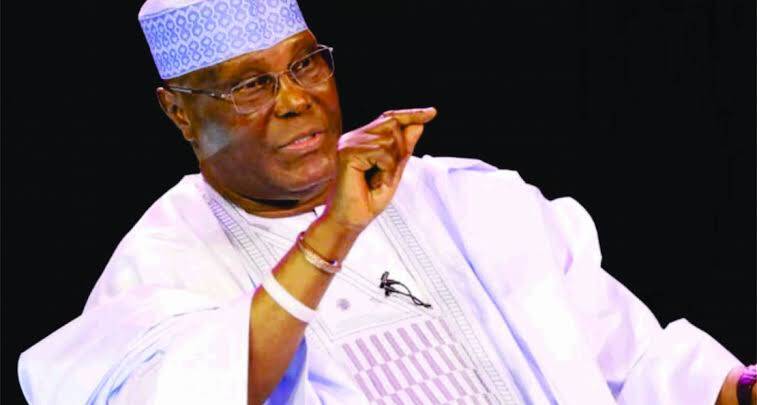
ABUJA, Nigeria – Former Vice President Atiku Abubakar has fired back at ex-Secretary to the Government of the Federation (SGF), Babachir David Lawal, describing him as a tribal bigot who has abandoned facts and reason in favour of dangerous ethnic profiling and conspiracy theories. The presidential candidate of the African Democratic Congress (ADC) issued the blistering rebuke in a statement by his Senior Special Assistant on Public Communication, Phrank Shaibu, on Sunday, June 7, 2026.
The exchange follows a series of public attacks by Lawal, who in a Facebook post titled “Kachalla II,” accused Atiku of manipulating the recent ADC primary election results, urged the party to replace him, and labelled him a religious and tribal bigot. Lawal further referred to Atiku using the moniker “Kachalla” – a term that connotes direct linkage with banditry.
In his response, Atiku said it was unfortunate that a man of Lawal’s standing had chosen to abandon evidence and reason in favour of ethnic profiling, prejudice and conspiracy theories in a desperate attempt to discredit a political opponent. “Throughout his lengthy public attacks, Babachir Lawal failed to present a single piece of evidence to support his grave allegations,” the statement read in part, adding that the former SGF had instead invited Nigerians to substitute suspicion for proof and emotion for facts.
Atiku reserved his strongest condemnation for what he described as Lawal’s repeated attempt to portray an entire ethnic group as inherently linked to criminality. “It is both dangerous and irresponsible to suggest that any Nigerian should be judged, condemned or held accountable for crimes committed by individuals simply because they share a common ancestry,” Atiku said, warning that such flawed reasoning meant every ethnic nationality in Nigeria could be collectively blamed for the actions of a few criminal elements – a mindset that has historically fuelled division and undermined national unity.
The former vice president pointed to what he called a glaring contradiction: Lawal now seeks to demonise the Fulani ethnic group even though a Fulani man, former President Muhammadu Buhari, appointed him to the highest office he ever occupied. “At no point did Mr Lawal object to receiving such trust and elevation from a Fulani President. He accepted the office, the privileges, and the prestige that came with it. It is therefore difficult to understand why he now seeks to stigmatise an entire ethnic group merely because another Fulani man seeks the presidency through democratic means,” Atiku stated.
Atiku also questioned Lawal’s contradictory public posture, noting that on the same day he launched his lengthy attack, he was also granting interviews boasting about his political relevance and claiming that no fewer than five governors wanted him back in the All Progressives Congress (APC). “Nigerians are entitled to ask a simple question: which Babachir should they believe? The Babachir who claims to be a victim of political conspiracies and ethnic domination, or the Babachir who boasts that governors are scrambling for his services?” Atiku queried. He added that such contradictions exposed a man struggling to reconcile personal disappointment with political reality.
Dismissing claims that he had been indifferent to victims of violence across the country, Atiku cited his consistent condemnation of terrorism, banditry, kidnappings and communal violence regardless of the identity of the victims. He recalled that when tragedy struck the people of Kagoro in Southern Kaduna, he attended a church thanksgiving service to identify with the grieving community – without asking whether the victims were Christians or Muslims, northerners or southerners, Fulani or non-Fulani. “Leadership is not about counting tribes or measuring faith. It is about standing with people in moments of difficulty, regardless of their ethnic or religious identity,” he said.
Atiku also highlighted his intervention following the abduction of the Chibok schoolgirls by Boko Haram, noting that he facilitated scholarships for some of the released girls at the American University of Nigeria, Yola. “Those young women are living proof that compassion is more powerful than bitterness and that nation-building requires action, not merely rhetoric. While some people chose to exploit national tragedies for political narratives, others chose to invest in healing and hope,” he said.
Concluding with a broad warning against ethnic stereotyping in political discourse, Atiku declared: “Babachir may see tribe. I see Nigerians. Babachir may see division. I see a nation that must come together if it is to overcome its present challenges. That is the difference between politics driven by resentment and leadership driven by purpose.” He reaffirmed his commitment to a Nigeria where every citizen, regardless of ethnicity, religion, region or social background, enjoys equal opportunity, equal protection and equal dignity under the law.
📩 Stone Reporters News | 🌍 stonereportersnews.com ✉️ info@stonereportersnews.com | 📘 Facebook: Stone Reporters News | 🐦 X (Twitter): @StoneReportNew | 📸 Instagram: @stonereportersnews
Add comment
Comments