

Reported by: Oahimire Omone Precious | Edited by: Oravbiere Osayomore Promise.
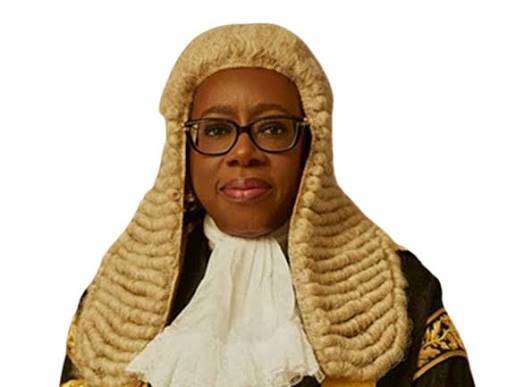
ABUJA, Nigeria – The Chief Justice of Nigeria, Justice Kudirat Kekere-Ekun, has issued a powerful call for the appointment of more women to leadership positions within the judiciary, arguing that gender parity on the bench is not merely a matter of representation but a fundamental question of institutional legitimacy and justice delivery. Speaking on Tuesday, June 9, 2026, at the opening ceremony of the International Association of Women Judges African Conference, held at the Body of Benchers complex in Abuja, the CJN maintained that excellence in the administration of justice requires a thoughtful examination of the relationship between gender equality and the legal system.
“The full and effective participation of women within the judiciary has far-reaching implications for justice delivery,” Justice Kekere-Ekun told the gathering of judges and legal professionals from across the continent. “From broadening jurisprudential perspectives to reducing unconscious biases and strengthening public confidence in legal institutions, the presence of women on the bench enriches the administration of justice in meaningful ways”.
The CJN acknowledged that encouraging progress has been made over the years in the representation of women within judiciaries across the world, but she warned that the Nigerian judiciary should not be constrained by the very inequalities it is called upon to remedy. “While notable gains have been made, particularly at entry and intermediate levels, significant work remains to be done in ensuring equal representation within leadership positions and at the highest levels of judicial decision-making,” she said.
Justice Kekere-Ekun, who is only the second woman to hold Nigeria’s highest judicial office after Justice Aloma Mariam Mukhtar, framed the pursuit of gender equality as essential to public trust. “A judiciary that reflects the diversity of the society it serves is better positioned to command public confidence and to appreciate the varied experiences that come before it,” she argued. “Diversity strengthens judicial deliberation, enriches legal reasoning, and ultimately enhances the quality of justice delivered”.
The CJN did not shy away from the historical structures that have limited women’s opportunities in the legal profession. “The judiciary, like many institutions, emerged from historical structures that offered limited opportunities for women,” she observed. “While considerable progress has been achieved, we must remain vigilant to ensure that our institutions are not constrained by the very inequalities they are called upon to remedy”.
A Persistent Gender Gap in Nigeria’s Apex Courts
The CJN’s call comes against the backdrop of sobering statistics that reveal the depth of gender imbalance within Nigeria’s judiciary, particularly at the highest levels. According to recent data from the International Federation of Women Lawyers (FIDA), only four out of the thirteen justices of the Nigerian Supreme Court are women, representing approximately 31 percent of the apex court’s bench. While the appointment of Justice Kekere-Ekun as Chief Justice in 2024 was hailed as a historic milestone, FIDA has noted that it “did little to address the broader systemic imbalance”.
Further data indicates that women currently make up roughly 38 percent of judges within the Nigerian judiciary overall, with representation dipping even lower in senior appellate roles. At the state level, the disparity remains stark: in Anambra State, for instance, out of 29 High Court judges, only five are women, according to a consultative dialogue held by FIDA in May 2026.
Justice Kekere-Ekun identified mentorship as a critical tool for bridging this gap. “Those who have attained positions of leadership bear a responsibility to inspire, support, and guide those who follow,” she said. “The success of any institution is not measured solely by the achievements of its present leaders but also by its capacity to prepare the next generation to surpass them”.
The CJN also spoke of the need for a collective institutional culture, one built on collaboration rather than individual ambition. “We must therefore embrace a culture of collaboration and mutual support, recognising that the strength of the judiciary is built collectively rather than individually,” she said.
Support from First Lady and International Partners
The conference, which drew participants from several African countries, also featured First Lady Oluremi Tinubu as a special guest. She stressed that the judiciary remains central to sustaining the rule of law in every democratic society and urged participants to continue building judicial systems that are transparent, compassionate, and firmly anchored in the rule of law.
Justice Kekere-Ekun noted that Nigeria is among five countries, alongside Kenya, South Africa, Mexico, and the Philippines, benefiting from a multi‑year programme funded by the philanthropic collaborative Co‑Impact and implemented by the International Association of Women Judges. The programme, known as the Women in Leadership in Law (WILIL) project, is designed to identify and dismantle barriers that hinder women from attaining leadership positions in the legal profession across the global South.
“The WILIL project will continue to explore pertinent issues and devise strategies that will help dismantle the barriers impeding the career progression of women in the legal profession,” Justice Kekere-Ekun said. She emphasised that the initiative is not a contest between genders but rather a concerted effort towards national development, adding that societies that prioritise the inclusion of women in leadership and decision‑making roles tend to experience greater prosperity.
The challenges facing women in Nigeria’s judiciary, the CJN noted, include gender bias, work‑life balance struggles, lack of mentorship, and unfavourable working conditions. “However, with concerted efforts and deliberate policies, these challenges can be addressed,” she assured the gathering.
A Broader Continental Conversation
Justice Kekere-Ekun placed the Nigerian struggle within the context of broader continental aspirations. “The challenges confronting African judiciaries may differ in form, but they are often united by common aspirations: the aspiration for independent courts, accessible justice, efficient case management, ethical leadership, and enduring public trust,” she told the conference. “Conferences such as this provide an invaluable opportunity to learn from one another and collectively advance those aspirations”.
The CJN’s remarks have resonated far beyond the conference hall. Legal observers note that her advocacy carries particular weight, given her unique position as both the head of Nigeria’s judiciary and a woman who has navigated the very barriers she now seeks to dismantle. As she herself reflected in an earlier interview, her decades‑long journey from magistrate in Lagos State to the Supreme Court was shaped not only by discipline and integrity but also by the structural supports she now urges others to put in place for the next generation.
For the women judges, magistrates, and legal practitioners who filled the Body of Benchers complex on Tuesday, the CJN’s message was clear: the time for incremental change has passed. What is needed now is deliberate, structural action to ensure that the bench reflects the full diversity of the society it serves. Whether that action will follow remains to be seen, but the voice demanding it now comes from the very highest seat in the land.
📩 Stone Reporters News | 🌍 stonereportersnews.com ✉️ info@stonereportersnews.com | 📘 Facebook: Stone Reporters News | 🐦 X (Twitter): @StoneReportNew | 📸 Instagram: @stonereportersnews
Add comment
Comments