

Reported by: Oahimire Omone Precious | Edited by: Oravbiere Osayomore Promise.
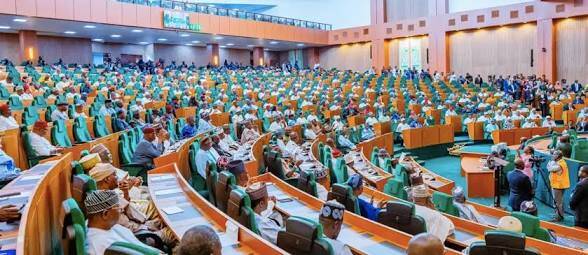
The House of Representatives will on Thursday, June 11, 2026, proceed to a historic vote on a constitutional amendment bill seeking to establish state and local police structures across Nigeria, marking the most decisive legislative action yet on a reform that has been debated for decades. The bill, jointly sponsored by Deputy Speaker Benjamin Kalu and 14 other members, is being prioritised over other constitutional amendment bills due to the worsening security crisis that has seen mass abductions of schoolchildren, bandit attacks on rural communities, and terrorist activity across multiple states.
Deputy Speaker Benjamin Kalu, who also chairs the House Committee on Constitution Review, announced the decision on Wednesday during a press briefing at the National Assembly Complex in Abuja. He charged all lawmakers attending to suspend ongoing oversight assignments outside the Federal Capital Territory and return to Abuja in time for Thursday’s plenary. “We have decided to prioritise the issue of state police ahead of other bills,” Kalu told journalists. “We have directed all members who are currently out of Abuja for oversight to suspend such and return to the parliament on Thursday for the voting procedure.”
Kalu expressed optimism that the long‑debated proposal would secure the required majority in the House and subsequently receive the backing of state legislatures across the federation. “Hope is coming. The hope of having better response time to incidents of crime is here,” Kalu said. “We have discovered that leaving the law as it is will not give us the expectations Nigerians have regarding the issue of insecurity. Therefore, we decided to prioritise security‑related reforms through constitutional amendment, targeting policing.” He dismissed reports suggesting that efforts were underway to frustrate the proposal. “We have read a lot of things in the news that people are trying to stop it. No. The Parliament is marching forward and by tomorrow we will be concluding on this. This is what we have come to inform Nigerians that hope is here and by tomorrow state police will make it into our constitutional amendment,” he declared.
The legislative push follows weeks of high‑level consultations involving the Presidency, the National Assembly, state governors, the Inspector‑General of Police, the Attorney‑General of the Federation, and other security stakeholders. The Chief of Staff to the President, Femi Gbajabiamila, disclosed on June 4 after a consultative meeting at the State House, Abuja, that discussions had advanced to the point of considering the necessary constitutional amendments. “We started deliberations in the last three or four months on how to go about the establishment of state police as directed by Mr President,” Gbajabiamila said. “Right now, what we are looking at is the constitutional amendment itself, and then the enabling law will follow thereafter.”
Gbajabiamila noted that the debate had long moved past the question of whether state police should exist and was now focused entirely on the legal and institutional architecture for its operation. He added that the constitutional amendment to establish state police is “nearing completion” and that President Bola Tinubu, who has consistently advocated for decentralised policing, would receive a comprehensive report on the outcome of the consultations.
The Senate has also indicated it will fast‑track the process. Senate Leader Opeyemi Bamidele disclosed on Monday, June 8, that the upper chamber would isolate the state police provision from other ongoing constitutional amendments and pass it as a standalone bill “due to national exigency.” Bamidele said the amendment would be voted on this week to avoid further delay. “If I can tell you as of today, that will come to fruition this very week. There is no need to allow any further delay,” he stated. He explained that Deputy Senate President Barau Jibrin, Chairman of the Senate Constitution Review Committee, and Deputy Speaker Benjamin Kalu have held meetings in the last week with the Attorney‑General of the Federation, the Chief of Staff to the President, the Inspector‑General of Police, and other stakeholders. “What we have resolved to do is to isolate it from the rest of the bills under the constitution amendment so that we can vote on this as soon as possible,” Bamidele said.
If passed by the National Assembly, the bill must be transmitted to the 36 state Houses of Assembly for ratification. Section 9 of the 1999 Constitution requires the approval of at least two‑thirds of the state legislatures before a constitutional amendment can be presented to the President for assent. Senate Leader Bamidele expressed confidence that the proposal would receive the backing of state governors and state assemblies. “The bill can as well be on its way to the 36 State Houses of Assemblies as soon as possible because you know we will need two‑third of the state assemblies to approve it before the president can assent to it,” he said. “The president is also with us on this proposal. I am sure he cannot wait for the bill to come to him for assent. The majority of our governors are in support. The state assemblies are also waiting.”
President Tinubu has maintained in recent months that state police is a necessary response to Nigeria’s evolving security challenges, advocating that a decentralised policing structure would strengthen grassroots security, enhance intelligence gathering, and improve the protection of lives and property across the country. In February, Tinubu urged the National Assembly to begin the process of amending the Constitution to accommodate state police, describing the initiative as necessary to address Nigeria’s evolving security challenges and strengthen grassroots law enforcement. The President also reiterated his call during a high‑level meeting with Plateau State stakeholders in late April and in his third anniversary statement on May 29.
The current constitutional framework for policing in Nigeria is centralised. Section 214(1) of the 1999 Constitution provides: “There shall be a Police Force for Nigeria, which shall be known as the Nigeria Police Force.” Under the existing structure, states have no constitutional authority to maintain their own police services. The proposed amendment would alter this provision to permit state governments to establish and operate their own police forces alongside the federal police. Section 315 of the Constitution also contains transitional provisions that would govern the transfer of personnel, assets, and liabilities from the Nigeria Police Force to new state police formations, a complex process that lawmakers are still working to finalise.
The legislative framework for state police has advanced significantly in recent weeks. Deputy Speaker Kalu disclosed on Sunday, June 7, that legislative action on state police has reached 98 percent completion and will soon be concluded as part of ongoing efforts to tackle the country’s worsening security challenges. He told the Nigerian Tribune that the joint committees of the House and Senate have worked extensively on the bill and that the legislative framework, including governance structures, funding models, recruitment standards, digital operations, and oversight mechanisms, is nearly ready for voting. Kalu added that the National Assembly is considering repealing the existing Police Act and re‑enacting a comprehensive version that would incorporate provisions for state police. “We are considering repealing and re‑enacting the Police Act to incorporate those details for state police, to avoid having multiple enactments on policing in Nigeria,” he said.
The Nigeria Governors’ Forum has transmitted its inputs to the House of Representatives Special Ad‑hoc Committee on Constitution Review. NGF Chairman AbdulRahman AbdulRazaq, speaking through Governor Babajide Sanwo‑Olu of Lagos State on April 23, announced that the forum had developed a State Police Framework covering governance structures, funding models, recruitment standards, digital operations, and oversight mechanisms for state policing. Kalu confirmed that the governors’ inputs have been received and will inform the enabling legislation that will follow the constitutional amendment. “The details of the implementation of state police will be well defined in an Act of Parliament,” he said.
The push for state police has gained momentum amid a surge in banditry, terrorism, kidnapping, and communal violence across Nigeria. Proponents argue that a centralised policing system has become overstretched, unable to effectively respond to security threats in all parts of the country. They contend that state police forces, recruited from local communities, would have better knowledge of local terrain, language and criminal networks, leading to improved intelligence gathering, faster response times, and more effective crime prevention. However, critics have warned that state police could be abused by some governors to harass political opponents, suppress dissent, or influence elections. Others have raised concerns about funding, noting that several states already struggle to meet financial obligations such as salary payments and may find it difficult to sustain police forces. To address these concerns, lawmakers are considering safeguards aimed at ensuring accountability, operational independence, and effective oversight of state police institutions.
As of Wednesday evening, June 10, all 360 members of the House of Representatives have been directed to suspend other engagements and attend Thursday’s plenary. Deputy Speaker Kalu described the nation’s security situation as an emergency and urged lawmakers to participate in the session to demonstrate the legislature’s commitment to tackling insecurity. “We want all our members to be in the House so that we can show our constituents that we are in support of state police and that security remains a priority on our agenda,” he said.
If the constitutional amendment bill passes both chambers of the National Assembly on Thursday, it will be transmitted to the 36 state Houses of Assembly for concurrence. Two‑thirds approval is required for the amendment to take effect. After ratification by the states, the bill will be presented to President Tinubu for final assent. Once signed into law, the constitutional amendment will allow the National Assembly to enact enabling legislation that will establish the legal and institutional framework for state police operations across the federation.
For millions of Nigerians who have lost loved ones to banditry, kidnapping and terrorism, the vote on Thursday represents a turning point in the long‑running debate over how best to secure the nation. Deputy Speaker Kalu’s message to the country on the eve of the vote was simple and direct: “Hope is coming. The hope of having better response time to incidents of crime is here.”
📩 Stone Reporters News | 🌍 stonereportersnews.com ✉️ info@stonereportersnews.com | 📘 Facebook: Stone Reporters News | 🐦 X (Twitter): @StoneReportNew | 📸 Instagram: @stonereportersnews
Add comment
Comments