

Reported by: Oahimire Omone Precious | Edited by: Oravbiere Osayomore Promise.
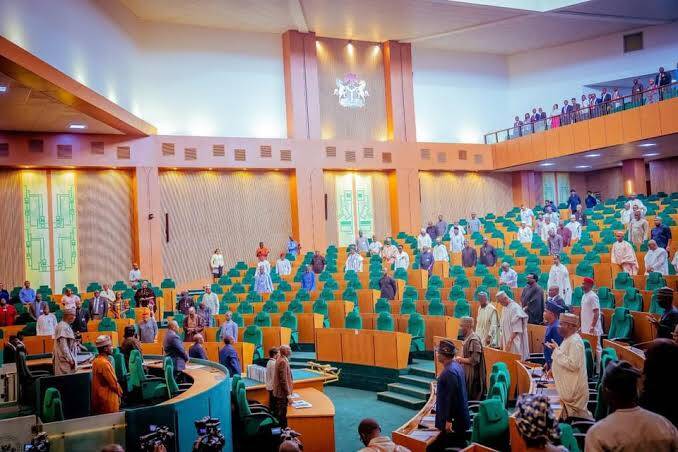
A comprehensive constitutional amendment bill before the National Assembly proposes to create 12 additional women‑only seats in the Senate, 37 additional seats in the House of Representatives and three additional seats per State House of Assembly, to be filled through a novel Electoral College system rather than direct elections, according to the draft proposal listed among the 37 constitutional amendment bills scheduled for a vote on Thursday, June 11, 2026.
The bill, formally titled “A Bill for an Act to Alter the Constitution of the Federal Republic of Nigeria, 1999 to Provide for Additional Special Seats for Women in the Senate, House of Representatives and State Houses of Assembly”, is listed as Bill NO. 20 on the House of Representatives voting schedule. The proposed legislation was earlier published in draft form as HB 1349, sponsored by Deputy Speaker Benjamin Kalu and 12 other lawmakers.
Under the proposed alteration to Section 48 of the 1999 Constitution, the Senate would retain the existing three Senators per State and one Senator from the Federal Capital Territory, but would add two additional Senators from each of the six geopolitical zones, both of whom must be women. The two special senatorial seats per zone would be filled through a State Electoral College rather than direct election, and would be rotated among the states within each zone, with the specific rotation mechanism to be prescribed by an Act of the National Assembly. The total number of new senatorial seats created by this provision would be 12, raising the Senate’s membership from 109 to 121. The additional seats are designated as special senatorial seats for the geopolitical zones, and the ordinary delimitation rules for senatorial districts would not apply. The provision would come into effect after the life of the current National Assembly and would be reviewed after 16 years.
For the House of Representatives, Section 49 would be amended to add one additional member for each State and for the Federal Capital Territory, exclusively reserved for women. The total additional seats would be 37, increasing the House of Representatives from 360 members to 397. The additional seats are treated as special federal constituencies, not subject to the ordinary delimitation rules. As with the Senate, these provisions would take effect after the life of the current National Assembly and would be reviewed after 16 years.
For State Houses of Assembly, Section 91 would be altered to add three additional members to each State House of Assembly, being one woman elected from each of the three senatorial districts within the state. This would create 108 new state legislative seats across the 36 states, raising total state assembly membership from the current variable range of 24‑40 members per state to an increased fixed number.
The amendment introduces a fundamental shift in how legislators occupying these special seats would be elected. For the Senate and House of Representatives, a new Section 77A would establish a State Electoral College for each State and an FCT Electoral College for the Federal Capital Territory. The Electoral College would be composed of all elected Local Government Area Chairpersons and Vice‑Chairpersons, all elected LGA Councillors, all members of the State House of Assembly, all House of Representatives members from the State, and all Senators from the State. The Electoral College would cast one vote per member in a secret ballot. Detailed procedures for accreditation, quorum, voting, collation, result declaration, tie‑breaking, by‑elections and election petitions would be prescribed by an Act of the National Assembly. The same structure is mirrored in a new Section 117A for the State Houses of Assembly elections.
Candidates for the special seats must be women, must be sponsored by registered political parties, and must meet the same constitutional qualification and disqualification requirements applicable to other members of the respective legislative houses. Holders of these special seats would have the same tenure, rights, privileges, immunities and obligations as members elected to ordinary seats. Vacancies would be filled as prescribed by an Act of the National Assembly.
The bill also provides a bespoke recall mechanism for holders of these special seats. A petition for recall must be signed by at least half of the members of the relevant Electoral College and submitted to INEC. If INEC verifies the petition, a recall election would be conducted by secret ballot, requiring approval by at least two‑thirds of the Electoral College members for the seat to be vacated. The ordinary recall provisions applicable to constituency‑based legislators would not apply to the special seat holders.
The bill is framed as a temporary special measure to address what supporters describe as Nigeria’s persistent gender imbalance in political representation. Currently, women occupy only four of the 109 Senate seats, representing 3.7 per cent, and 16 of the 360 House of Representatives seats, representing 4.44 per cent. Fourteen State Houses of Assembly have no female legislators at all. The bill’s lead sponsor, Deputy Speaker Benjamin Kalu, has previously described the legislation as a corrective intervention designed to move women from tokenism to policy‑making without displacing existing office holders. Critics, however, have raised concerns that creating a parallel track for women could entrench exclusion rather than dismantle it, and that the indirect Electoral College system may make the special seats vulnerable to elite capture.
The amendment bill is scheduled for a vote on Thursday, June 11, 2026, together with 36 other constitutional alteration bills, including the state police bill. If passed, the proposal would require ratification by at least two‑thirds of the 36 State Houses of Assembly before it can be presented to the President for assent.
📩 Stone Reporters News | 🌍 stonereportersnews.com ✉️ info@stonereportersnews.com | 📘 Facebook: Stone Reporters News | 🐦 X (Twitter): @StoneReportNew | 📸 Instagram: @stonereportersnews
Add comment
Comments