

Reported by: Oahimire Omone Precious | Edited by: Oravbiere Osayomore Promise.
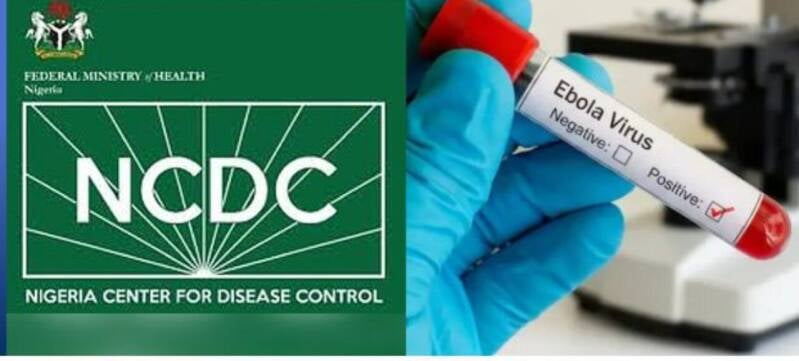
The Nigeria Centre for Disease Control and Prevention has placed its National Emergency Operations Centre on alert mode and activated the Incident Management System following the classification of Nigeria’s risk of Ebola importation as “high”. The development, announced on Friday, follows a dynamic risk assessment conducted by the agency in response to the worsening Ebola outbreak in the Democratic Republic of Congo and Uganda, where the Bundibugyo strain of the virus has continued to spread.
Dr. Gbenga Joseph, Deputy Director and Head of the Health Emergency Preparedness and Response Department at the NCDC, confirmed the alert status during an appearance on the Nigerian Television Authority’s programme “Good Morning Nigeria.” In the broadcast, Dr. Joseph explained that the agency’s Incident Management System had been fully activated to coordinate national preparedness and response activities, noting that the decision was part of a broader strategy to ensure Nigeria remains ready to rapidly detect, investigate and contain any potential outbreak should the virus cross its borders.
The NCDC’s latest risk assessment identified several factors driving the heightened threat level. International travel and population movements, porous borders, and the possibility of delayed detection—because Ebola symptoms often resemble those of malaria, Lassa fever and other common febrile illnesses—were cited as major vulnerabilities. The agency noted that the Bundibugyo strain of Ebola, which is responsible for the current outbreak in East Africa, has no approved vaccine or specific treatment, making early detection and rapid containment even more critical.
In response to the elevated risk, the NCDC has intensified a range of preparedness measures nationwide. Enhanced surveillance has been deployed at points of entry, including Nigeria’s five international airports in Lagos, Abuja, Kano, Enugu and Port Harcourt, where travellers from affected countries are being screened. Health declaration forms have been introduced, and passengers are being monitored based on established case definitions. The agency has also strengthened laboratory readiness, with testing capacity already available in states hosting international points of entry. Critical response commodities, including personal protective equipment, laboratory consumables, body bags and emergency medical supplies, are being mapped for prepositioning in strategic locations across the country.
A key component of the NCDC’s strategy is the 21-day monitoring period for exposed travellers. Under guidelines issued to health facilities and disease surveillance officers, any person who develops a sudden fever and other symptoms associated with Ebola within 21 days of travelling to an affected country should be treated as a suspected case and immediately investigated. The guidelines also mandate that persons who have had contact with a confirmed or probable Ebola patient within the previous 21 days and subsequently develop fever, with or without other symptoms, be investigated immediately. The agency has also expanded community-based surveillance, urging residents to report unusual illnesses and unexplained deaths promptly.
States have been directed to strengthen their emergency preparedness structures, designate isolation and treatment centres, assess bed capacity, and ensure the availability of medical supplies. The NCDC has completed a national risk and vulnerability assessment to identify gaps and prioritise interventions. Refresher sensitisation programmes for healthcare workers on infection prevention and control measures, including triage systems and early identification of suspected viral haemorrhagic fever cases, are ongoing nationwide.
The agency has also intensified risk communication campaigns to combat misinformation surrounding the disease. “NCDC has developed and disseminated Ebola Myths and Facts materials to address misinformation and false claims circulating online,” the agency stated. The public has been urged to maintain regular hand hygiene, avoid direct contact with the body fluids of sick persons, and promptly report unexplained illnesses or deaths.
While reassuring Nigerians that no confirmed case of Ebola has been recorded in the country, the NCDC called on healthcare workers to maintain a high index of suspicion, particularly among patients with recent travel history to affected countries. “We are not waiting for an outbreak before acting. Preparedness must begin before the first case is detected,” the NCDC Director-General, Dr. Jide Idris, said during a media briefing in Lagos. He added that Nigeria’s ability to contain Ebola had been tested before. “Let me be frank with you. If Ebola comes into Nigeria, we will stop it. Nigeria successfully contained Ebola in 2014 through strong leadership, rapid detection, effective coordination, public trust and collective action. We are building on those lessons.”
As of the latest data from the Africa Centres for Disease Control and Prevention, the Democratic Republic of Congo has reported 635 confirmed cases and 127 deaths, while Uganda has recorded 19 confirmed cases with two deaths. The World Health Organization has declared the outbreak a Public Health Emergency of International Concern, and the Africa CDC has issued a continental public health emergency declaration. The NCDC has urged Nigerians to remain calm, avoid misinformation, and report any unusual symptoms or exposure history through established public health channels, stressing that collective vigilance remains the country’s strongest defence against the deadly virus.
📩 Stone Reporters News | 🌍 stonereportersnews.com ✉️ info@stonereportersnews.com | 📘 Facebook: Stone Reporters News | 🐦 X (Twitter): @StoneReportNew | 📸 Instagram: @stonereportersnews
Add comment
Comments