

Reported by: Ijeoma G | Edited by: Oravbiere Osayomore Promise.
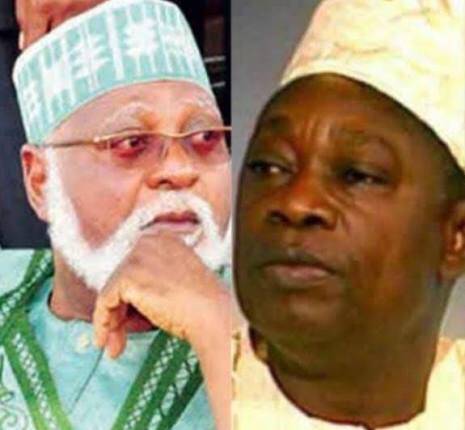
Nearly three decades after the death of Chief Moshood Kashimawo Olawale (MKO) Abiola sent shockwaves through Nigeria and ignited a storm of conspiracy theories that have never fully died, former military Head of State, General Abdulsalami Abubakar (retd.), has broken his long silence, declaring in his newly published autobiography that the acclaimed winner of the June 12, 1993 presidential election was not poisoned but died of natural causes. The stunning revelation, contained in Chapter 21 of his 264‑page, 27‑chapter memoir Call of Duty, was unveiled on Saturday at the Presidential Villa, Abuja, as part of events marking the former leader’s 84th birthday.
Abubakar insists that a post‑mortem examination conducted by an international team of pathologists found no evidence of foul play. “I do not believe Abiola was poisoned,” the former Head of State wrote in the book. “The family requested an autopsy and we assembled American, British, Nigerian and Canadian pathologists to conduct it. The autopsy report attributed his death to natural causes”.
The retired military ruler described, for the first time in a single first‑hand narrative, the precise circumstances of Abiola’s final moments. According to the memoir, Abiola collapsed on July 7, 1998, in the middle of a meeting with a visiting United States delegation that had come to assess the political situation in Nigeria after the sudden death of General Sani Abacha. The delegation was led by Mr Tom Pickering, then U.S. Undersecretary of State for Political Affairs, and Ms Susan Rice, then Assistant Secretary of State for African Affairs.
“As far back as 1994 when he was arrested by the Abacha Administration for declaring himself President, it was public knowledge that Abiola was managing certain medical conditions which could seriously affect the quality of life of any human being,” Abdulsalami wrote.
In a crucial passage of the book, Abdulsalami revealed that a radiological report dated September 28, 1994, signed by Colonel (Dr.) O. Awofeso, then Chief Consultant Radiologist at the Nigerian Army Defence Hospital, Sokoto, found that Abiola was suffering from an enlarged heart with “right ventricular preponderance” consistent with hypertensive cardiac disease.
“The report indicated that Abiola’s heart was enlarged and there were signs consistent with hypertensive heart disease,” the former military leader added, noting that the pathologists who examined Abiola after his death relied on these records to conclude that a heart attack had been the immediate cause of his demise.
Drawing extensively on Rice’s 2019 memoir, Tough Love: My Story of the Things Worth Fighting For, Abdulsalami recounted that Abiola began coughing mildly about five minutes into the conversation with the American diplomats. “Rice said she noticed Abiola’s ankles were swollen,” the book states. “About five minutes into their conversation, according to her, ‘Abiola started to cough, at first mildly and intermittently, and then wrackingly with consistency’”.
As the coughing intensified, Abiola reportedly complained of feeling unusually hot and asked for the air‑conditioning to be turned up. A doctor was summoned and concluded that he was suffering a heart attack.
Citing Pickering’s recollections in a BBC interview conducted shortly after Abiola’s death, Abdulsalami wrote that the politician “had trouble breathing, went into the toilet and came out obviously very distressed,” before being moved to a couch where he removed his shirt and asked for the room to be ventilated.
“A doctor arrived within 10 minutes and called for immediate hospital attention,” Pickering was quoted as saying. “We all helped to put him in a car. There was no ambulance immediately available. We followed him to the clinic of the Head of State of Nigeria, where doctors immediately began to work on him, but unfortunately their efforts were unsuccessful”.
Abdulsalami recalled that he received the news of Abiola’s death through his Chief Security Officer, Abdulrasheed Aliyu, who had led the American delegation to the meeting. “Aliyu, my CSO, called me. As soon as I picked, he said, in a shaky voice, that there was a problem. I asked: ‘What problem again?’ He said Abiola was dead. My head went blank,” the former Head of State wrote.
He described his immediate response to the tragedy, noting that he gathered himself and called Vice Admiral Mike Akhigbe, his second‑in‑command, to inform him that “we had a problem.” Akhigbe, he wrote, was “dumbfounded.” He also informed Alhaji Gidado Idris, the Secretary to the Government of the Federation.
Speaking at the book launch on Saturday, former President Olusegun Obasanjo disclosed that efforts to secure Abiola’s freedom had been nearing completion before his sudden death. “Your next move was how to get MKO Abiola released and you kept me regularly informed. Kola was already in Abuja to pick up his father when the unexpected happened,” Obasanjo said, addressing the gathering. “I remember you telling me on the telephone, ‘our man is dead’”.
The event, chaired by another former military Head of State, General Yakubu Gowon (retd.), brought together an extraordinary assembly of national and continental leaders. Former Presidents Goodluck Jonathan and Thabo Mbeki were in attendance, and President Bola Tinubu was represented by Vice President Kashim Shettima as Special Guest of Honour. Three books were presented in honour of Abdulsalami’s 84th birthday: his own Call of Duty, Nigeria’s Grand Patriot, and Mediating for Peace in Africa.
The launch also served as a high‑level fundraising forum. Aliko Dangote, Africa’s richest man, donated N500 million; BUA Group Chairman Abdul Samad Rabiu gave N250 million; the Senate contributed N100 million; and the House of Representatives donated N50 million, alongside contributions from state governors and commercial banks.
In another passage of the memoir, the former military ruler addressed the sudden death of General Sani Abacha on June 8, 1998, rejecting claims that Abacha too had been poisoned. He wrote that Abacha suffered a heart attack, contrary to rumours that the military leader had been killed by political rivals.
Reflecting on the political implications of Abiola’s death, Abdulsalami argued that allowing the American delegation to see Abiola was a critical decision that helped dispel accusations of a government cover‑up. “If we had not allowed the American delegation to see him and he had died in custody, it would have been a different story,” he wrote. “It would have been insinuated that he had long died and we were trying to cover it up”.
He also used the memoir to firmly deny a long‑standing rumour that he received $500 million in cash following Abacha’s death. The allegation, he said, is “pure fantasy” and “absolute imagination”.
For millions of Nigerians who believe that Abiola was assassinated for winning the freest and fairest election in the nation’s history, Abdulsalami’s account will reopen a wound that never fully healed. The man who was detained for four years for declaring himself the rightful president after the annulment paid the ultimate price for his conviction – a price that, according to the former Head of State, was not inflicted by poison but by the silent, cumulative toll of illness, stress and captivity.
The book, published by Cable Books, is distributed nationwide by Rovingheights Bookstores and is also available on Amazon.
📩 Stone Reporters News | 🌍 stonereportersnews.com ✉️ info@stonereportersnews.com | 📘 Facebook: Stone Reporters News | 🐦 X (Twitter): @StoneReportNew | 📸 Instagram: @stonereportersnews
Add comment
Comments