

Reported by: Ijeoma G | Edited by: Oravbiere Osayomore Promise.
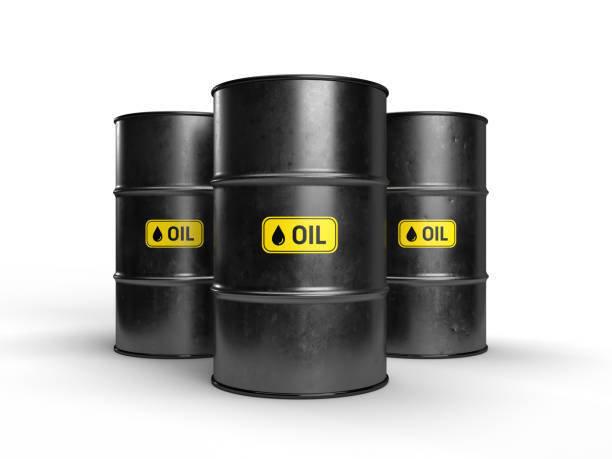
Global crude oil prices plunged to a three‑month low on Monday, June 15, 2026, after the United States, Israel and Iran announced an agreement to end their months‑long conflict and to reopen the strategic Strait of Hormuz. Brent crude, the international benchmark, dropped 5 percent to $82.90 a barrel, while US West Texas Intermediate (WTI) crude fell 4 percent to $80 a barrel. Earlier in the session, Brent had slumped as much as 5.3 percent to $82.73, its lowest level since early March. The retreat reversed a steep wartime rally that had pushed oil above $125 a barrel in April.
US President Donald Trump announced the breakthrough on social media late Sunday. “The Deal with the Islamic Republic of Iran is now complete,” Trump wrote, adding, “Ships of the World, start your engines. Let the oil flow!” Iran’s Deputy Foreign Minister Kazem Gharibabadi confirmed the agreement in a televised statement, saying it would bring an “immediate end” to the war. The conflict erupted on February 28 when the United States and Israel launched military operations against Iran. Tehran retaliated by effectively shutting the Strait of Hormuz, through which roughly a fifth of global crude oil supplies normally pass, triggering weeks of price spikes and supply fears. Under the new peace deal, both sides agreed to lift their blockades of the strait, clearing the way for oil tankers to resume transiting the vital waterway. The memorandum of understanding is scheduled to be formally signed in Switzerland on Friday, June 19, according to Pakistani mediators who helped broker the accord. Although Israel’s Prime Minister Benjamin Netanyahu has not yet publicly commented on the deal, the framework calls for an end to military operations on all fronts, including in Lebanon.
Investors embraced the prospect of renewed oil flows and a broader easing of geopolitical tensions. Global stock markets rallied sharply; South Korea’s Kospi surged 5 percent, Japan’s Nikkei 225 rose 3 percent, and US futures pointed to gains of 1.3 to 2 percent for Wall Street. European benchmarks also traded higher, led by France’s CAC 40, which gained nearly 1.5 percent. Analysts, however, caution that restoring normal trade through the Strait of Hormuz will not happen overnight. “Our forecast implicitly assumes that oil and refined product exports can resume quickly through the Strait, but this view carries considerable uncertainty tied to the damage to oil and refinery assets,” said Vivek Dhar, a mining and energy analyst at CBA. Mines must be cleared, damaged facilities repaired, and production wells restarted across the Middle East – a process that could take weeks or even months.
Despite the sharp drop, crude prices remain about 14 percent higher than their pre‑conflict level of $72.48 on February 27. On Sunday, the average price of gasoline in the United States stood at $4.07 per gallon, down from wartime peaks but still significantly above pre‑war levels. The International Energy Agency projects that it may take until late summer for oil prices to fall back into the mid‑$70 range, assuming the strait remains open and no further disruptions occur.
📩 Stone Reporters News | 🌍 stonereportersnews.com ✉️ info@stonereportersnews.com | 📘 Facebook: Stone Reporters News | 🐦 X (Twitter): @StoneReportNew | 📸 Instagram: @stonereportersnews
Add comment
Comments