

Reported by: Ijeoma G | Edited by: Oravbiere Osayomore Promise.
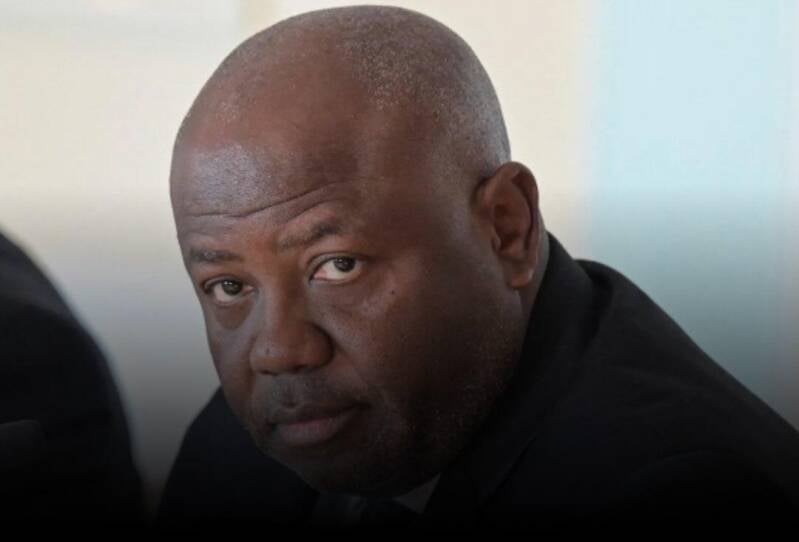
The government of Equatorial Guinea has resigned en masse after failing to meet key performance targets, with Vice‑President Teodoro Nguema Obiang Mangue announcing that the cabinet achieved “barely 10 per cent” of its assigned objectives in a rare public rebuke that has shaken the oil‑rich Central African nation. Prime Minister Manuel Osa Nsue Nsua and the entire cabinet tendered their resignations on Tuesday, June 16, 2026, following weeks of mounting dissatisfaction from the country’s leadership over the government’s management of the economy and public affairs.
The announcement was made by the Vice‑President, who is also the son of President Teodoro Obiang Nguema Mbasogo, the world’s longest‑serving head of state who has ruled Equatorial Guinea since 1979. In a statement posted on his official X account, Obiang Mangue declared that “the rule is simple: public responsibility has to come with results.” He noted that the state had placed significant human, material, and financial resources at the government’s disposal to address the needs of the population, and that the degree of execution achieved was “clearly insufficient in relation to the expectations and commitments undertaken.”
Although the Vice‑President did not specify the exact targets the government had failed to meet, a subsequent statement by the ruling Democratic Party of Equatorial Guinea (PDGE) revealed that President Obiang was deeply dissatisfied with the outgoing administration’s performance. The party cited the misuse of state resources for personal interests, stagnation in the implementation of development projects, and the government’s failure to diversify the economy away from its heavy dependence on petroleum. The president specifically criticised the cabinet for failing to advance policies in the agricultural sector, which he argued could reduce the country’s reliance on imported goods that could be produced locally.
The outgoing government was appointed in 2024, with Manuel Osa Nsue Nsua as Prime Minister. Nsua, a former governor of the National Bank of Equatorial Guinea for more than a decade, was tasked with driving economic reforms aimed at improving the living conditions of the country’s poorest citizens. However, two years into his administration, the economy has continued to struggle, weighed down by declining oil production, reduced investment, and external economic shocks. Oil and gas remain the backbone of Equatorial Guinea’s economy, accounting for the bulk of government revenue and exports, leaving the country vulnerable to fluctuations in global energy markets. Despite its oil wealth, much of the country’s 1.8 million population has not benefited, as poverty remains rampant, and in recent years the economy has been on a decline amid reduced production and demand for oil.
In its statement, the PDGE sought to frame the collective resignation as a routine institutional reorganisation rather than a crisis, noting that the move was part of “periodic processes aimed at adapting the government structure to the state’s new priorities.” However, the decision to publicly attribute the resignation to the cabinet’s failure to meet performance targets marks a departure from the usual discreet reshuffles that have characterised the Obiang administration.
The resignation has drawn attention to the broader governance and economic challenges facing Equatorial Guinea, a country that holds significant hydrocarbon resources yet struggles with widespread poverty and corruption. The leadership vacuum in Malabo resonates across the Central African region, where Equatorial Guinea remains a key player in both the Economic Community of Central African States (ECCAS) and the Central African Economic and Monetary Community (CEMAC). Analysts note that successful agricultural reform could serve as a vital blueprint for regional food security, reducing the heavy reliance on costly food imports.
A new government is expected to be appointed in the coming days as authorities seek to revive the economy and accelerate reforms. President Obiang, who has maintained a firm grip on power for over four decades while appointing family members to key government roles, has signalled that the incoming administration will be expected to deliver tangible results and address the structural challenges that have long hindered the country’s development. For now, the resignation stands as a stark acknowledgment that even in one of Africa’s most tightly controlled political systems, poor performance carries consequences.
📩 Stone Reporters News | 🌍 stonereportersnews.com ✉️ info@stonereportersnews.com | 📘 Facebook: Stone Reporters News | 🐦 X (Twitter): @StoneReportNew | 📸 Instagram: @stonereportersnews
Add comment
Comments