

Reported by: Ijeoma G | Edited by: Oravbiere Osayomore Promise.
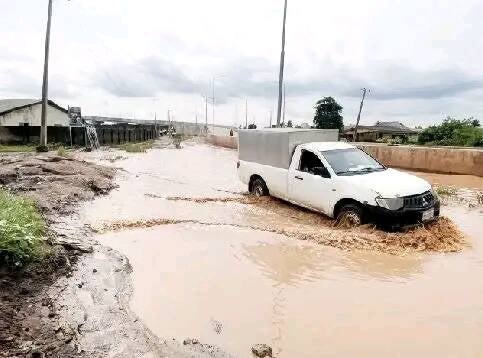
Residents of Agbado, Abule Ijoko, Itoki, Ope‑Ilu and other adjoining communities in the Ifo Local Government Area of Ogun State say they have been cut off from civilisation by a 13‑kilometre stretch of road that has collapsed, leaving them to navigate craters, waterlogged gullies, and a rising tide of nocturnal attacks by hoodlums who exploit the darkness and the broken tarmac to rob, maim and seize motorcycles. The situation, which residents say has persisted for over 15 years with little or no attention from the government, has transformed a 10‑minute drive into a tortuous detour through inner streets that are themselves falling apart, and has pushed transport costs to breaking point.
During a visit to the communities on Tuesday, June 16, 2026, PUNCH Metro correspondents observed that the stretch of road connecting the communities from Agbado Oja to Abule Ijoko has collapsed. While some parts were barely motorable, others remained completely impassable and overgrown with weeds. Motorists and pedestrians were seen struggling to navigate various craters and waterlogged gullies along the route, with some vehicles and tricycles breaking down at different points due to the condition of the road. A resident, Waheed Sanyaolu, said the situation has brought different dimensions of suffering to the communities. “We are suffering, and we feel like we have been totally cut off from civilisation. We have made repeated calls to the government to come to our rescue, but we have not received any response. It was only during Ibikunle Amosun’s administration that we got a little attention, but it did not translate into anything meaningful,” he said.
The rainy season has compounded the community’s suffering, with frequent flooding occasioned by the rains. A female resident who preferred anonymity appealed to the government to clear the drainage channel by the footbridge at Bashy Bus Stop in the community. According to her, the blockage is also contributing to flooding in the already flood‑prone area. “The drainage by the footbridge is blocked, and it is causing flooding. We need immediate intervention. If you had come here yesterday, you would not have been able to pass through because the area was completely flooded. Students returning from school were also wading through the water. It is extremely dangerous,” she said. Moving from Agbado Crossing to Abule Ijoko, which is just about a 10‑minute drive, is no longer motorable unless you use a motorcycle. Even the motorcycles have to pass through inner streets and areas such as Gasline, Oluasho and Oyetedo before linking Sharp Bend and proceeding to Abule Ijoko, according to residents.
The dilapidated state of the roads has also posed security threats to residents and transporters in the communities. Residents, especially those returning from work, as well as transport workers, are often attacked by hoodlums at night while trying to navigate the roads. A resident who identified himself simply as Olatunji disclosed that the community has recorded a series of attacks by hoodlums because of the bad roads. “Those affected the most are people returning from work and motorcycle riders. Ordinarily, by 8pm, you can barely find a motorcycle due to the condition of the road, so the few available are often exposed to attacks. While passengers are dispossessed of their belongings, the motorcycles are often seized from the riders,” he said. While showing our correspondent a picture of one of the victims of the attacks on his phone, Olatunji disclosed that the hoodlums hit him on the head with a hammer.
Transporters who spoke with PUNCH Metro said they spend huge amounts repairing their vehicles and motorcycles, and that the situation has also increased transportation costs within the community. One rider told Newswatch Metro, “Today alone, I have spent N18,000 repairing my motorcycle.” The worsening condition of the roads has been attributed by residents to the construction of the Lateef Jakande train station situated at Agbado Crossing. According to the residents, although the roads were already dilapidated, they were still manageable until the construction began around 2017. “The construction of the train station totally destroyed the roads. This was due to the presence of heavy‑duty trucks plying the roads from the Sango‑Ota area while supplying granite to the construction site. We were still managing the roads before they came, but the moment they started operations, everything worsened. And when they finished, they did not bother to fix the roads; they simply left them that way,” a resident said.
The Ogun State Commissioner for Works, Ade Akinsanya, could not be reached for comments as calls made to her telephone line were not responded to. A text message sent to her had yet to be replied to as of the time this report was filed. The residents of Agbado, Abule Ijoko, Itoki, Ope‑Ilu and other adjoining communities continue to await government intervention, even as they face the daily reality of collapsed roads, rising transport costs, and the constant threat of nocturnal attacks.
📩 Stone Reporters News | 🌍 stonereportersnews.com ✉️ info@stonereportersnews.com | 📘 Facebook: Stone Reporters News | 🐦 X (Twitter): @StoneReportNew | 📸 Instagram: @stonereportersnews
Add comment
Comments