

Reported by: Ijeoma G | Edited by: Oravbiere Osayomore Promise.
The Economic and Financial Crimes Commission and the 81 Division of the Nigerian Army have reaffirmed their commitment to deepening strategic collaboration, intelligence sharing and operational synergy in the fight against economic and financial crimes, as well as other threats to national security, in a high-level meeting that underscored the growing recognition that corruption and terrorism financing are increasingly intertwined with broader security challenges.
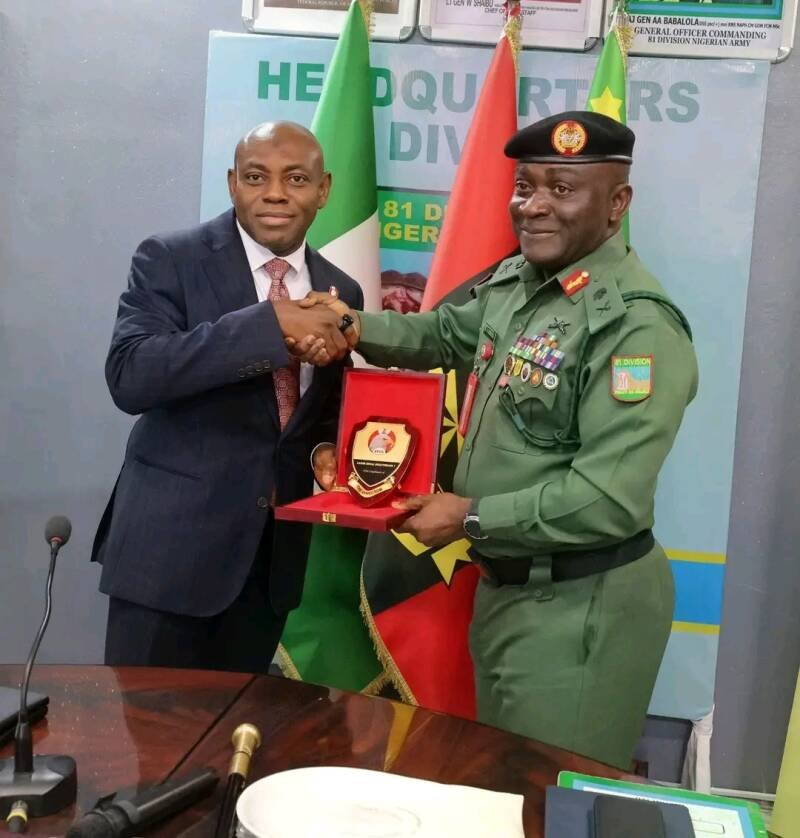
The commitment was made on Thursday, June 18, 2026, when the Acting Zonal Director of the Lagos Zonal Directorate 1 of the EFCC, Assistant Commander of the EFCC (ACE I) Adebayo Adeniyi, led a delegation on a courtesy visit to the General Officer Commanding (GOC) of the 81 Division, Major General Adebayo Abdulrahman Babalola, at the Division’s Headquarters in Lagos.
Speaking during the visit, Adeniyi reiterated the importance of strategic collaboration and synergy among security and law enforcement agencies, noting that such cooperation must be institutionalised and sustained as a culture, given the evolving nature of economic crimes and security threats. He added that the EFCC and the Nigerian Army have recorded notable successes through joint operations and intelligence-driven engagements, demonstrating the value of a sustained partnership. According to him, closer cooperation remains essential to strengthening the capacity of both institutions to address economic and financial crimes, terrorist financing, and other forms of economic sabotage.
“There are so many things we can do together. In the area of intelligence gathering, we have done a lot together, and we still have more to do. We are here to strengthen our synergy and identify areas where we can continue to support one another,” Adeniyi said. He stressed that both institutions share a common responsibility to protect Nigeria’s security and economic stability, adding that information sharing and inter-agency cooperation should remain standard practice in achieving national objectives. “We must collaborate to make the Federal Republic of Nigeria better. We need you to share information with us, and we are ready to work together through effective inter-agency cooperation and collaboration,” he added.
He further disclosed that the Commission operates state‑of‑the‑art forensic laboratories that could provide additional support for the military’s investigative and intelligence activities whenever required.
In his response, Major General Babalola commended the EFCC for its professionalism and sustained efforts in combating corruption, economic crimes, and financial misconduct. He described collaboration among security institutions as indispensable to safeguarding the nation. “You are high‑calibre professionals with a wealth of experience, and we are honoured to receive you. Anytime you need our support, we are willing to help,” he said.
The GOC reaffirmed the Nigerian Army’s commitment to maintaining strong ties with the EFCC, emphasising that intelligence sharing, mutual support, and strategic cooperation should remain an enduring culture among security and law enforcement agencies in the collective pursuit of national security and economic prosperity.
The meeting comes at a time when Nigeria is grappling with multiple security threats, including terrorism, banditry, and kidnapping, which are often sustained by illicit financial flows. The EFCC has increasingly turned its attention to the financing of terrorism and illegal mining, which have been identified as major drivers of insecurity in the North‑West and other parts of the country. In recent months, the anti‑graft agency has strengthened its ties with other security agencies, including the Department of State Services, to disrupt the financial lifelines of criminal networks.
The 81 Division of the Nigerian Army, headquartered in Lagos, covers the South‑West region and plays a critical role in maintaining internal security, protecting economic assets, and supporting civil authorities. The division has previously collaborated with the EFCC on joint operations targeting economic sabotage, including oil theft and illegal mining.
The renewed commitment to collaboration signals a recognition that economic and financial crimes are not merely administrative violations but are deeply intertwined with the broader security challenges confronting the nation. The EFCC and the Nigerian Army have agreed to deepen intelligence sharing, enhance joint operations, and explore new areas of cooperation, including the use of forensic evidence in military investigations. As Adeniyi put it, the goal is to make Nigeria better – and that, he said, requires institutions to work together, not in isolation.
📩 Stone Reporters News | 🌍 stonereportersnews.com ✉️ info@stonereportersnews.com | 📘 Facebook: Stone Reporters News | 🐦 X (Twitter): @StoneReportNew | 📸 Instagram: @stonereportersnews
Add comment
Comments