

Reported by: Ijeoma G | Edited by: Oravbiere Osayomore Promise.
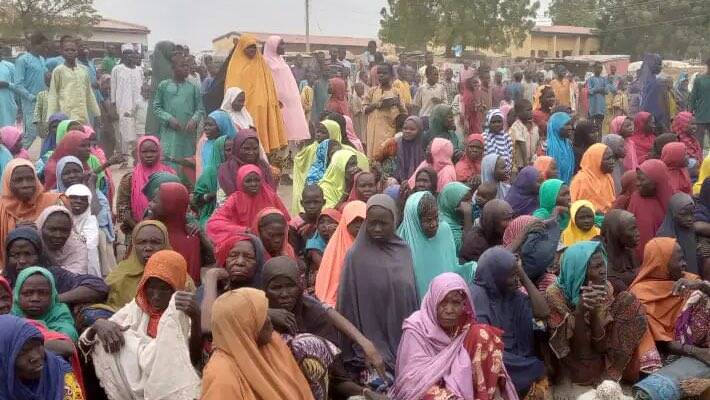
The United Nations and the European Union have joined forces with federal and state governments to call for a fundamental shift from emergency humanitarian relief to long-term, sustainable development solutions for the more than 3.5 million internally displaced persons (IDPs) across Northern Nigeria, warning that prolonged dependence on aid is no longer viable.
The commitment was made during the inaugural Project Steering Committee meeting for the EU Support for Internally Displaced Persons in Nigeria (SIDPIN) and the EU Support for Protection, Assistance, and Durable Solutions (SPADS) programmes, held at the UN House in Abuja on Thursday, June 18, 2026.
The United Nations Resident and Humanitarian Coordinator in Nigeria, Mohamed Fall, said the scale and duration of displacement in Northern Nigeria demand a new approach that goes beyond humanitarian relief. “With approximately 3.5 million internally displaced persons in the region covered by IOM Nigeria, displacement is no longer solely a humanitarian issue,” Fall said. “It is a development issue, a peace issue, and a human rights issue”.
Fall stressed that the international community must move from managing crises to solving them. “As the UN Secretary-General has reminded us constantly, we must move from managing crises to solving them, from short-term relief to long-term solutions rooted in dignity and in human rights,” he said. Highlighting achievements under the UN Common Programme in 2025, Fall disclosed that nearly 200,000 children received education and skills training, about 150,000 people were supported with sustainable livelihood opportunities, and 40,000 individuals regained access to critical legal documentation.
The European Union has also signalled a strategic shift, moving away from short-term livelihood assistance toward private sector-led development. The Head of Cooperation for the EU Delegation to Nigeria and ECOWAS, Massimo De Luca, stated that the bloc plans to phase out short-term livelihood assistance in conflict-affected regions, shifting its financial focus toward private sector-led development.
“I personally don’t think that livelihood assistance is part of our mission,” De Luca said. “Let’s review all our livelihood interventions and development projects to see how they can contribute to the purposes of durable solutions. We need to move out from humanitarian-style interventions”.
Representing the Minister of the Federal Ministry of Humanitarian Affairs and Poverty Reduction, the Permanent Secretary of the ministry, Mr. Olubunmi Olusanya, described Nigeria’s displacement crisis as a product of multiple pressures, including insecurity, climate-related shocks, and socio-economic vulnerabilities. He stressed that while humanitarian interventions remain indispensable, durable solutions require a more integrated approach that bridges humanitarian action, development efforts, and peacebuilding initiatives.
In a related development, the UNHCR and Tropical General Investments (TGI) Group launched a three-year partnership to support over 5,000 farmers and create more than 10,000 jobs for refugees, IDPs, and host communities in Benue and Cross River States. The programme, implemented through TGI's agribusiness arm, WACOT Limited, targets an estimated 25,000 to 35,000 beneficiaries.
“This partnership is about moving from aid to opportunity,” said Arjun Jain, UNHCR Representative in Nigeria. “TGI and UNHCR are connecting displaced people to jobs, skills, and markets so they can rebuild their lives with dignity and contribute to the economy”.
The commitments come amid a worsening displacement crisis in Nigeria. The UN's 2026 Humanitarian Needs and Response Plan seeks US$516 million, prioritising 2.5 million people in the most acute need of life-saving support — less than half of those who require humanitarian assistance. In the Borno, Adamawa, and Yobe states alone, 7.8 million people require assistance, including 2.7 million displaced persons and returnees.
Fall emphasised that durable solutions are not achieved by one sector alone. “They are built when humanitarian action meets development planning, when government leadership aligns with community voices, and when our collective investments are sustained over time,” he said. “Durable solutions are not only about ending displacement. They are about beginning the future”.
📩 Stone Reporters News | 🌍 stonereportersnews.com ✉️ info@stonereportersnews.com | 📘 Facebook: Stone Reporters News | 🐦 X (Twitter): @StoneReportNew | 📸 Instagram: @stonereportersnews
Add comment
Comments