

Reported by: Oahimire Omone Precious | Edited by: Oravbiere Osayomore Promise.
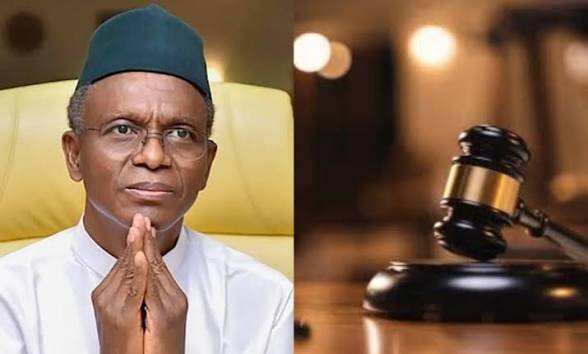
Former Kaduna State Governor Nasir El-Rufai has moved a step closer to testing the strength of the case against him after the Department of State Services formally closed its prosecution in the alleged wiretapping trial before the Federal High Court in Abuja, setting the stage for a no-case submission that could determine whether the trial proceeds further or comes to an abrupt end.
The development came during proceedings on Tuesday, June 23, 2026, when counsel to the DSS, Oluwole Aladedoye (SAN), informed the court that the agency had concluded the presentation of its evidence and would not be calling any additional witnesses. The announcement effectively marked the end of the prosecution’s case, shifting attention to the defence and setting the stage for what could become a crucial phase of the trial.
Seizing on the development, El-Rufai’s lead counsel, Paul Erokoro (SAN), told the court that the defence would be filing a no-case submission, a legal procedure through which an accused person argues that the prosecution has failed to establish sufficient evidence requiring him to enter a defence. The application, if successful, could result in the dismissal of the charges without the former governor being required to open his defence. The defence subsequently requested two weeks to prepare and file the no-case submission, while the prosecution sought a similar period to study and respond to the application. The court granted the requests, paving the way for legal arguments that could determine the future of the trial.
The DSS is prosecuting El-Rufai on an amended five‑count charge bordering on alleged unlawful interception of communications and breach of national security. According to the charges, the former Kaduna State governor had claimed on Arise Television during a live interview in February 2026 that he had intercepted a telephone conversation involving the National Security Adviser, Mallam Nuhu Ribadu, which allegedly revealed plans by security operatives to arrest him. The offence, the agency said, was contrary to Section 12(1) of the Cybercrimes (Prohibition, Prevention, etc.) Amendment Act, 2024.
During the trial, the second prosecution witness, Deji Adeyanju, told the court that El-Rufai admitted during the television interview that “we listened to the conversations of the NSA”. Adeyanju confirmed he was present when El-Rufai made the statements on air and that when further questioned during the interview, the former governor stated that someone carried out the phone tapping and passed the information to him. Under cross-examination by defence counsel, the witness stated that while he did not hear El-Rufai specifically say he hacked the phone lines of the NSA, he heard him say, “we listened to the conversations of the NSA”.
Beyond the issue of the no‑case submission, El‑Rufai’s legal team also sought a review of the bail conditions earlier imposed by the court. Counsel argued that some of the requirements were excessively demanding and difficult to satisfy. Specifically, the defence questioned the condition requiring sureties who are Level 17 civil servants with landed properties in Abuja’s highbrow Maitama or Asokoro districts, as well as the requirement for verification and attestation letters from the Kaduna State Traditional Council. They argued that the conditions placed an unnecessary burden on the former governor and could complicate efforts to perfect his bail.
However, the prosecution strongly opposed the application, insisting that the conditions were neither impossible nor unreasonable. Counsel for the DSS maintained that qualified public officers capable of meeting the requirements exist and argued that there was no basis for altering the terms previously approved by the court. In her ruling, Justice Joyce Abdulmalik rejected the application for a variation of the bail conditions. The judge held that the court was not convinced by the arguments advanced by the defence and noted that civil servants who meet the stipulated requirements could indeed be found. Consequently, the existing bail conditions remain in force.
With the prosecution’s case now officially closed, attention has shifted to the defence’s forthcoming no‑case submission, which is expected to challenge the sufficiency of the evidence presented by the DSS. Legal observers say the outcome of that application could prove decisive in determining the future of the trial. The court subsequently adjourned the matter until September 22, 2026, for the filing and adoption of the no-case submission as proceedings continue in the closely watched case involving the former Kaduna State governor.
📩 Stone Reporters News | 🌍 stonereportersnews.com ✉️ info@stonereportersnews.com | 📘 Facebook: Stone Reporters News | 🐦 X (Twitter): @StoneReportNew | 📸 Instagram: @stonereportersnews
Add comment
Comments