

Reported by: Oahimire Omone Precious | Edited by: Oravbiere Osayomore Promise.
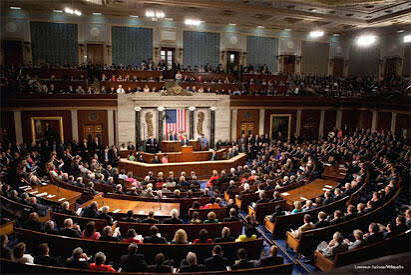
The United States Senate has passed a resolution directing President Donald Trump to end military hostilities against Iran, delivering a rare and powerful bipartisan rebuke to a Republican president who has faced little resistance from his own party on matters of war. The vote, which passed 50 to 48 on Tuesday, marks the first time since the enactment of the War Powers Resolution of 1973 that both chambers of Congress have approved a concurrent resolution instructing a president to end a military conflict. While the measure is largely symbolic and does not carry the force of law, its passage places both the Senate and the House of Representatives firmly on record against a war that has rattled global energy markets, strained the economy, and deepened divisions within the Republican Party ahead of the midterm elections.
The resolution, which had previously passed the House of Representatives earlier this month, directs President Trump to remove United States Armed Forces from hostilities against Iran unless Congress formally declares war or authorises the use of military force. Because it is a concurrent resolution, it does not require the president's signature and carries disputed legal force. However, its passage represents a significant political statement, adding pressure on the White House as it negotiates a lasting settlement with Tehran. The war began with US and Israeli strikes on Iran in late February and has since escalated into a broader regional conflict involving Lebanon and Gulf states, disrupting trade routes and driving up energy prices.
Four Republican senators broke ranks with their party to vote in favour of the measure: Susan Collins of Maine, Lisa Murkowski of Alaska, Bill Cassidy of Louisiana, and Rand Paul of Kentucky. Their support, combined with the absence of two Republicans—including Senate Minority Leader Mitch McConnell of Kentucky, who was recently hospitalised—allowed the resolution to prevail. Senator John Fetterman of Pennsylvania was the lone Democrat to vote against it. The vote marked the tenth time since the beginning of the year that the Senate has passed a resolution seeking to limit Trump's war powers over Iran.
Senate Democratic Leader Chuck Schumer forced the vote to put Republicans on the record after several Trump allies voiced private alarm over both the war and the president's deal to end it. "Republicans can complain about Trump's war, his secrecy, and his disastrous deal with Iran all they want behind closed doors, but the only way to ensure this war ends once and for all is for Republicans to act," Schumer said in a floor speech ahead of the vote. Democrats have argued that Trump violated the Constitution by launching military operations against Iran without congressional approval. Under the 1973 War Powers Act, presidents must obtain authorisation from Congress within 60 days of introducing US forces into hostilities, though administrations of both parties have often contested how the law applies.
The White House has dismissed the resolution as unconstitutional and has argued that the conflict had already ended under an April ceasefire ordered by Trump. The administration is currently pursuing a 60-day diplomatic push to transform a preliminary memorandum of understanding with Iran into a final agreement covering Tehran's nuclear programme, sanctions relief, and the strategic Strait of Hormuz. However, major disputes remain. Iran said Tuesday that the UN nuclear watchdog would not be allowed to inspect nuclear sites bombed by the United States and Israel last year, rejecting Vice President JD Vance's claim that Tehran had agreed to allow inspectors back in. Trump later insisted on social media that Iran had accepted "the highest level" of nuclear inspections.
The vote also reflects growing unease in Congress over the cost of the war, which has placed new strain on American voters already worried about inflation ahead of November's midterm elections. House Speaker Mike Johnson, a Trump ally, had warned before the House vote that limiting the commander-in-chief during negotiations was a "very dangerous prospect". Following the Senate vote, Trump called the four Republican lawmakers "GRANDSTANDERS" and described their actions as "unpatriotic" in a post on Truth Social.
While the resolution is not binding, its passage is historically significant and could set the stage for further legal and political challenges to the president's war authority. The last war powers vote in the Senate on a joint resolution—which would require the president's signature—remains pending, and Democrats have indicated they will continue to press for additional votes. The Trump administration has warned that restricting the president's authority could weaken Washington's leverage as negotiators seek to lock in a final deal with Iran. But for now, both chambers of Congress have spoken: the war in Iran must end, or the president must seek congressional approval to continue it.
📩 Stone Reporters News | 🌍 stonereportersnews.com
✉️ info@stonereportersnews.com | 📘 Facebook: Stone Reporters News | 🐦 X (Twitter): @StoneReportNew | 📸 Instagram: @stonereportersnews
Add comment
Comments