

Reported by: Oahimire Omone Precious | Edited by: Oravbiere Osayomore Promise.
The Senate on Wednesday reversed its earlier decision after senators initially rejected a motion to allow governors and other senior government officials into the chamber during consideration of the state police bill, creating a dramatic scene that briefly delayed proceedings and tested the upper legislative chamber's commitment to transparency. The motion was first put to a voice vote but was rejected by the majority of lawmakers, leaving invited governors and other senior officials waiting at the entrance to the chamber. Under parliamentary practice, only senators are ordinarily allowed on the floor of the chamber, while visitors and non-members observe proceedings from the gallery.
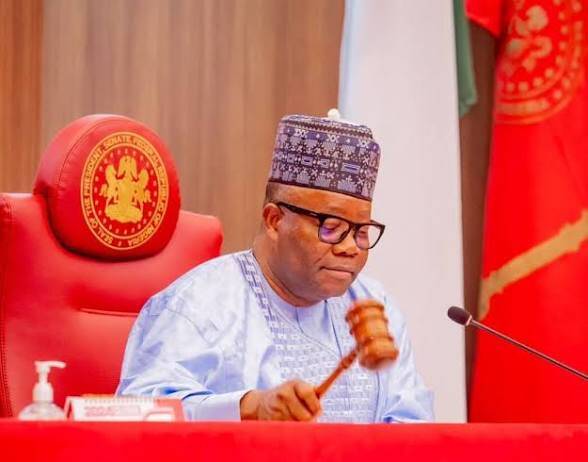
In a bid to resolve the situation, President of the Senate Godswill Akpabio appealed to his colleagues to revisit the matter, stressing the importance of allowing key stakeholders to witness deliberations on the proposed state police framework. Akpabio reminded senators that whatever decision the Senate takes on the constitutional amendment would still require the approval of State Houses of Assembly, making it necessary for governors and other stakeholders to follow the proceedings closely. He also noted that the bill under consideration is an Executive Bill and that many of those invited into the chamber were members of the Executive arm of government. Following his appeal, the Senate Leader moved the motion again, seeking the suspension of Order 12 of the Senate Rules on Floor Privileges to admit the visitors as strangers into the chamber.
Those eventually admitted included the Chief of Staff to the President, Femi Gbajabiamila; the governors of Kaduna, Ogun and Ondo states; state attorneys-general; the Senior Special Assistant to the President on Planning and Research; and the Director-General of the Nigeria Governors' Forum, among other stakeholders. Supporting the motion, Deputy Senate President Barau Jibrin commended Akpabio for his leadership and foresight, saying the move would promote inclusiveness and unity in the consideration of the state police proposal. After the motion was reconsidered, the Senate approved the request, and the governors and other invited officials were subsequently allowed into the chamber to witness the proceedings.
The development comes as the Senate concluded consideration of the highly anticipated State Police Bill, which seeks to amend the 1999 Constitution to allow for the establishment of state police services across the federation. The bill, transmitted to the National Assembly by President Bola Tinubu, has been one of the most consequential legislative proposals of the 10th Assembly, with proponents arguing that it is a critical response to rising insecurity, banditry, kidnapping, and insurgency across the country. The bill seeks to move policing from the Exclusive Legislative List to the Concurrent Legislative List, creating a dual policing structure consisting of federal and state police services, with each state empowered to establish and operate its own police force subject to oversight and coordination at the national level.
The debate on the bill has generated intense public interest, with various stakeholders, including governors, civil society organisations, security experts, and traditional rulers, weighing in on the proposed constitutional amendment. While some have voiced strong support for the bill, citing the failure of the federal police to effectively tackle security challenges across the country, others have expressed concerns about the potential for abuse, politicisation, and the financial burden of maintaining state police services. The decision to admit governors and other executive officials into the chamber during the debate reflects a recognition of the critical role that state governments will play in the implementation of the proposed reform, should it be passed by the National Assembly and ratified by the required number of State Houses of Assembly.
The Senate's earlier rejection of the motion and subsequent reversal underscores the tension between parliamentary tradition and the need for inclusive deliberation on matters of national importance. The decision to allow stakeholders into the chamber, despite initial opposition, signals a commitment to transparency and collaborative governance, even as the Senate navigates the complex procedural requirements of constitutional amendment. The State Police Bill is now expected to move to the House of Representatives for consideration, and if passed by both chambers, it will require ratification by at least 24 of the 36 State Houses of Assembly before it can become law. For now, the debate continues, and the Senate's reversal has set a precedent for future deliberations on matters that require the input of key stakeholders beyond the legislative chamber.
📩 Stone Reporters News | 🌍 stonereportersnews.com
✉️ info@stonereportersnews.com | 📘 Facebook: Stone Reporters News | 🐦 X (Twitter): @StoneReportNew | 📸 Instagram: @stonereportersnews
Add comment
Comments