

Published by Osasere Edomwonyi Ikpoba
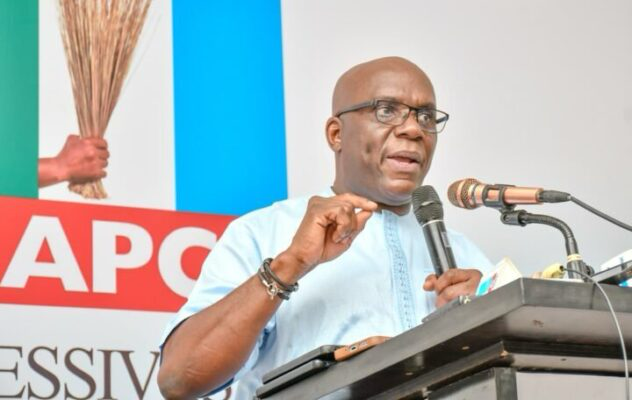
The All Progressives Congress (APC) has mounted a robust defence of President Bola Tinubu's economic reforms, with the party's National Publicity Secretary, Felix Morka, declaring that Nigeria has successfully transitioned from a period of severe fiscal distress to a trajectory of stronger economic growth and significantly bolstered foreign reserves. Morka made the assertion during an interview on TVC News' Beyond the Headlines on Wednesday, September 2, 2026, arguing that the administration's tough policy decisions, particularly the removal of the fuel subsidy, have laid a foundation for sustainable macroeconomic stability.
Morka painted a stark picture of the inheritance the Tinubu administration received in May 2023, describing an economy that was effectively "broke" and teetering on the brink of collapse. He claimed that Nigeria was previously spending approximately 93 per cent of its revenues on subsidy payments and debt servicing, leaving virtually no fiscal space to run government operations or invest in critical infrastructure. According to the APC spokesman, the country was borrowing just to meet basic obligations, including paying wage bills and pensions, a situation he argued was patently unsustainable. "This President did what no other president before him did, which is that he summoned the courage and audacity to announce the removal of the fuel subsidy. Today, our country is better for it," Morka declared.
Citing a raft of macroeconomic indicators, Morka said Nigeria's economy was now growing at more than 4.5 per cent, while foreign reserves had risen dramatically from about $3 billion to $50 billion. He also claimed that oil production had increased from approximately 700,000 barrels per day to about 1.7 million barrels per day, and that Nigeria had recorded several consecutive quarters of stronger exports. These improvements, he argued, demonstrated that the reforms were already producing tangible results at the macroeconomic level, even though Nigerians were yet to fully experience their benefits at the household level. "The removal of subsidy is already bearing fruit that will, by gestation, by time, yield microeconomic drastic improvements that our people will ultimately see and benefit from," Morka said.
The APC spokesman rejected opposition arguments that Nigerians were yet to see meaningful benefits from the removal of the fuel subsidy, pointing to increased federal allocations to states, regular payment of salaries and pensions, cash transfers, and the expansion of Compressed Natural Gas (CNG) infrastructure as evidence of the reforms' impact. Using Delta State as an example, Morka claimed that the state's monthly federal allocation had risen dramatically from about N12–16 billion before the Tinubu administration to about N101 billion in July. He argued that these additional resources had strengthened the ability of states to meet their financial obligations. "Are you telling me that those citizens are oblivious of the positive impact of this reform that is giving them their due at the end of every month without anyone owing them nine months salary?" he asked.
Morka also addressed the continuing cost-of-living pressures facing Nigerian households, acknowledging the pain but urging patience. He argued that economic reforms should not be judged as if they were one-off events, noting that countries such as the United States, Germany, France, Canada, and the United Kingdom were also grappling with inflation and cost-of-living pressures. He further argued that international developments, including fluctuations in global energy prices and geopolitical conflicts, continued to affect Nigeria's economy, and that petrol prices were influenced by international market conditions and could not simply be dictated by the Nigerian government.
In a separate interview with ARISE NEWS on Tuesday, Morka had warned that without the subsidy removal, Nigeria would have been "utterly bankrupt". He dismissed suggestions that the country is already bankrupt, attributing the rise in naira-denominated debt figures largely to the devaluation of the currency and insisting that the country is undergoing a necessary market correction rather than an economic collapse. "We're not bankrupt. We're not even borrowing to par with what the ceiling or the threshold level is. We're not near the threshold," he said. He also criticised presidential candidates who have opposed the policy or promised to restore fuel subsidies, describing such positions as disingenuous and self-serving, noting that several leading political figures, including former Vice President Atiku Abubakar, had previously acknowledged that the subsidy regime was unsustainable and plagued by corruption.
Morka further argued that the government's cash transfers and other social interventions were not an admission that subsidy removal had created a new social problem, but rather measures designed to cushion vulnerable Nigerians while the economy adjusted to the reforms. He likened the process to renovating a house while keeping a room available for people to shelter in during the renovation. He maintained that the government's CNG programme was another part of the strategy to reduce the cost of transportation and ease the pressure created by higher petrol prices, and that economic reforms required time before their full benefits could be felt at household level.
The APC spokesman also took a swipe at the opposition's proposed coalition against Tinubu in the 2027 elections, dismissing the Abuja gathering of opposition parties as "more of a publicity stunt than actual political relevance". He argued that the absence of the principal figures at the summit alone was evidence the push had "hit the rock before the journey even began".
While Morka's assertions paint a picture of an economy on the mend, critics have questioned the disconnect between the macroeconomic indicators he cited and the lived realities of millions of Nigerians grappling with soaring food prices, high transportation costs, and a relentless cost-of-living crisis. The opposition has argued that the administration's reforms have increased economic hardship for the majority of citizens, even as official data suggests improvements in GDP growth and foreign reserves. The APC spokesman, however, remains adamant that the reforms were necessary and that reversing them would risk returning Nigeria to the period of fiscal weakness that preceded the Tinubu administration.
As Nigeria approaches the 2027 elections, the battle over the narrative of the economy is set to intensify. For the APC, the message is clear: Nigeria was broke, and Tinubu fixed it. For the opposition, the message is equally clear: the people are suffering, and the numbers do not tell the full story. The truth, as always, lies somewhere in between. What is undeniable is that the debate over Nigeria's economic trajectory will be a defining issue in the coming election cycle, and both sides are already sharpening their arguments for the fight ahead.
📩 Stone Reporters News | 🌍 stonereportersnews.com
✉️ info@stonereportersnews.com | 📘 Facebook: Stone Reporters News | 🐦 X (Twitter): @StoneReportNew | 📸 Instagram: @stonereportersnews
Add comment
Comments