

Published by Osasere Edomwonyi Ikpoba
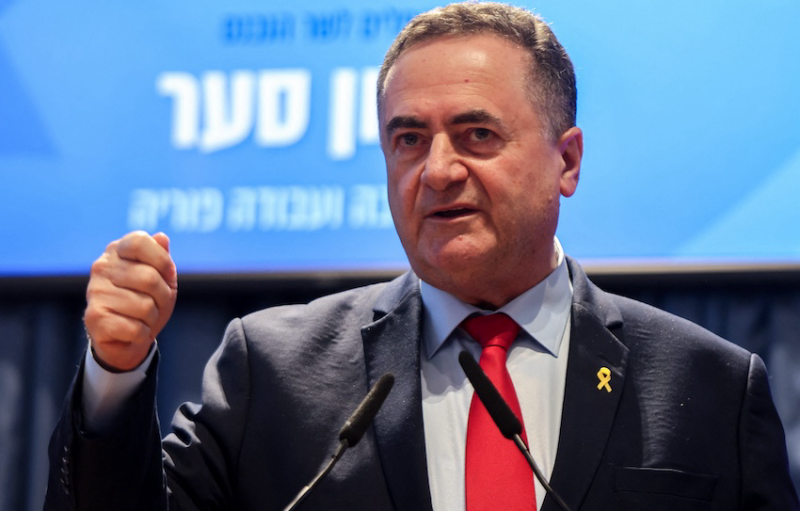
Israel has issued a chilling warning to Tehran, declaring that its military is fully prepared to respond with overwhelming power if Iran dares to launch an attack, as the conflict between Washington and Iran escalates into its most violent phase in months. Defense Minister Israel Katz made the emphatic declaration on Wednesday, stating that while Iran has so far avoided striking Israeli territory, the Jewish state is bracing for a potential assault during the upcoming Jewish high holiday season.
"For now, they are striking throughout the region except us," Katz told a conference hosted by Israeli news site Ynet and newspaper Yedioth Ahronoth. "But there is a possibility that they will attack us. We are prepared for that defensively." He left no room for ambiguity about the consequences of such an attack. "If Iran attacks, we will respond with great force, independently of anyone else. Our planes are ready to take off".
The warning comes as the Middle East teeters on the brink of a wider regional war. Iran's Revolutionary Guards launched a wave of retaliatory overnight attacks on U.S. military sites across the region following extensive American bombardment on Tuesday night. U.S. bases in Jordan, the United Arab Emirates, Kuwait, Bahrain, and Iraq's autonomous Kurdistan region came under fire in what observers described as the heaviest exchange of fire between Washington and Tehran in six months.
The United States and Israel jointly launched the war against Iran on February 28, 2026, with a coordinated strike that killed Iran's supreme leader, Ayatollah Ali Khamenei. The opening salvo, codenamed Operation Roaring Lion, was designed to destabilize the Iranian regime and destroy its ballistic missile and nuclear programs. A ceasefire brokered by President Donald Trump in April brought a temporary halt to the fighting, and an interim agreement between the U.S. and Iran was signed in June. However, the deal collapsed over disputes concerning control of the strategic Strait of Hormuz, where Iran had imposed a blockade early in the conflict. Since then, the U.S. and Iran have continued to exchange fire sporadically.
Katz's remarks underscore Israel's precarious position. While Jerusalem launched the war alongside Washington, it has largely remained on the military sidelines since the April ceasefire, even after the truce fell apart. Katz made it clear, however, that this restraint would evaporate instantly if Iran struck Israeli territory. "If Iran did attack, Israel would 'respond with great force, independently of anyone else'," he reiterated.
Katz also highlighted the vulnerability of the upcoming Jewish high holiday season, which begins in mid-September. He suggested that Iran has a history of exploiting such periods for attacks. "They like to attack on Jewish holidays because they hate Jews. Look at the many things that have happened in the past," Katz said. The holidays, which include the solemn Day of Atonement, Yom Kippur, are traditionally a time when public gatherings are large and security forces are on high alert. This year, officials view the period as an "especially combustible window" due to the confluence of rising tensions, the approaching third anniversary of the war, and the looming Israeli election campaign.
The Israeli military has been quietly preparing for this moment. Military intelligence and the Israeli Air Force have completed both defensive and offensive preparations, updating target banks for potential strikes in Iran and revising operational methods based on lessons learned from the initial February offensive. The Israel Defense Forces are preparing contingencies for escalation on one front or several simultaneously, maintaining readiness for the possibility that the renewed U.S.-Iran confrontation could draw Israel directly back into the conflict. Katz added that Israel was coordinating its defensive and offensive preparations with the United States. The aim, according to security assessments, is to enter any future confrontation with improved capabilities and deliver a rapid, heavy blow that could push Iran toward a more favorable agreement.
Israeli Foreign Minister Gideon Saar echoed Katz's stance while striking a slightly more cautious tone. In an interview with France 24, Saar said Israel would "surely respond heavily" if attacked but expressed doubt that Tehran would make such a mistake. "We don't have the plans to join the war right now," Saar clarified. This distinction highlights Israel's strategic dilemma: it wants to avoid being dragged into a wider war, but it is prepared to escalate dramatically if directly provoked.
The Saudi Arabian government has also been drawn into the fray, accusing Iran of a deadly attack on one of its state-owned oil tankers traversing the Strait of Hormuz. This incident, coupled with Iran's strikes on U.S. allies in the Gulf, suggests that Tehran is broadening its targets, raising the stakes for all regional actors. Iranian state media reported that the Revolutionary Guards' attacks on U.S. bases were a direct response to the American bombardment on Tuesday night. The U.S. military had struck Iranian targets, including air defenses and mine-laying capabilities, in response to Iranian attacks on commercial ships in the Strait of Hormuz.
President Donald Trump, who has taken a hardline stance against Tehran throughout the conflict, further fueled tensions on Wednesday. He dismissed any prospect of renewed negotiations with Iran, posting on Truth Social that he "couldn't care less" if they signed an agreement, and pointedly asking, "When are the Iranian people going to rise up and fight?". Trump has previously encouraged Iranians to seize their government once the bombing stops, though he later cautioned that the regime would crack down on rebels.
The paradox of U.S. economic pressure on Iran is not lost on Israeli officials. The more effective the sanctions become, the greater the chance that Iran could respond with a desperate strike against Israel after refraining from doing so in recent months. Such an attack would itself be viewed as a key indicator that the economic pressure was beginning to bite. Katz acknowledged this dynamic, noting that "the greater the friction and economic strangulation of Iran, the greater the likelihood that they will attack".
For now, Israel remains in a state of high alert, its planes fueled and its target banks updated. The message from Jerusalem is clear: any Iranian attack will be met with a devastating response, and Israel will not hesitate to act alone. As Katz put it, "We are prepared both defensively and offensively, in coordination with the United States". The coming days will determine whether Tehran tests that resolve.
📩 Stone Reporters News | 🌍 stonereportersnews.com
✉️ info@stonereportersnews.com | 📘 Facebook: Stone Reporters News | 🐦 X (Twitter): @StoneReportNew | 📸 Instagram: @stonereportersnews
Add comment
Comments