

Published by Osasere Edomwonyi Ikpoba
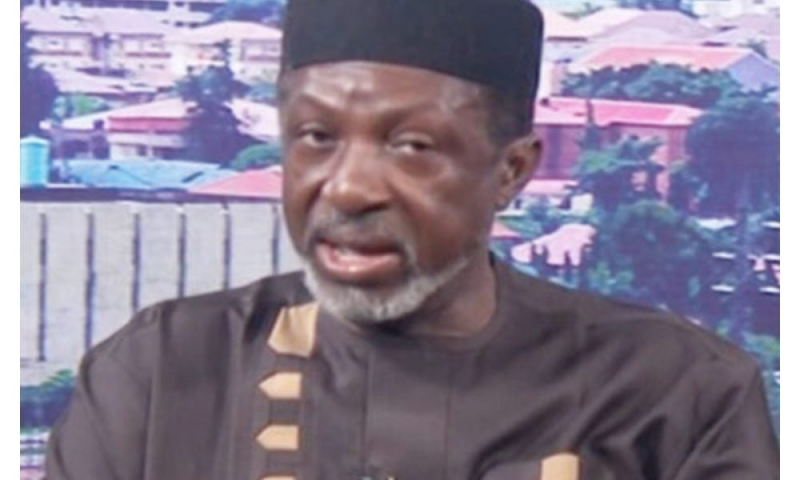
The camp of former Vice President and 2027 presidential candidate Atiku Abubakar has squarely blamed President Bola Tinubu's economic policies for Uber's decision to shut down its Nigerian operations after 12 years, describing the global ride-hailing giant's departure as a "wake-up call" that exposes the administration's failure to create an investment-friendly environment. Paul Ibe, Atiku's media adviser, issued the blistering critique on Wednesday, September 2, 2026, hours after Uber announced it would immediately wind down its services in Nigeria and Uganda.
Uber, which launched in Lagos in 2014 and expanded to become a household name across the country, said in a statement that the decision followed a "thorough review of our business" and was driven by "evolving business priorities and investment focus across Africa". The company also announced a 10 per cent global workforce reduction on the same day. However, Ibe rejected the notion that the exit was merely a corporate restructuring exercise, insisting that Nigerians should look beyond the company's diplomatic language. "Uber may diplomatically describe its decision as a review of its business priorities and investment focus. But Nigerians cannot ignore the bigger picture," he said.
The Atiku aide painted a grim picture of an economy in distress, citing soaring inflation, exchange rate volatility, rising operating costs, weak consumer purchasing power, and policy uncertainty as factors driving businesses away. He questioned why Nigeria was increasingly becoming what he called a "business graveyard" where companies choose to leave rather than invest and expand. "An administration that promised to attract investment cannot continue celebrating economic statistics while companies shut down, scale back or redirect investments elsewhere," Ibe said. He argued that Nigeria needs policies that make businesses want to come, stay, and create jobs, "not an economic environment that steadily drives them away".
Ibe's criticism did not stop at economic indicators. He coined a sharp phrase to describe the administration's economic direction, declaring that "Tinubunomics is powered by 'bole ka ja' policies"—a Yoruba phrase loosely meaning "cut and run" or "slash and burn," suggesting that the government's reforms are haphazard and destructive rather than strategic and sustainable. The aide further argued that Uber's departure should serve as a warning sign that the government's economic reforms have not yet delivered the investment-friendly Nigeria that citizens were promised.
The context of Ibe's attack is the harsh economic reality that has unfolded since President Tinubu announced the removal of the fuel subsidy on his first day in office in May 2023. The policy, while intended to free up fiscal space, triggered a cascade of price increases that have severely eroded consumer purchasing power. Petrol prices have surged multiple times, pushing up transportation costs and feeding into broader inflation. Uber drivers in Nigeria had long complained that fares on the app were too low given the rising cost of fuel and that commission charges were too high. The removal of the subsidy, combined with the depreciation of the naira and the global disruption caused by the US-Iran war, created an operating environment that became increasingly unsustainable for the ride-hailing giant.
Uber's exit is the latest in a string of high-profile multinational departures from Nigeria. In recent years, GlaxoSmithKline (GSK), Procter & Gamble, and Sanofi-Aventis Nigeria Limited have all either scaled back or completely withdrawn their operations. The pattern has raised serious questions about the country's investment climate and the effectiveness of the government's economic reforms. While the Tinubu administration has pointed to macroeconomic indicators such as GDP growth and rising foreign reserves as evidence of progress, critics argue that these figures have not translated into tangible improvements for businesses and households.
The political implications of Ibe's attack are significant. Atiku Abubakar, who is running on the platform of the African Democratic Congress (ADC), has positioned himself as the leading opposition candidate for the 2027 presidential election. His camp has been consistent in its criticism of the Tinubu administration's economic policies, with Atiku himself vowing to restore a targeted fuel subsidy if elected. By linking Uber's departure to the government's failures, Ibe is seeking to sharpen the contrast between Atiku's proposed economic agenda and what he portrays as the Tinubu administration's mismanagement.
The government has not yet issued an official response to Ibe's specific allegations, but APC officials have previously defended the administration's reforms as necessary measures to rescue an economy that was, in their view, "broke" and teetering on the brink of collapse. They have argued that the pain of the reforms is temporary and that the benefits will eventually trickle down to ordinary Nigerians. However, with multinational companies continuing to exit and the cost-of-living crisis showing no signs of abating, the government's ability to sell its economic narrative to a sceptical public is becoming increasingly difficult.
For Ibe and the Atiku camp, Uber's departure is not just a business decision—it is a political opportunity. "Uber's exit should therefore be a wake-up call: Tinubu's economic policies are not yet delivering the investment-friendly Nigeria Nigerians were promised," Ibe declared. Whether that message resonates with voters will depend on whether the government can point to tangible improvements in the months ahead. For now, the ride-hailing giant's farewell has handed the opposition a powerful talking point—and deepened the anxiety of a nation watching its investment climate unravel.
📩 Stone Reporters News | 🌍 stonereportersnews.com
✉️ info@stonereportersnews.com | 📘 Facebook: Stone Reporters News | 🐦 X (Twitter): @StoneReportNew | 📸 Instagram: @stonereportersnews
Add comment
Comments