

Published by Osasere Edomwonyi Ikpoba
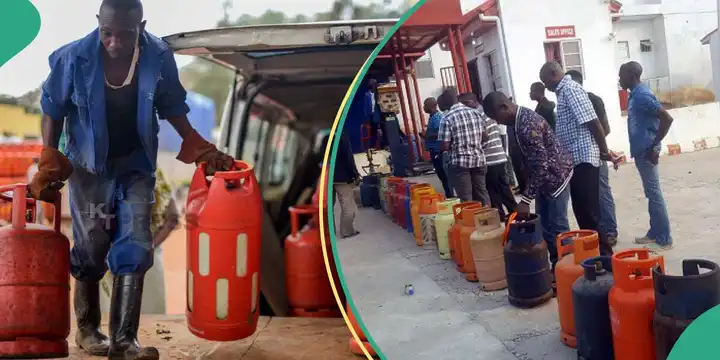
Nigerian households are finally receiving some relief at the kitchen stove as the price of cooking gas has dropped by 39 per cent across the country, following a sustained increase in domestic supply of Liquefied Petroleum Gas (LPG). The price of cooking gas now sells for between ₦1,100 and ₦1,650 per kilogramme nationwide, a significant decline from the peak of about ₦2,300 to ₦2,400 per kilogramme recorded in June. The price drop reflects the combined effect of policy interventions by the Federal Government, increased domestic production, and a surge in imports aimed at bridging the supply gap.
Data from the Nigerian Midstream and Downstream Petroleum Regulatory Authority shows that domestic LPG supply climbed to a record 5,332 tonnes per day in July 2026, up from 5,100 tonnes in June. The supply surge has been driven largely by the Nigeria Liquefied Natural Gas (NLNG) company, which, in partnership with SEPNU, supplied 2,031 tonnes per day through vessels in July, accounting for approximately 38 per cent of total domestic supply. Other processing plants contributed 1,513 tonnes per day through truck deliveries, while the Dangote Petroleum Refinery supplied about 829 tonnes per day. Domestic sources now account for roughly 82 per cent of Nigeria's LPG supply, while imports make up the remaining 18 per cent. The growing role of local production and processing underscores Nigeria's progress in reducing dependence on imported cooking gas and improving energy security.
Despite the record supply, however, the benefits have yet to translate fully into a return to cheaper cooking gas for consumers. Retail prices have remained above the N1,000 per kilogramme level, fluctuating between N1,300 and N1,600 per kilogramme depending on location and market conditions. In Lagos and Ibadan, consumers are paying between ₦1,100 and ₦1,350 per kilogramme, while prices in other parts of the country have remained higher. The NMDPRA has recommended that the product should sell within the region of N1,000 to N1,200 per kilogramme after accounting for transportation and distribution costs. However, the price gap between wholesale supply and retail markets has become a major issue for regulators, producers and consumers alike.
The price surge earlier in the year had placed enormous pressure on Nigerian households, with many families forced to reduce their gas consumption or switch to alternative cooking fuels such as firewood and charcoal. The crisis was driven by a combination of factors, including supply shortages, foreign exchange volatility, rising transportation costs, and global energy market pressures. Industry operators described LPG as a logistics-dependent commodity, with multiple costs accumulating between the depot and the final consumer. The situation was further complicated by what NLNG described as artificial scarcity and distortions within the distribution chain.
NLNG Managing Director and Chief Executive Officer, Adeleye Falade, raised serious concerns over the activities of some marketers, accusing them of contributing to the sharp increase in cooking gas prices. Falade disclosed that some buyers had purchased LPG from NLNG for between N800 and N900 per kilogramme but sold it to consumers for as much as N2,400 per kilogramme. The company questioned the extent to which supply shortages alone were responsible for the dramatic increase in retail LPG prices, pointing to market distortions and the hoarding of products by some distributors.
The Federal Government has responded with a series of interventions aimed at stabilising the market. In June, the government granted LPG import permits to bridge the supply gap, and the NMDPRA has worked to ensure that locally produced LPG remains cheaper than imported volumes. The Nigerian Association of Liquefied Petroleum Gas Marketers (NALPGAM) has projected that retail cooking gas prices could fall to between N900 and N1,100 per kilogramme by the end of 2026 if the government implements further reforms to boost supply and cut costs.
Despite the recent price reduction, however, NLNG has warned that sustained affordability will require coordinated action by the Federal Government, regulators, and industry operators. Falade called on the government to expand domestic LPG supply, improve storage capacity, and strengthen distribution infrastructure. He also urged the removal of multiple taxes, levies and regulatory charges imposed on operators across different levels of government, which he said increase operating costs and discourage investment in the LPG industry. According to Falade, improving access to LPG remains important to Nigeria's energy transition and the wellbeing of millions of households.
For consumers, the decline in cooking gas prices offers a measure of relief after months of relentless increases. A standard 12.5kg cylinder, which was selling for as high as N20,625 at the peak of the crisis, can now be filled for between N15,625 and N20,625 depending on location and retailer margins. A 5kg cylinder costs between N6,250 and N8,250, while a 1kg refill is priced at about N1,250. The price variation across the country reflects differences in transportation costs, distance from major depots, and retailer margins.
The road to stable and affordable cooking gas in Nigeria, however, remains long. While the record supply figures demonstrate progress, the gap between wholesale and retail prices, the activities of middlemen, and the structural challenges facing the LPG market continue to prevent consumers from fully benefiting from increased availability. As NLNG and other stakeholders have repeatedly warned, lasting relief will depend on sustained government action, infrastructure investment, and a commitment to addressing the distortions that have long plagued the sector.
📩 Stone Reporters News | 🌍 stonereportersnews.com
✉️ info@stonereportersnews.com | 📘 Facebook: Stone Reporters News | 🐦 X (Twitter): @StoneReportNew | 📸 Instagram: @stonereportersnews
Add comment
Comments