

Published by Osasere Edomwonyi Ikpoba
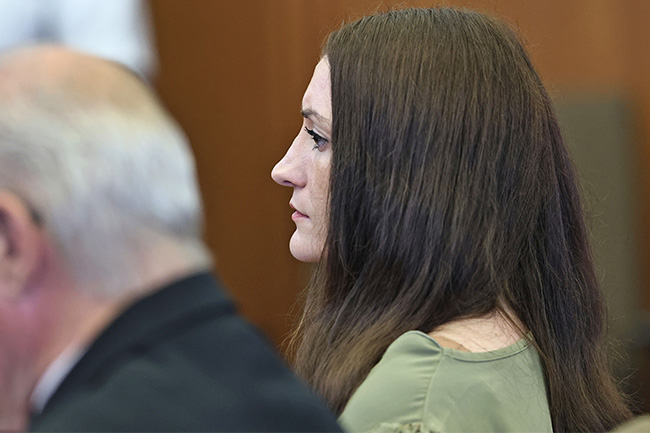
In a dramatic and emotional conclusion to one of Massachusetts’ most closely watched criminal trials in years, a judge declared a mistrial on Friday after a jury remained hopelessly deadlocked over whether a 36-year-old mother is criminally responsible for strangling her three young children to death in their Duxbury home in January 2023. Judge William Sullivan of Plymouth Superior Court made the ruling after the jury of seven women and five men spent more than 36 hours deliberating over six days, telling the court three separate times that they could not reach a unanimous verdict.
The case, which has gripped the nation and reignited fierce debates over postpartum mental health, the insanity defense, and the limits of criminal responsibility, now faces an uncertain future. Prosecutors must decide whether to retry Lindsay Clancy, accept a plea deal, or drop the charges entirely. Clancy, a former labor and delivery nurse at Massachusetts General Hospital, does not deny killing her children — 5-year-old Cora, 3-year-old Dawson, and 8-month-old Callan — with exercise bands in the basement of the family home on January 24, 2023. But the central question that fractured the jury was whether she was in the grip of a severe postpartum psychosis that rendered her incapable of understanding the wrongfulness of her actions, or whether she acted with premeditation and cold calculation.
The mistrial was not declared without last-minute drama. After the jury sent a third note on Friday indicating they remained deadlocked, Sullivan announced in open court that he intended to declare a mistrial. But Clancy’s lead defense attorney, Kevin Reddington, immediately requested an emergency one-hour stay to file an appeal with the Massachusetts Supreme Judicial Court, arguing that a single holdout juror was refusing to follow the judge’s instructions on reasonable doubt. The judge granted the request, briefly delaying the declaration. However, Sullivan had already made clear earlier in the week that he would not remove the juror in question, telling the court, “I don’t feel it is proper for me to side with one side or the other of the deliberations”.
The jury’s deadlock was extraordinary in its persistence. On Tuesday, the panel told the judge for the first time that they could not agree. Sullivan sent them back with a standard instruction urging them to continue deliberating. On Wednesday, they returned with a second deadlock note. The judge again urged them to persevere, reminding them that no one knows whether another jury would be “more intelligent, more impartial or more competent to decide it than you are”. By Thursday, the jury’s foreperson had disclosed in a note that a single juror was refusing to follow the court’s instructions about reasonable doubt. The defense seized on this, demanding the juror’s removal. Sullivan instead questioned each juror individually in private, reread his instructions, and sent them back to work. On Friday, after a third deadlock note, he had finally had enough.
The trial itself was a grueling, six-week examination of Clancy’s mental state leading up to the killings. Prosecutors argued that Clancy had “coldly and efficiently executed” her children, “with no hesitation, with deliberate premeditation and extreme atrocity and cruelty”. They pointed to evidence that she had sent her husband, Patrick, out of the house to pick up dinner and a pharmacy order, mapping the time it would take him to return, to create a window of opportunity to carry out the murders. Patrick Clancy, who has since divorced his wife, testified that she had been discharged from a psychiatric hospital less than two weeks earlier but had shown no signs of planning to hurt herself or the children in the days that followed. Prosecutors also presented testimony from a psychologist who concluded that Clancy had planned to commit suicide and chose to kill her children because “she was convinced that they would suffer without her”.
The defense, however, painted a radically different picture. Reddington argued that Clancy was a loving mother who had been in the grips of a severe postpartum psychosis, a rare condition that can cause auditory hallucinations, paranoia, and a break from reality. He presented testimony from family members, including Clancy’s mother and aunt, who described her desperate struggle with her mental health in the months following Callan’s birth. The court heard that Clancy had been prescribed 13 different medications for anxiety and sleep, which the defense argued may have exacerbated her symptoms. She had checked herself into a psychiatric clinic in the weeks before the killings. Forensic psychiatrist Dr. Phillip Resnick testified for the defense that Clancy had “severe” postpartum psychosis and was unable to appreciate the wrongfulness of her actions.
Under Massachusetts law, a defendant must have “retained the substantial capacity to appreciate the wrongfulness or criminality of their conduct and to conform their conduct to the requirements of the law” in order to be found guilty. The defense argued that Clancy lacked that capacity. The prosecution argued that she did not.
The case drew inevitable comparisons to the infamous 2001 case of Andrea Yates, the Texas mother who drowned her five children in a bathtub and was later found not guilty by reason of insanity. Like Clancy, Yates suffered from severe postpartum psychosis. But unlike Yates, Clancy’s jury could not agree on her criminal responsibility.
The mistrial leaves Clancy in a legal limbo. She remains in custody, paralyzed from her failed suicide attempt after the killings. Her defense team has signaled they will fight any retrial. Legal analysts have suggested that a retrial is the most likely outcome, but that the emotional toll on all parties — the families, the jurors, and the community — would be immense.
For now, the case of Lindsay Clancy remains unresolved. A jury of her peers could not decide whether she was a murderer or a victim of her own mind. The question now passes to prosecutors, who must weigh the costs of seeking justice for three young lives against the possibility that no jury will ever be able to deliver a unanimous answer.
📩 Stone Reporters News | 🌍 stonereportersnews.com
✉️ info@stonereportersnews.com | 📘 Facebook: Stone Reporters News | 🐦 X (Twitter): @StoneReportNew | 📸 Instagram: @stonereportersnews
Add comment
Comments