

Reported by: Ijeoma G | Edited by: Oravbiere Osayomore Promise.
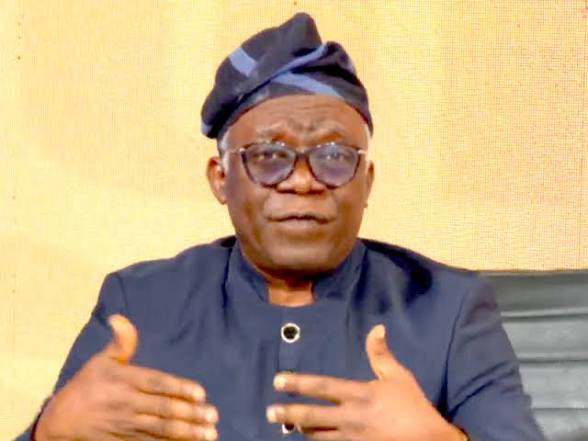
The pattern has become grimly familiar. A Nigerian is killed in South Africa. Abuja issues a statement of condemnation. The South African authorities promise to investigate. Nothing happens. Then another Nigerian is killed, and the cycle repeats itself. But on Saturday, September 13, 2026, human rights lawyer and Senior Advocate of Nigeria, Femi Falana, drew a line in the sand. He told the Federal Government that diplomatic condemnations are no longer enough. The killings must be met with legal action, and the appropriate venue is the African Court on Human and Peoples' Rights in Arusha, Tanzania.
Falana's intervention followed two deaths that shook the Nigerian community in South Africa. On September 4, 2026, Bishop Michael Taiwo Fakunle, a 58-year-old cleric from Ekiti State, was shot dead at his residence in Kensington, Johannesburg, by unknown gunmen after reportedly receiving threats. Barely 24 hours later, another Nigerian, James Uchechukwu Nwankwo, died after what Falana described as an alleged interrogation by officers of the South African Police Service. Citing comments attributed to Nigeria's High Commissioner to South Africa, Femi Fani-Kayode, Falana said the two deaths brought to eight the number of Nigerians allegedly killed in South Africa in 2026 alone. Four of those eight, he said, were reportedly killed by South African security personnel. The broader picture is even more disturbing. Between 2022 and 2026, more than 100 Nigerians have been killed in South Africa, including over 30 allegedly killed by officers of the South African Police Service and the South African Defence Force. Yet despite repeated concerns raised by Nigeria, no one has been arrested, prosecuted or brought to justice for any of those killings.
"The response from Abuja has so far been limited to condemnation of the latest killings," Falana said. "Yet the Federal Government has a constitutional and international human rights obligation to protect Nigerians and to take effective measures to secure justice when their rights are violated abroad." His words carried the weight of a man who has spent decades holding Nigerian governments accountable, and his frustration was palpable. "The Federal Government cannot continue to issue statements of condemnation after every killing while taking no effective legal steps to secure accountability and justice," he declared. The human rights lawyer did not stop at criticism. He laid out a clear legal pathway for the government to follow. Nigeria and South Africa are both parties to the African Charter on Human and Peoples' Rights and have ratified the protocol establishing the African Court. Nigeria ratified the protocol in 2004, but has not made the declaration under Article 34(6) that would allow individuals and non-governmental organisations to bring cases directly before the court. Falana urged the government to make that declaration, but he also made it clear that Nigeria does not need to wait for that step to act. As a state party to the charter, Nigeria can bring an interstate case against South Africa concerning its failure to protect Nigerian nationals from serious human rights violations and its failure to ensure effective investigation, prosecution and remedies.
Falana cited precedents that demonstrate the power of such legal action. He referenced the African Court's decision in the case involving the family of slain Burkinabe investigative journalist Norbert Zongo, where Burkina Faso was held responsible for failing to properly investigate his assassination and was ordered to pay reparations. He also cited the ECOWAS Court's decision in the Apo Six case, in which Nigeria itself was held responsible for human rights violations arising from the killing and ill-treatment of citizens during a security operation in Abuja. "The cases demonstrate that failure to investigate serious violations of the right to life can result in state responsibility," Falana said. The implication was unmistakable. If Nigeria can be held accountable for failing to investigate killings within its own borders, South Africa can be held accountable for failing to investigate killings of Nigerians within its borders.
The timing of Falana's intervention is significant. It comes against the backdrop of a reported deadline issued to African nationals, including Nigerians, to leave South Africa by September 30, 2026. The existence of such a deadline, if confirmed, would represent a mass expulsion of foreign nationals, which is prohibited under Article 12 of the African Charter except in accordance with the law. It also comes just days after the National Assembly suspended all official visits to South Africa and directed its members to boycott South African-hosted legislative activities until further notice, a decision that reflected the growing frustration in Abuja over the continued killings of Nigerians. The Federal Government has also repatriated nearly 1,500 Nigerians from South Africa in recent months amid the xenophobic violence, and Vice President Kashim Shettima has reiterated Nigeria's opposition to the mistreatment of its citizens while stressing a commitment to dialogue and peaceful engagement.
But Falana's message is that dialogue and peaceful engagement have failed. The South African government rejected Nigeria's compensation demand in July 2026, claiming that many of those evacuated were in the country illegally, a position disputed by victims and their representatives. The African Union, Falana argued, lacks the legal authority to compel South Africa to compensate victims. The only viable path, he said, is the African Court. And Nigeria has the standing to take South Africa there. Falana also called on the Federal Government to establish a coordinated mechanism involving the Ministry of Foreign Affairs, Nigeria's diplomatic mission in South Africa and the Federal Ministry of Justice to document cases of killings, torture and other serious abuses against Nigerians and to monitor investigations and prosecutions. Such a mechanism, he argued, would provide the evidentiary foundation for a successful case at the African Court.
The question now is whether President Bola Tinubu's administration will heed Falana's call. The National Assembly's decision to suspend official visits to South Africa was a strong political statement, but it did not provide justice for the families of the more than 100 Nigerians killed since 2022. Legal action at the African Court would be a more substantive step, one that could result in binding orders for reparations and systemic reforms in how South Africa protects foreign nationals. But it would also require the political will to confront a fellow African state in an international forum, and the resources to build a case that can withstand legal scrutiny. Falana has provided the roadmap. The Federal Government must now decide whether to follow it. For the families of Bishop Fakunle, James Nwankwo and the dozens of other Nigerians who have been killed in South Africa, the answer cannot come soon enough. Condemnation is not justice. Only accountability is. And as Falana has made clear, accountability will not be achieved through statements. It will be achieved through the courts.
📩 Stone Reporters News | 🌍 stonereportersnews.com
✉️ info@stonereportersnews.com | 📘 Facebook: Stone Reporters News | 🐦 X (Twitter): @StoneReportNew | 📸 Instagram: @stonereportersnews
Add comment
Comments