

Reported by: Ijeoma G | Edited by: Oravbiere Osayomore Promise.
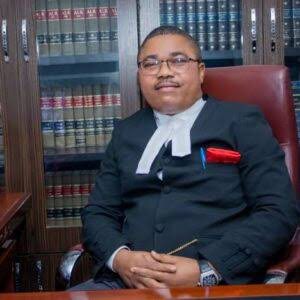
In a political season already defined by raw nerves and fragile alliances, a human rights lawyer and political analyst has delivered a stinging rebuke to a group of clergymen whose recent endorsement of President Bola Ahmed Tinubu has reignited the explosive debate over the role of religion in Nigerian politics. Sir Ifeanyi Ejiofor, a former lead counsel to the Indigenous People of Biafra and a prominent voice in national discourse, issued a statement at the weekend titled "The Auction of Ecclesiastical Imprimatur: A Disturbing Show of Shame and the Urgent Need to Quarantine Religious Authority from the 2027 Electioneering Campaigns," in which he condemned what he described as the theatrical deployment of episcopal authority to advance a partisan political agenda.
The controversy stems from a gathering in Abuja under the auspices of the Charismatic Bishops Conference of Nigeria, where clergymen in full episcopal regalia, accompanied by their female counterparts, publicly endorsed President Tinubu of the All Progressives Congress for a second term in office. The event, which was beamed live and attended by senior government officials, was widely reported as a major boost for the President's re-election bid. But Ejiofor saw something far more troubling: the conversion of a sacred institution into a megaphone for political power, and the blurring of a line that ought never to be crossed.
Ejiofor was careful to distinguish his objection from a blanket rejection of Christian participation in politics. "I do not question, and have no intention of questioning, the constitutional freedom of any Nigerian, including a clergyman, to choose, support or vote for any candidate of his or her choice," he said. "Every citizen is entitled to his political preference." What he found profoundly disturbing, however, was the manner in which ecclesiastical identity and the symbolic authority of the episcopacy were mobilised and deployed as an instrument of partisan political endorsement, particularly at a time when the formal electioneering campaign had not even commenced.
His central argument rests on a distinction that he believes is being dangerously eroded. There is a difference, he insists, between a Christian citizen exercising his civic franchise and an ecclesiastical institution, or persons parading the authority of the episcopate, deploying the sacred imprimatur of the Church in the service of partisan political mobilisation. "The Church should be a conscience to power, not a megaphone for power," he declared. "A bishop should be able to challenge the government today and commend it tomorrow without either position being interpreted as evidence of political purchase." It is a principle that speaks to the heart of democratic accountability, where the moral authority of the Church derives its strength not from governmental patronage but from its spiritual independence.
Ejiofor's intervention comes at a moment of heightened anxiety over the weaponisation of religion and ethnicity ahead of the 2027 general elections. He warned that the wounds from previous ethnoreligious political clashes remain unhealed, and that introducing religious endorsement into the political marketplace was akin to playing with a combustible instrument in an already fragile environment. He invoked recent remarks by Chief Nduka Obaigbena, Chairman of Arise Media Group, who had urged presidential aspirants to embrace issue-based campaigns and jettison the dangerous temptation of religious-based politicking. That admonition, Ejiofor said, was not only profound but eminently timely, and it was scarcely heeded before the Abuja gathering took place.
The lawyer did not stop at criticising the event's political purpose; he also questioned the ecclesiastical credentials of some of its participants. "On a closer examination of the event, I observed that I did not sight at the gathering any properly ordained bishops from the established and widely recognised ecclesiastical traditions," he said. He added that he was told episcopal regalia had allegedly been distributed ahead of the event, though he stressed that he did not personally witness such an occurrence. "Given what subsequently unfolded, one might be forgiven for wondering whether episcopacy has now acquired a rather convenient 'event-based' dimension—appearing whenever the political weather becomes favourable," he said.
The Charismatic Bishops Conference of Nigeria has defended its endorsement of President Tinubu, citing his handling of religious diversity, his appointments of Christians to key positions, and his efforts to tackle insecurity. The group's President-General, Archbishop Leonard Bature Kawas, has also responded to critics, insisting that he was not called a "fake bishop" when he supported former President Goodluck Jonathan or Peter Obi in previous elections. But for Ejiofor, the substance of the endorsement is less important than the precedent it sets. The 2027 elections, he argues, should be fought on issues, records, and competing visions for Nigeria, not on the altar of religious solidarity. "The pulpit is not a political rally; episcopal vestments are not party uniforms; the altar is not a campaign podium; and ecclesiastical authority must never become a substitute for democratic persuasion," he said.
His words carry particular weight because they come from a lawyer who has spent years navigating the treacherous terrain of Nigerian politics and human rights advocacy. Ejiofor is not a stranger to controversy, having served as legal counsel to Nnamdi Kanu and the Indigenous People of Biafra, and his traditional title, Dunu-Ezeugosinachi, places him within the cultural fabric of the South-East. His intervention is unlikely to silence the debate, but it has sharpened its terms. The question now is whether religious leaders will heed the call to quarantine ecclesiastical authority from the 2027 campaigns, or whether the altar will continue to serve as a campaign podium in the months ahead. For Ejiofor, the answer is clear: "Our democracy certainly deserves better than an electoral contest fought in episcopal regalia."
📩 Stone Reporters News | 🌍 stonereportersnews.com
✉️ info@stonereportersnews.com | 📘 Facebook: Stone Reporters News | 🐦 X (Twitter): @StoneReportNew | 📸 Instagram: @stonereportersnews
Add comment
Comments