

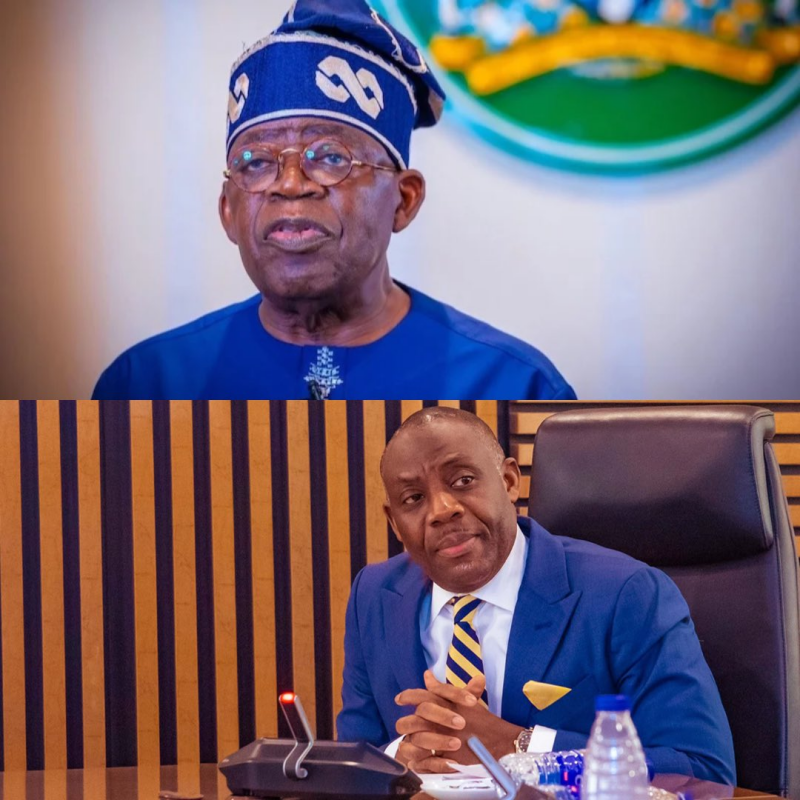
Nigeria’s Minister of Education, Dr Maruf Tunji Alausa, has praised President Bola Ahmed Tinubu’s leadership, arguing that his administration has delivered exceptional changes to the country and defending reforms in education, skills development and human capital investment as preparations intensify for the 2027 elections.
Alausa’s assessment, reported on October 31, 2026, places him among senior government officials publicly championing Tinubu’s record. The minister has described the administration’s interventions as transformative, although comparisons with previous presidents remain political judgments.
The minister has repeatedly pointed to student financing, technical education and changes to school administration as evidence of progress. He argues that reforms launched since Tinubu assumed office in May 2023 are intended to address longstanding weaknesses and prepare younger Nigerians for employment and economic participation.
One prominent initiative is the Nigerian Education Loan Fund, known as NELFUND, which provides eligible students with financial support for tertiary education. Its implementation has become a central part of the government’s argument that access to higher education should not depend entirely on a family’s ability to pay upfront.
Questions remain about coverage, disbursement timelines and repayment arrangements. Its effectiveness depends not only on announced funding but also on whether students receive assistance when needed and can complete their studies without unsustainable financial burdens.
Alausa has also promoted technical and vocational education and training, or TVET, as a response to youth unemployment and the mismatch between academic qualifications and labour-market requirements. Government-backed initiatives aim to connect training with practical occupations and skills sought by employers.
In recent remarks, the minister cited approximately 250,000 people undergoing technical skills training and a network of training centres being developed or used nationwide. Those figures describe the scale claimed for the programme; they do not independently demonstrate how many participants have completed training or secured sustainable employment.
Effective vocational education requires instructors, equipment, industry partnerships and recognised certification. Training enrolment can signal demand, but employment outcomes provide a stronger measure of whether public investment is improving opportunities for young people.
The Federal Ministry of Education has also emphasised curriculum changes, teacher development, digital learning and better collection of school data. Alausa says these measures can help officials identify gaps in enrolment, staffing and infrastructure, while giving policymakers clearer information for allocating resources.
A government announcement in October reported that 29 Nigerian universities appeared in the 2027 Times Higher Education world rankings, compared with 24 in the preceding edition. The ministry presented the increase as evidence of stronger international visibility for Nigerian institutions.
Rankings, however, are influenced by methodology, research output, institutional submissions and participation. An increase in listed universities does not, by itself, establish that teaching quality or student experiences have improved across the country's higher education system.
The administration has similarly highlighted proposed investments in student accommodation and educational infrastructure. For students facing crowded hostels, rising rents and unreliable facilities, the practical test will be how many projects are completed, maintained and made accessible at affordable prices.
Alausa’s public defence of Tinubu has also moved beyond his ministerial responsibilities into electoral politics. On October 8, he pledged to help mobilise 10 million votes from Nigeria’s education sector in support of the president’s re-election campaign.
The commitment came during an inaugural meeting of an All Progressives Congress presidential campaign working group focused on education-sector mobilisation. Alausa urged participants to engage teachers, students, administrators and communities, arguing that a second term would allow ongoing policies more time to produce results.
He said Nigeria needed continuity and credited Tinubu with changing the country’s fortunes. That position reflects his support for the president, but the proposed 10 million votes remain a campaign target, not a prediction supported by a verified survey of education workers or students.
The minister reiterated his confidence in the administration during an October visit to the City Boy Movement in Abuja, where he praised grassroots engagement and defended education policies.
The political dimension has prompted broader questions about the boundary between public administration and partisan campaigning. Civil servants, students and education institutions have differing legal and institutional responsibilities, and participation in political activity must respect applicable rules and individual freedom of choice.
Tinubu’s wider economic record remains contested. Supporters argue that difficult reforms are necessary to stabilise public finances, attract investment and support future growth. Critics point to pressure on household budgets, persistent poverty, insecurity and the costs faced by families seeking education and healthcare.
In the education sector, challenges include children remaining outside school, uneven learning outcomes, inadequate facilities and periodic disputes involving university staff. These problems predate the current administration, but their persistence complicates claims that transformation has already been achieved.
Nigerian news outlets have reported both the ambition of Alausa’s reform programme and concerns about implementation, policy reversals and the relationship between government and education unions. Such scrutiny highlights the need to evaluate reforms through measurable results rather than declarations alone.
Assessing Tinubu’s education record requires examining enrolment, literacy, completion, teacher availability, employment and regional differences. It would also distinguish programmes inherited from earlier governments from initiatives introduced or substantially expanded under the present administration.
Comparing presidents presents an additional challenge. Administrations faced different conditions, making comparisons dependent on consistent data and agreed criteria.
Alausa is entitled to advance his administration’s case, while opposition parties, professional associations and citizens are equally entitled to challenge it. Ultimately, voters will assess the president’s performance against their experiences and the evidence available before the 2027 election.
For now, the minister’s sweeping endorsement underscores the importance Tinubu’s supporters attach to education reform as both a policy achievement and a campaign message. Whether the promised changes amount to lasting national transformation will depend on implementation and demonstrable improvements in Nigerians’ lives.
📩 Stone Reporters News | 🌍 stonereportersnews.com
✉️ info@stonereportersnews.com | 📘 Facebook: Stone Reporters News | 🐦 X (Twitter): @StoneReportNew | 📸 Instagram: @stonereportersnews
Add comment
Comments