

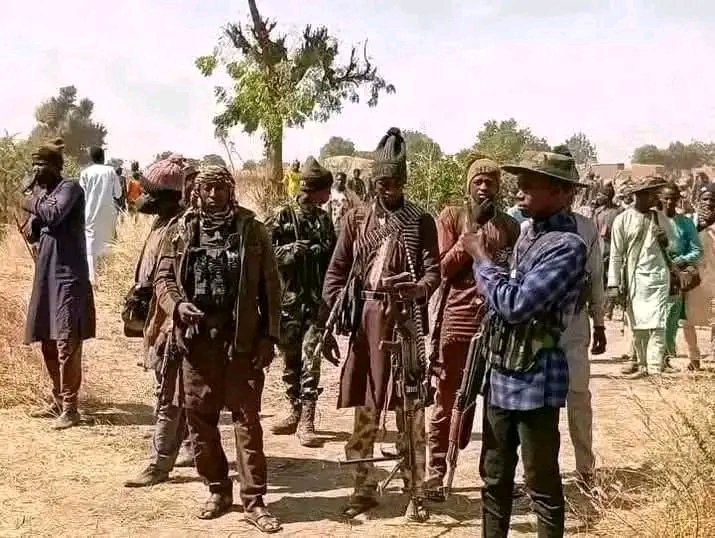
Suspected bandits have reportedly killed a farmer and abducted several other people during an afternoon attack on Fadamar Tarah, a farming settlement in Sabon Birni Local Government Area of Sokoto State, renewing concerns about the safety of rural communities in northwestern Nigeria.
The incident was reported on Saturday, October 31, 2026. According to the initial account, armed attackers targeted farmers in the area, leaving one person dead and taking an unspecified number of people captive. The circumstances of the assault and the identities of those affected have not yet been independently established.
There was no independently verified statement from the Sokoto State Police Command or the military confirming the reported casualties at the time of writing. It also remains unclear whether security personnel reached the scene, whether anyone was injured, or whether a search for the abducted people had begun.
The number of people reportedly taken away has not been confirmed. Neither the victims' relatives nor the authorities have publicly provided a verified list of those missing, and no information has emerged about demands from the attackers. Those details are particularly important for families seeking reliable information about their loved ones.
The latest account follows earlier violence affecting Fadamar Tarah and neighbouring communities. In February 2026, reports said gunmen abducted three people, including a pregnant woman, from Fadamar Tarah. That earlier incident was separate from Saturday's reported attack and should not be confused with the new allegations.
In July, further attacks were reported around Tarah and Takatsaba in Sabon Birni. Accounts described armed men confronting local vigilantes and abducting residents, including women and children. The reports illustrated how repeated raids can leave communities fearful even when individual incidents have not been fully documented by official agencies.
More recently, troops operating under the military's Operation Fansan Yamma reported an intervention in the same local government area. On October 28, soldiers said they disrupted an attempted livestock raid and abduction at Takasaba village, forcing armed suspects to flee and abandon hundreds of animals.
The military reported recovering 520 livestock and rescuing two abducted herders, identified as Malam Sulaiman, 50, and Nasiru Sulaiman, 14. The rescued pair were handed over to local authorities. That operation demonstrated a security presence in the area, although it does not establish any connection with Saturday's reported assault.
The geographical proximity of these incidents underscores the difficulties of protecting scattered farming settlements. Residents often travel between homes, fields, grazing areas and markets, sometimes along routes where an immediate security response may be difficult. Attackers can exploit distance and limited communications to target civilians.
Farming communities face particular exposure because agricultural work frequently takes place beyond densely populated settlements. People tending crops or moving produce may be isolated from assistance when violence occurs. Repeated attacks can consequently undermine not only personal safety but also the ability of households to earn a living.
In September, a Premium Times investigation documented renewed violence, abductions and displacement across parts of Sokoto and neighbouring Katsina State. Residents interviewed for that report described abandoning farms, businesses and livestock after attacks. Their experiences illustrated how insecurity can continue to damage livelihoods long after a raid ends.
The same reporting noted that residents of Sabon Birni had fled their communities, leaving agricultural land and businesses behind. Some displaced families struggled to rebuild their livelihoods elsewhere. Such displacement can place additional pressure on host communities and reduce the food and income available to affected households.
Other reports during 2026 described alleged demands for payments from farmers in parts of Sabon Birni, with threats against people who entered their fields without complying. Those claims varied by community and were not uniformly confirmed by police. Nevertheless, they highlighted concerns that violence and coercion were interfering with ordinary agricultural activity.
The effect can extend through local food markets. When farmers are unable to plant, tend or harvest crops safely, supplies may decline and transport costs may rise. Traders can also become reluctant to travel along insecure roads, limiting the movement of goods between rural communities and larger commercial centres.
For households already facing economic pressure, the loss of a harvest or an income earner can have lasting consequences. Families of abducted people may also experience uncertainty, interrupted work and additional expenses while seeking information or assistance. These impacts cannot be quantified for Saturday's incident without further evidence.
Sokoto's security challenges are part of a wider pattern across Nigeria's North-West, where armed criminal networks have carried out kidnappings, cattle theft and attacks on villages. The motives and membership of individual groups differ, and responsibility for a specific incident should not be assigned without credible evidence.
The term bandits is commonly used in regional reporting, but the identity of the attackers in Fadamar Tarah has not been established. There is currently no verified basis to attribute Saturday's reported raid to a named commander or organisation, even though other attacks in the area have previously been linked to particular armed figures.
Protecting farming settlements requires more than responding after violence occurs. Residents need accessible emergency channels, dependable intelligence arrangements and coordinated patrols along vulnerable routes. Effective investigations are also necessary to identify perpetrators and establish whether warnings were received before attacks.
Local information can assist security agencies, but civilians should not be expected to confront heavily armed assailants themselves. Any effort to locate missing people must prioritise their safety and avoid circulating unverified names, ransom claims or operational details that could endanger those held captive.
The immediate questions in Fadamar Tarah remain unanswered: who was killed, how many people were abducted, where the attackers went and what action authorities have taken. Official confirmation and accounts from affected families will be essential to establishing a reliable record of the incident.
For now, Saturday's reported attack adds to concern about the vulnerability of farmers in Sabon Birni. The priority is to verify the casualties, establish the whereabouts of those missing and provide meaningful protection so residents can work their land without fear of violence.
📩 Stone Reporters News | 🌍 stonereportersnews.com
✉️ info@stonereportersnews.com | 📘 Facebook: Stone Reporters News | 🐦 X (Twitter): @StoneReportNew | 📸 Instagram: @stonereportersnews
Add comment
Comments