

Reported by Ariajegbe Sylvia Esezobor
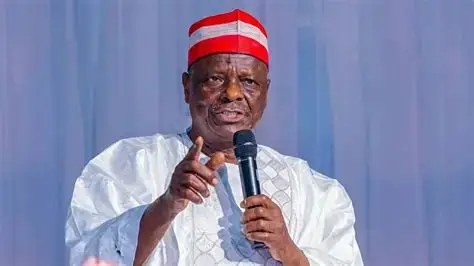
The vice-presidential candidate of the Nigeria Democratic Congress, Senator Rabiu Kwankwaso, has declared that an administration led by the party’s presidential candidate, Peter Obi, would reintroduce fuel subsidy in a different form if elected in the January 2027 general elections, outlining a plan centred on government investment in refineries to increase domestic refining capacity and bring down the price of petrol for Nigerians.
Kwankwaso made the declaration on Tuesday during an interview with Arise Television, where he was discussing the fuel subsidy policy of the President Bola Tinubu-led administration and the positions of the major presidential candidates ahead of the 2027 election. Asked whether it would be difficult for the NDC to campaign in the North-West, where there is significant support for the return of subsidy, Kwankwaso was emphatic. “No, no, no, look. We are bringing subsidy in our own way,” he said. Pressed on how the party would achieve this, he pointed to refinery investment as the primary mechanism. “Of course, there are many ways. One, I can tell you: now we have a refinery built by a businessman, and I’m sure more refineries would be built. Now, if individuals in this country could build refineries, I see no reason why government, under certain circumstances, will not build a refinery or refineries to the extent that we achieve the minimum requirement,” he said. “What is the minimum requirement? The minimum requirement is for the people across the country to go to the filling stations and buy fuel at a reasonable price. We, in the NDC, will do whatever it takes, really, to put the price of oil down.”
The declaration marks a notable moment in the 2027 campaign, as it places the NDC’s position on fuel subsidy in direct tension with the party’s own presidential candidate’s previously stated views. Peter Obi has consistently backed the removal of petrol subsidy, arguing that while the subsidy system was riddled with corruption, the funds saved from its removal have been mismanaged by the Tinubu administration. In August 2026, Obi said, “I subscribe, and I maintain that you need to remove subsidy,” while criticising the Federal Government over what he described as poor management of the proceeds. He has also rejected the proposal by former Vice President Atiku Abubakar, the presidential candidate of the African Democratic Congress, to restore subsidy, saying the solution to poverty in the North was not a return to subsidy but investment in agriculture, education, healthcare and skills. Kwankwaso’s statement on Tuesday therefore represents a significant clarification, or a significant shift, in the NDC’s campaign messaging on one of the most consequential economic policy questions facing Nigerian voters.
Kwankwaso also used the interview to criticise President Tinubu’s decision to remove the petrol subsidy on his first day in office in May 2023. “Among the three of them, Bola Tinubu decided to do so and removed the subsidy. And the consequences that we thought would happen, certainly happened. And not only he decided to remove the subsidy, what he did was to remove it immediately—in fact, day one—without looking at all those possible issues that were associated with that. And that’s how we find ourselves in this total mess, economically,” he said. Tinubu announced the end of the petrol subsidy in his inaugural address on May 29, 2023, saying, “subsidy is gone.” Petrol prices subsequently rose from below N200 per litre to more than N500 in many parts of the country, feeding into higher transport and food costs and contributing to a cost-of-living crisis that has become the central issue of the 2027 campaign.
The APC Presidential Campaign Council has challenged Atiku Abubakar to explain the legal and fiscal basis of his own subsidy proposal, which would involve a production subsidy for locally refined petrol, with qualifying Nigerian refineries receiving crude at a discounted price. The council estimated that Atiku’s plan could cost between N17 trillion and N21 trillion annually, depending on the level of discount and the volume of crude covered, and questioned its compatibility with the Petroleum Industry Act 2021, which provides that unrestricted free-market conditions shall determine wholesale and retail prices of petroleum products. Atiku’s camp has rejected the APC’s framing, challenging the ruling party to produce the portion of any legal document that declares his proposal unlawful.
For the NDC, Kwankwaso’s refinery-centred approach offers a distinct alternative to both Atiku’s production subsidy and the Tinubu administration’s deregulation policy. By framing subsidy in terms of domestic refining capacity rather than direct price support or discounted crude, the NDC is positioning itself as a party that seeks to address the root cause of high petrol prices, namely Nigeria’s reliance on imported refined products, rather than managing the symptoms. The Dangote Refinery, built by businessman Aliko Dangote in Lagos, has demonstrated that private capital can build large-scale refining capacity in Nigeria, and Kwankwaso’s argument that government should follow suit is designed to appeal to voters who are frustrated with rising fuel costs but sceptical of a return to the corruption-ridden subsidy regime of the past.
Whether the NDC’s plan is operationally and fiscally feasible is another matter. Building government-owned refineries would require massive capital expenditure at a time when the Federal Government is already grappling with a debt burden and competing infrastructure priorities. The Dangote Refinery, which cost an estimated twenty billion dollars, took years to complete and required complex financing arrangements. Kwankwaso did not provide cost estimates or timelines for the refineries he proposed, nor did he explain how the government would fund them without borrowing or cutting spending elsewhere. He also did not specify what form the reintroduced subsidy would take, beyond the refinery investment and the goal of ensuring Nigerians buy fuel at a reasonable price.
The coming months will determine whether the NDC’s fuel subsidy position becomes a political liability or an asset. The North-West, where Kwankwaso commands significant political influence, has been a stronghold of opposition to the subsidy removal, and his promise to bring subsidy back in a different form is clearly designed to appeal to voters in the region. But Obi’s previous statements on subsidy could create confusion among the party’s supporters, who may be unsure whether the NDC is committed to removing subsidy, restoring it, or replacing it with a refinery-led industrial policy. As the 2027 campaign intensifies, the NDC will need to present a coherent and consistent message on fuel prices, one of the defining issues of the election. Kwankwaso’s intervention on Tuesday was a step in that direction, but it may also have opened a new front in the party’s internal deliberations over how to position itself on an issue that cuts to the heart of Nigeria’s economic policy.
📩 Stone Reporters News | 🌍 stonereportersnews.com
✉️ info@stonereportersnews.com | 📘 Facebook: Stone Reporters News | 🐦 X (Twitter): @StoneReportNew | 📸 Instagram: @stonereportersnews
Add comment
Comments