

Reported by: Ijeoma G | Edited by: Oravbiere Osayomore Promise.
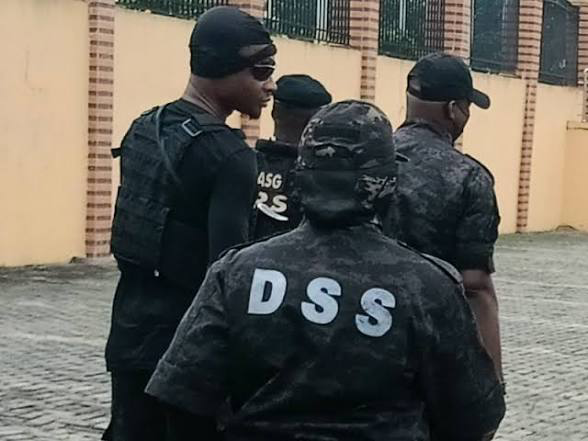
The Department of State Services on Monday, September 28, 2026, arraigned four suspected members of the proscribed Indigenous People of Biafra before Justice Joyce Abdulmalik of the Federal High Court in Abuja, charging them with terrorism, kidnapping and the unlawful possession of firearms in connection with the abduction and killing of its operative, Ekpeyong Asuquo Owoh. The defendants, Michael Okafor, also known as Onyechimeleze; Chinedu Chukwudozie, alias Kante; Chibunna Olisa; and Chigozie Olisa, also known as Ability, were brought before the court on a six-count charge that accuses them of conspiring to commit acts of terrorism and participating in the abduction of Owoh while he was travelling from Port Harcourt in Rivers State to Awka in Anambra State. The prosecution alleged that the defendants took the DSS operative hostage and caused his death during the operation. They were also accused of belonging to the proscribed IPOB and its armed wing, the Eastern Security Network, as well as being involved in activities linked to terrorism. The charges followed investigations into the circumstances surrounding the abduction and killing of the officer and the alleged activities of the defendants.
When the charges were read to them, all four defendants pleaded not guilty. Munirat Oladunjoye, who appeared for the DSS, sought a trial date and informed the court that the prosecution had three witnesses ready to give evidence. Kelvin Ekwe, who appeared for the defendants, did not oppose the application. Justice Abdulmalik subsequently adjourned the matter until October 6, 2026, for the commencement of trial and ordered that the four accused persons be remanded in the custody of the DSS. The arraignment marks a significant escalation in a case that has underscored the deadly conflict between Nigerian security forces and separatist groups operating in the South-East, and it raises familiar questions about the legal and human rights implications of prosecuting alleged members of a group that has been at the centre of a prolonged insurgency in the region.
The background to the case is as grim as it is familiar. Owoh, a DSS operative, was reportedly travelling from Port Harcourt to Awka when he was intercepted, abducted and killed. The prosecution did not disclose the exact date of the incident, but the charges against the defendants describe a conspiracy that resulted in the operative’s death. The defendants are also accused of possessing AK-47 and pump-action rifles in connection with the alleged offences. The DSS has classified the case as an act of terrorism, a designation that carries severe penalties under Nigerian law, including the possibility of life imprisonment or the death penalty if the defendants are convicted. The decision to remand them in DSS custody rather than a conventional correctional facility reflects the security agencies’ assessment of the threat they allegedly pose and the sensitivity of the case.
The context in which this trial is taking place is one of entrenched conflict. IPOB has been proscribed by the Nigerian government since 2017 and is legally designated as a terrorist organisation. Its leader, Nnamdi Kanu, has been in detention since his controversial rendition from Kenya in 2021 and faces terrorism charges before the Federal High Court in Abuja. The group’s armed wing, the Eastern Security Network, has been blamed for a series of attacks on security personnel, government facilities and civilians across the South-East, including the killing of police officers, the burning of police stations and the enforcement of violent sit-at-home orders that have paralysed economic activity in the region. Security forces have responded with sustained military operations, mass arrests and prosecutions. The conflict has claimed hundreds of lives and displaced thousands, creating a climate of fear and suspicion that has made impartial justice difficult to achieve.
But the prosecution of alleged IPOB members has also drawn scrutiny from human rights organisations and legal practitioners, who have accused the Nigerian government of using terrorism laws to suppress dissent and criminalise political opposition. The Cybercrimes Act and the Terrorism (Prevention and Prohibition) Act have been invoked against journalists, activists and social media users who criticise the government, raising concerns about the erosion of civil liberties. In the case of alleged IPOB members, the accusations often rely on intelligence reports and confessions that may be difficult to verify in open court, and the defendants frequently allege torture and coercion during interrogation. The trial of Owoh’s alleged killers will therefore be watched closely by civil society, the media and the international community, who will assess whether the proceedings meet international standards of fairness and due process.
For the DSS, the case is an opportunity to demonstrate that its operatives are not above the law and that those who attack them will be held accountable. The killing of security personnel is a serious crime that undermines the state’s ability to maintain order and protect citizens. The agency has a legitimate interest in pursuing justice for Owoh, whose death, if the prosecution’s allegations are proven, represents a direct assault on the state’s authority. But the pursuit of justice must be conducted transparently and in accordance with the law. The defendants are presumed innocent until proven guilty, and the burden of proof rests squarely on the prosecution. The court must ensure that the trial is conducted fairly, that the defendants have adequate access to legal representation, and that the evidence presented is credible and lawfully obtained. Anything less would undermine public confidence in the judiciary and reinforce the perception that justice in Nigeria is selective and politically motivated.
The adjournment to October 6, 2026, gives the prosecution time to prepare its case and the defence time to review the charges. The three witnesses listed by the prosecution will be central to the case, and their testimony will be scrutinised for consistency and credibility. The recovery of AK-47 and pump-action rifles, if presented as evidence, could strengthen the prosecution’s case, but the chain of custody and the circumstances of the recovery will also be examined. The trial is expected to be complex, involving multiple defendants, serious charges and a politically charged context. Justice Abdulmalik will have to navigate these sensitivities with care, ensuring that the proceedings are conducted in a manner that upholds the integrity of the court and the rights of all parties.
For the families of the victims of the broader conflict in the South-East, the trial of Owoh’s alleged killers is a reminder of the human cost of the insurgency. For the DSS, it is a test of its commitment to the rule of law. For the defendants, it is a fight for their freedom. And for Nigeria, it is another chapter in the long and difficult struggle to balance security with justice in a region that has known far too little of either. The October 6 hearing will set the tone for what is likely to be a lengthy and contentious legal battle. The world will be watching.
📩 Stone Reporters News | 🌍 stonereportersnews.com
✉️ info@stonereportersnews.com | 📘 Facebook: Stone Reporters News | 🐦 X (Twitter): @StoneReportNew | 📸 Instagram: @stonereportersnews
Add comment
Comments