

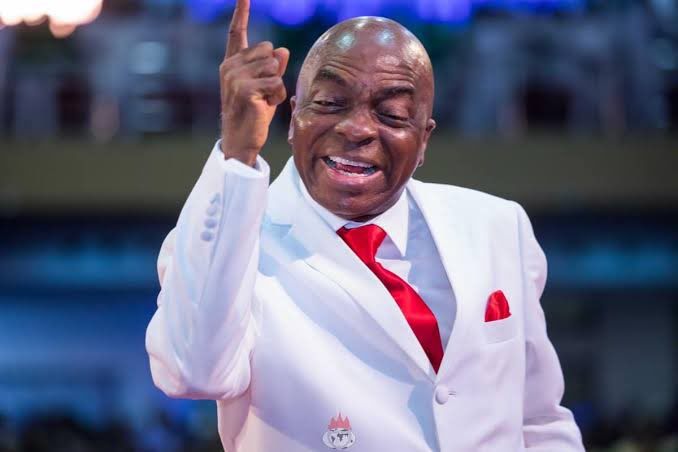
Founder of the Living Faith Church Worldwide, Bishop David Oyedepo, has declared that Nigeria does not belong exclusively to Muslims, Christians, Fulanis, politicians or any other group, insisting that every Nigerian has an equal stake in the country.
Oyedepo made the remarks during a recent sermon while addressing religious and political divisions in Nigeria and the country's direction ahead of the 2027 general elections. His comments were reported on Thursday, October 1, 2026, as Nigeria marked its 66th Independence Anniversary. The exact date, time and venue of the sermon were not specified in the report carrying the remarks.
“Muslims don’t own Nigeria, we’re not tenants to the Fulanis, no Nigerian is more Nigerian than others. We own this country together,” Oyedepo said.
“Politicians don’t own the nation, Nigerians own the nation.”
The cleric also rejected the idea that political leadership in Nigeria should be treated as something one religious group has the authority to allocate to another.
“Don’t vote for a Christian, we won’t give it to a Christian. Who’re you to give it?” Oyedepo said while addressing the subject.
His remarks centred on the position that citizenship, rather than ethnicity, religion or political influence, should determine Nigerians' sense of ownership and belonging in the country.
Oyedepo's statement that Nigerians are “not tenants to the Fulanis” was part of that broader argument.
He maintained that no ethnic group should regard other Nigerians as subordinate citizens and that no Nigerian should be considered more entitled to the country than another.
“No Nigerian is more Nigerian than others,” he said.
“We own this country together.”
The statement also addressed political leaders directly.
According to Oyedepo, holding political office does not amount to ownership of the Nigerian state.
“Politicians don’t own the nation, Nigerians own the nation,” he said.
Oyedepo is the founder and presiding bishop of Living Faith Church Worldwide, popularly known as Winners' Chapel International.
He was born into a religiously mixed family, with his father described in the church's biography as Muslim and his mother as a member of the Cherubim and Seraphim movement.
His latest remarks are consistent with previous public statements in which he has rejected attempts to define Nigeria as belonging exclusively to a particular religious or ethnic group.
In August 2026, Oyedepo publicly rejected claims that Nigeria should be regarded as an Islamic nation.
Speaking during a Sunday service, the cleric criticised such a characterisation and pointed to Nigeria's substantial Christian population and institutions as evidence of the country's religious diversity.
That earlier statement generated public debate because of the strong language he used in rejecting the description of Nigeria as an Islamic nation.
His latest remarks broaden the argument beyond Christianity and Islam.
Rather than saying Nigeria belongs to Christians instead of Muslims, Oyedepo's position in the latest sermon was that neither religious community has exclusive ownership of the country.
His statement also extended the principle to ethnicity.
By saying Nigerians are not “tenants to the Fulanis,” Oyedepo argued against any understanding of citizenship that gives one ethnic group superior ownership of the Nigerian state.
The remarks come as questions of religion, ethnicity, regional representation and political power remain part of public debate ahead of the 2027 general elections.
Nigeria's population includes hundreds of ethnic groups and substantial Muslim and Christian populations, alongside adherents of traditional and other beliefs.
Political discussions in the country have historically included arguments over regional and religious representation in presidential tickets and other major political offices.
Oyedepo's intervention rejects the idea that any of those identities confers exclusive authority over the country.
His words also place responsibility for determining political leadership on Nigerians rather than political elites.
“Politicians don’t own the nation,” he said.
“Nigerians own the nation.”
The cleric did not, in the reported remarks, endorse a named presidential candidate or political party.
Instead, the statement focused on who has a legitimate stake in Nigeria and rejected the notion that one religious, ethnic or political group possesses superior ownership of the country.
Oyedepo has previously spoken publicly on Nigerian governance and political leadership.
Academic analysis of his public interventions has documented his longstanding position that religious leaders should speak on issues of governance, insecurity and the welfare of Nigerians even when they are not members of political parties.
In an earlier sermon documented in academic research, Oyedepo said that although he did not belong to a political party, “the welfare of Nigeria is uppermost in my heart.”
His latest remarks therefore continue a pattern of public interventions on national affairs.
However, the specific message in the latest sermon was centred on equality of citizenship.
For Muslims, Christians and other religious communities, his argument was that religious identity should not determine ownership of Nigeria.
For ethnic groups, including the Fulani, his position was that no group possesses greater rights to the Nigerian state than others.
For politicians, he argued that elected or appointed political power does not transfer ownership of the country from citizens to those occupying public office.
The statement is particularly notable because Oyedepo rejected religious exclusivity from both directions.
His reported words did not say Nigeria should belong to Christians because it does not belong to Muslims.
Instead, he maintained that the country belongs collectively to Nigerians.
“Muslims don’t own Nigeria,” he said.
“We’re not tenants to the Fulanis.”
“No Nigerian is more Nigerian than others.”
“We own this country together.”
The remarks were reported on the same day Nigeria commemorated 66 years of independence, an anniversary that has prompted political leaders, religious figures, activists and citizens to debate the country's progress since October 1, 1960.
Against that national discussion, Oyedepo's message focused on shared citizenship and national ownership.
His declaration that politicians do not own Nigeria also places political authority within the context of public service rather than personal or partisan possession of the country.
The central position expressed by the bishop was that Nigeria is a common national inheritance in which citizens should enjoy equal belonging irrespective of religion or ethnicity.
“No Nigerian is more Nigerian than others,” Oyedepo said.
“We own this country together.”
📩 Stone Reporters News | 🌍 stonereportersnews.com
✉️ info@stonereportersnews.com | 📘 Facebook: Stone Reporters News | 🐦 X (Twitter): @StoneReportNew | 📸 Instagram: @stonereportersnews
Add comment
Comments