

Reported by Ariajegbe Sylvia Esezobor
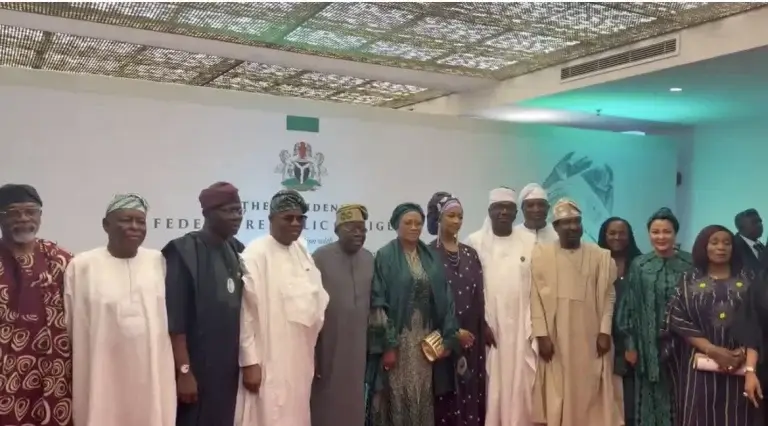
President Bola Ahmed Tinubu and First Lady Oluremi Tinubu arrived at the Wole Soyinka Centre for Culture and Creative Arts in Iganmu, Lagos, on Thursday, October 1, 2026, for the national premiere of MKO, a feature-length documentary on the life and political legacy of the late Chief Moshood Kashimawo Olawale Abiola, in what marked the President's first major public appearance since returning from a four-week working vacation in Europe.
The President's arrival was captured in a video shared by his Special Assistant on Social Media, Dada Olusegun, showing Tinubu and the First Lady entering the venue as a band played the national anthem, with guests standing in respect. The premiere was held on Nigeria's 66th Independence Day, a date loaded with historical significance for the democratic struggle that the documentary chronicles. The event was organised under the auspices of the Presidency in collaboration with the Federal Ministry of Art, Culture, Tourism and the Creative Economy, with guests seated by 3 p.m. and a reception following the screening.
Directed by Nigerian-American filmmaker Ose Oyamendan, MKO revisits Abiola's life, his business and publishing career, his political journey and his role in the struggle that followed the annulment of the June 12, 1993 presidential election. The documentary features archival materials and accounts from major figures connected with the period, including former military leaders Ibrahim Babangida and Abdulsalami Abubakar, former President Olusegun Obasanjo, Nobel laureate Wole Soyinka and Tinubu himself. It had its international premiere at the Sheffield International Documentary Festival in the United Kingdom in June before returning home for the Nigerian debut.
The symbolism of the premiere extended beyond cinema. Tinubu and Abiola once belonged to the same Social Democratic Party, and Tinubu was elected senator for Lagos West in 1992 on the SDP platform. After the annulment of the June 12 election and the return of full military rule, he became involved with the National Democratic Coalition, which campaigned against military rule and for the recognition of Abiola as the winner of the election. More than three decades later, Tinubu is President under an administration whose governing programme is branded the Renewed Hope Agenda, a phrase that echoes Abiola's "Hope '93" campaign and his promise of "Farewell to Poverty." The premiere therefore brought together two political eras linked by the same democratic history, as the Sun noted in its preview of the event.
Abiola contested the June 12, 1993 presidential election on the SDP platform, running a campaign built around the promise of ending poverty. The election, widely regarded as the freest and fairest in Nigeria's history, was annulled by the military government of General Ibrahim Babangida, plunging the country into a prolonged political crisis. Abiola was subsequently arrested and detained, and he died in custody on July 7, 1998, on the eve of his expected release. His death sparked riots across the country and cemented his place as one of the enduring symbols of Nigeria's democratic struggle. The documentary's focus on his final days and the pro-democracy agitation that followed his detention gives the film a contemporary resonance, particularly as Nigeria continues to grapple with questions of democratic consolidation and the legacy of military rule.
The premiere was attended by government officials, members of the diplomatic community, cultural figures and other dignitaries who gathered to honour the late politician. The national premiere marked the beginning of the documentary's Nigerian rollout, with the film scheduled to open in cinemas nationwide on Friday, October 2, distributed by Nile Entertainment. The Managing Director of Nile Entertainment, Moses Babatope, said the nationwide rollout was intended to give Nigerians broad access to the story, ensuring that the documentary reached audiences beyond the capital cities and elite venues where such films often premiere.
For Tinubu, the event carried personal and political weight. His return to Lagos on September 29 after about four weeks in London and Paris had been accompanied by controversy over his extended absence from the country, particularly his decision to skip the 81st United Nations General Assembly in New York, where Vice President Kashim Shettima represented Nigeria. The Presidency rejected suggestions that anything was amiss, maintaining that Tinubu remained healthy and continued to discharge his responsibilities while abroad. His decision to make the MKO premiere his first major public engagement after returning was read by observers as a deliberate choice to associate himself with the legacy of the man whose election he fought to validate as a pro-democracy activist, and to frame his own administration's agenda within that historical continuity. The Presidency had said Tinubu chose to fly to Lagos first to honour Abiola's memory on Independence Day, describing the premiere as a tribute to "the martyr of the democracy we enjoy today."
The event also came amid a charged political environment. The 2027 general elections are less than four months away, with the presidential and National Assembly elections scheduled for January 16, and the governorship and state assembly elections for February 6. President Tinubu is seeking a second term on the All Progressives Congress platform, while former Vice President Atiku Abubakar of the African Democratic Congress, former Anambra Governor Peter Obi of the Nigeria Democratic Congress and Oyo State Governor Seyi Makinde of the Allied Peoples Movement are among the major challengers. The documentary's release in cinemas nationwide, just as the political season intensifies, ensures that the story of June 12 and the struggle for its validation will remain part of the national conversation, a reminder of the democratic sacrifices that preceded the current electoral cycle.
For Nigerians who lived through the June 12 crisis, the premiere offered an opportunity to revisit a pivotal moment in the country's history through the eyes of those who shaped it. For younger generations, the documentary provides a window into a struggle that many know only through second-hand accounts. For the Tinubu administration, the event was an occasion to align itself with the legacy of Abiola and the democratic movement he came to symbolise. As the film moves from the National Theatre to cinemas across the country, it carries with it a question that remains relevant to Nigeria's present: whether the democracy for which Abiola and countless others sacrificed so much is delivering on the promise of a better life for all Nigerians. The premiere answered that question with symbolism; the coming months of political campaigning will test it with substance.
📩 Stone Reporters News | 🌍 stonereportersnews.com
✉️ info@stonereportersnews.com | 📘 Facebook: Stone Reporters News | 🐦 X (Twitter): @StoneReportNew | 📸 Instagram: @stonereportersnews
Add comment
Comments