

Reported by: Ijeoma G | Edited by: Oravbiere Osayomore Promise.
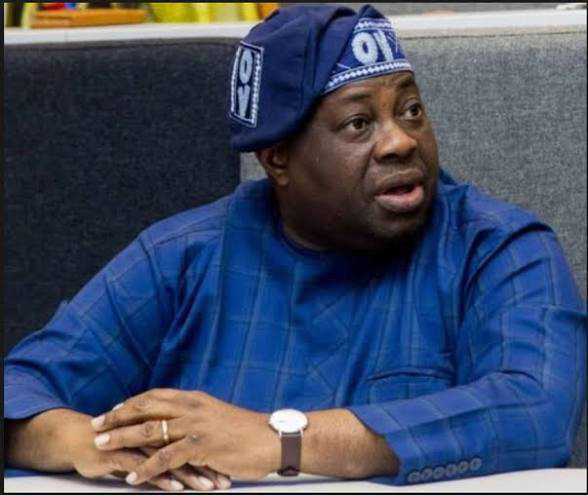
The chieftain of the African Democratic Congress and Deputy Director-General of the ADC Presidential Campaign Council, Chief Dele Momodu, has launched a blistering attack on President Bola Ahmed Tinubu over his 66th Independence Anniversary broadcast, accusing the President of metastasising Nigeria into stage-four cancer. In a statement posted on his verified X handle on Thursday, October 1, 2026, the publisher of Ovation Magazine said the President’s speech, which was meant to inspire hope, instead turned the day of national celebration into a day of lamentation.
Momodu’s criticism centred on Tinubu’s analogy of Nigeria as a cancer patient who had merely survived on painkillers before his emergence as a celebrated surgeon. Tinubu, in his nationwide broadcast, had defended his aggressive economic policies by likening the country’s pre-2023 state to a sick patient, claiming previous leaders relied on morphine to dull the symptoms of economic distress, while his administration chose to excise the cancer through difficult but necessary reforms. Momodu found the analogy both morbid and misplaced. “My heart bled as you went into the morbid analogy of Nigeria as being a cancer patient that merely survived on painkillers before your arrival as a celebrated surgeon,” Momodu wrote. “You specifically mentioned morphine as the drug of choice by your predecessors. I’m not sure this analogy was appropriate. At the time you assumed power, Nigeria probably had stage-two cancer at worst. You were expected to stabilise it and not to metastasise it into a stage-four cancer.”
The ADC chieftain then turned to the President’s first major policy decision, the removal of fuel subsidy on his first day in office, which he described as a monumental disaster. “Your first prescription on day one was a monumental disaster. You took no time to properly examine your patient. You were too much in a hurry to administer your jab, which automatically sent Nigeria into an instant coma. And you’ve not been able to revive it. The least we expected from you was to stabilise and not to destabilise everything in sight.” Momodu said the subsidy removal was a misadventure and that Nigerians deserved an apology for what he called a medical calamity.
He then listed the challenges confronting the country, arguing that despite increased revenues from the subsidy removal, Nigeria has amassed more loans, insecurity has increased, poverty has escalated, profligacy is palpable, politicians have remained insensitive, elections have taken priority over governance, and renewed hope has collapsed into hopelessness and abject despair. “Nigerians have mostly given up on your promises,” he said. “I doubt they are able to endure and accept endless excuses barely three months to next elections. Four years may not be able to contain and solve all our problems, but hope should be glaring by now.”
Momodu’s intervention is the latest in a series of criticisms he has directed at the Tinubu administration. In July 2026, he accused the President of showing no remorse over the worsening economic hardship and insecurity in the country, saying the administration had failed to demonstrate empathy for the suffering of ordinary Nigerians. In March 2026, he likened Tinubu’s style of governance to the dictatorship of the late military Head of State, General Sani Abacha, a comparison that drew a sharp rebuke from the Nigerian Ambassador-designate to South Africa, Femi Fani-Kayode, who accused Momodu of hypocrisy and ingratitude, alleging that he had benefited from Tinubu’s generosity for close to forty years but refused to support his presidential ambition.
The political context of Momodu’s latest attack is significant. As the Deputy Director-General of the ADC Presidential Campaign Council, he is a key figure in the opposition coalition supporting former Vice President Atiku Abubakar’s 2027 presidential bid. His criticism of Tinubu is therefore not merely the musings of a disgruntled former ally but a strategic intervention designed to frame the 2027 election as a referendum on the President’s economic record. The ADC has positioned itself as a major opposition platform, and Momodu’s statement is part of a broader effort to highlight the hardship facing Nigerians under the current administration.
The Tinubu administration has consistently defended its economic reforms as necessary to prevent national bankruptcy and to redirect resources towards infrastructure and social programmes. The Presidency has argued that the fuel subsidy removal saved trillions of naira, which are being used to finance development projects, and that the long-term benefits of the reforms will outweigh the short-term pain. Officials have also pointed to improved macroeconomic indicators, including rising government revenues and a narrowing gap between the official and parallel exchange rates, as evidence that the reforms are working.
But for millions of Nigerians who are struggling to afford food, transportation, and basic necessities, the promise of future prosperity offers little comfort in the present. Momodu’s statement captures the frustration of a population that has borne the brunt of the reforms without seeing the promised gains. His use of the cancer analogy is particularly pointed because it turns Tinubu’s own rhetoric against him. The President presented himself as a surgeon who would excise the cancer of economic mismanagement. Momodu argues that the surgeon’s scalpel was wielded recklessly, leaving the patient worse off than before.
As the 2027 general elections approach, the debate over the President’s economic record is likely to intensify. Momodu’s intervention has set a combative tone for the opposition’s campaign, framing the election as a choice between continued hardship and a return to stability. For the Tinubu administration, the challenge is to demonstrate that the pain of the reforms has not been in vain and that the country is on a path to recovery. For the Nigerian people, the question is whether they will endure the sacrifices the President has demanded or whether they will heed Momodu’s call for a change of direction. The cancer analogy, once introduced, is not easily forgotten. It will haunt the 2027 campaign, shaping the way Nigerians understand the stakes of the election and the record of the man who asked them to trust his prescription. Whether the patient survives will depend on who is given the scalpel next.
📩 Stone Reporters News | 🌍 stonereportersnews.com
✉️ info@stonereportersnews.com | 📘 Facebook: Stone Reporters News | 🐦 X (Twitter): @StoneReportNew | 📸 Instagram: @stonereportersnews
Add comment
Comments