

Reported by Ariajegbe Sylvia Esezobor
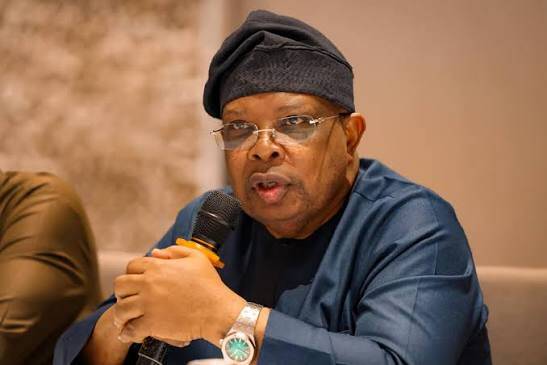
Senate President Godswill Akpabio has issued a strong warning to Nigerians, urging the public to stop taking comments made by lawmakers during plenary debates out of context, insisting that individual opinions expressed on the floor should never be mistaken for the Senate’s final position.
The caution came during Thursday’s plenary in Abuja, just two days after a heated debate on the Suicide Prevention Bill 2026 sparked a firestorm of criticism against the Senate President. The bill, sponsored by Senator Asuquo Ekpenyong, representing Cross River South, seeks to decriminalise attempted suicide and replace imprisonment with medical treatment, rehabilitation, and psychological support. It scaled second reading on Tuesday, but not before Akpabio made remarks that would ignite a nationwide controversy.
During Tuesday’s debate, Akpabio opposed the proposed decriminalisation, arguing that attempted suicide should remain a criminal offence. His remarks drew sharp criticism after he was quoted as saying that anyone who attempts suicide must succeed or risk being sent to prison. The statement was widely circulated on social media and television, triggering outrage from mental health advocates, legal experts, and the general public. Critics accused the Senate President of being insensitive to Nigerians experiencing psychological crises and of mocking a bill designed to save lives.
But on Thursday, Akpabio sought to set the record straight. Addressing his colleagues on the floor, he explained that legislative debates are inherently adversarial, with lawmakers arguing both for and against proposed legislation. He stressed that the final decision of the chamber, not the individual contributions of senators, is what ultimately matters. “When we discuss here, we discuss for and against, and in the course of our discussions, whatever we say should not anger anybody outside this chamber, because at the end, what matters is our final decision,” Akpabio said. He added that lawmakers must be free to oppose each other during deliberations without their remarks being misinterpreted or used to damage their reputations. “We want to make the best laws, so we are bound to oppose each other, and we are also bound to support each other,” he noted.
The Senate President specifically directed his caution at television panellists and public commentators, accusing them of interpreting legislative proceedings through political lenses rather than focusing on the substance of the issues under consideration. “No matter the discussion, please consider the final decision of the Senate. Don’t go and sit down in panels and try to do politically motivated discussions,” he warned.
Akpabio also used the occasion to address the religious dimension of the controversy. He rejected attempts to associate his remarks with any particular faith, insisting that terrorism has no religion. “Terrorists are not Muslims. Terrorists are not Christians. Terrorists are human beings who believe in taking their lives and the lives of others,” he said. He maintained that Islam prohibits suicide and killing, and argued that claims about suicide bombers expecting rewards in paradise should not be used to misrepresent the religion. He further distinguished between suicide committed by people with mental health challenges and deliberate acts of violence. “You have to distinguish between suicide committed by people who are mentally disturbed and suicide intentionally committed by people who are physically sound,” he stated.
To reinforce his position on religious tolerance, Akpabio cited his record as governor of Akwa Ibom State, where he sponsored 5,800 Muslims to the Holy Land and more than 10,000 Christians to Rome and Jerusalem. He also spoke of his longstanding relationship with Muslim members of his staff, including his aide-de-camp of nineteen years, whom he described as a brother rather than a Muslim. “There’s no way I will talk down on Muslim religion,” he insisted.
The controversy had a political dimension as well. Akpabio alleged that some politicians were distorting his comments to portray him as being against the Muslim community, suggesting that the attacks were linked to his position as Senate President. He noted that with the positions of President and Vice President already settled, the Senate Presidency had become the target of political attacks. In a dramatic turn, the Senate on Thursday unanimously passed a resolution declaring that there was no vacancy in the office of the Senate President. The motion was moved by Senate Chief Whip Tahir Monguno, who expressed confidence that most serving lawmakers would return to the Senate after the 2027 general election. “This seat is hereby declared: there is no vacancy. Including the seat of Deputy Senate President, there is no vacancy,” Monguno said. Senator Cyril Fasuyi of Ekiti North backed the motion, describing Akpabio as the occupant of the Senate Presidency in the next assembly. When Akpabio asked those opposed to the resolution to respond, the chamber remained silent. “They are not here. I think that settles it,” he said.
The Suicide Prevention Bill 2026, which sparked the entire controversy, seeks to address what its sponsor described as inconsistencies in Nigeria’s legal framework. Under the current system, the National Mental Health Act recognises attempted suicide as a psychiatric emergency requiring intervention, while the Criminal Code and Penal Code still criminalise the act. Ekpenyong argued that criminalising attempted suicide could encourage people to ensure they die rather than survive and face prosecution. “A police station or correctional facility should not be the default destination for a person who requires urgent clinical care,” he said. The bill proposes crisis helplines, public awareness campaigns, training for police officers, teachers and health workers, and a national data system to strengthen suicide prevention efforts. It has been referred to the Senate Committees on Judiciary and Health for further consideration, including a public hearing.
Reactions to Akpabio’s remarks have been mixed. Legal practitioner Olajengbesi faulted the Senate President over his reported stance on jailing suicide attempt survivors, describing the remarks as insensitive to the plight of Nigerians experiencing psychological crises. Mental health advocates have long argued that decriminalisation is essential to encourage people at risk to seek help without fear of prosecution. On the other hand, some senators rallied behind Akpabio, with Senator Babangida Hussaini of Jigawa North-West citing the Quran’s prohibition of taking one’s life and urging the Senate to focus on tackling hard drugs and substance abuse, which he said contribute to criminality among young people.
The episode underscores the delicate balance between legislative debate and public perception in Nigeria’s democracy. Akpabio’s caution about misinterpreting plenary debates is a reminder that the Senate is a deliberative body where opposing views are not only expected but necessary. Yet in an era of viral social media clips and politically charged television panels, the distinction between individual contributions and final decisions can easily be lost. As the Suicide Prevention Bill moves to committee stage, the Senate President’s words will be tested. For now, he has made one thing clear: lawmakers must be free to speak their minds without fear that their words will be twisted into political weapons.
📩 Stone Reporters News | 🌍 stonereportersnews.com
✉️ info@stonereportersnews.com | 📘 Facebook: Stone Reporters News | 🐦 X (Twitter): @StoneReportNew | 📸 Instagram: @stonereportersnews
Add comment
Comments