

Reported By Mary Udezue | Oravbiere Osayomore Promise.
In a development that adds a new dimension to Nigeria’s long‑running battle against violent extremist groups, the Islamic Republic of Iran has publicly expressed readiness to support Nigeria in tackling terrorism and insurgency, while also firmly rejecting foreign allegations that it sponsors extremist movements within the country and the wider West African region.
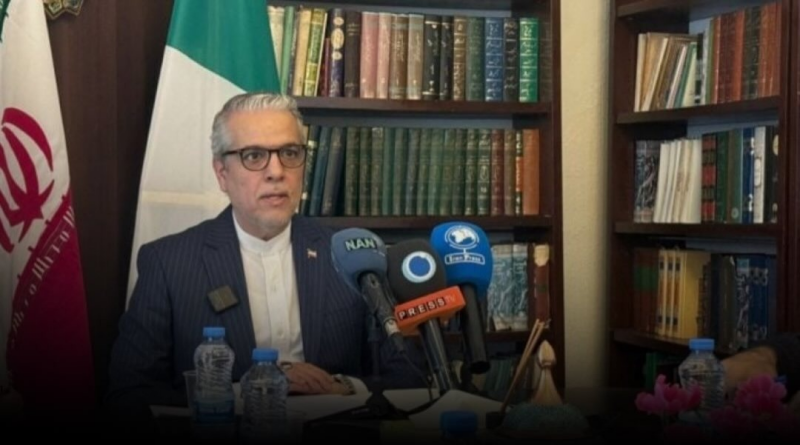
The remarks came from Gholamreza Mahdavi Raja, Iran’s Ambassador to Nigeria, in a high‑profile interview broadcast on Nigerian television amid heightened regional security concerns and heightened diplomatic tensions involving Iran, Israel and other global powers. The ambassador’s statements come against a backdrop of persistent terror threats in Nigeria from groups such as Boko Haram and the Islamic State West Africa Province (ISWAP), which continue to destabilise communities and strain national security resources.
Raja told journalists and analysts that Tehran strongly condemns terrorism “in all its forms” and stands ready to cooperate with countries that are grappling with violent extremism, explicitly citing Nigeria’s ongoing efforts to counter insurgent attacks and protect its citizens. He framed the offer of support as rooted in shared experience and mutual interest rather than ideological alignment, describing Iran itself as a victim of terrorism over decades of regional conflict.
“Nigeria faces security challenges from Boko Haram, ISWAP and others, and we are ready to share our experience in counter‑terrorism,” Raja said, emphasising that Iran has accumulated significant counterterrorism knowledge through its own prolonged struggle against militant groups. He stressed that cooperation among nations confronting similar threats was essential to addressing terrorism on a global scale, a point he said was central to Iran’s diplomatic engagement with African countries, including Nigeria.
The ambassador confronted sensitive questions about the nature of Iran’s engagement with Islamic organisations in Nigeria. He clarified that while some groups in Nigeria share spiritual and cultural ties with Tehran, this does not equate to political direction or direct support from the Iranian state. This distinction was underscored by Raja in response to allegations that Iran exerts influence over certain movements within Nigeria.
These allegations were articulated just days earlier by Michael Freeman, the Israeli Ambassador to Nigeria, who publicly accused Iran of sponsoring Islamic movements in Nigeria and across West Africa as part of a broader strategy to project influence and expand its ideological reach. According to Freeman, Tehran’s support allegedly extends to certain religious organisations whose activities, he claimed, align with extremist objectives. The Israeli envoy’s comments touched on highly charged geopolitical issues, intertwining Nigeria’s internal security challenges with larger Middle East conflicts and the ongoing struggle between Tehran and Jerusalem.
Raja rejected these accusations as “entirely unfounded” and politically motivated, characterising them as part of what he called a propaganda campaign aimed at deflecting attention from other international conflicts. He reaffirmed that Iran’s diplomatic relations with Nigeria were grounded in mutual respect and aimed at constructive long‑term engagement, encompassing areas such as trade, education, culture, science, technology and health.
“We condemn terrorism committed anywhere, including in Nigeria and across Africa multiple times,” the ambassador said, reiterating Tehran’s stance against extremist violence and its willingness to assist affected countries. He called for cooperation based on factual assessments and stressed that Iran’s approach to counterterrorism focused on shared security objectives, not geopolitical rivalry.
Nigeria has endured decades of violent insurgency, particularly in its northeastern states, where Boko Haram and ISWAP have carried out mass kidnappings, bombings and attacks on civilian and military targets. These extremist organisations have imposed heavy human and economic costs on affected regions, prompting sustained military operations by Nigerian forces and cooperation with international partners.
The offer of support from Tehran arrives amid a complex international context marked by broader geopolitical tensions. In recent weeks, military actions involving Iran, Israel and the United States have escalated in the Middle East, drawing global attention to issues of security and diplomatic alignment. Within this backdrop, Nigeria has sought to navigate relationships with various international stakeholders in pursuit of effective strategies to counter terrorism, protect its population and foster regional stability.
Public reactions to Iran’s statements in Nigeria have been mixed, reflecting wider debates over foreign influence, national sovereignty and the best approaches to deepen counterterrorism cooperation. Some analysts view the offer of support as symbolic and diplomatically significant, while others caution that any form of external involvement must be carefully calibrated to align with Nigeria’s strategic interests and existing security frameworks.
Regional experts also note that the fight against terrorism in Nigeria cannot be disentangled from wider West African security dynamics, where cross‑border insurgent groups, criminal networks and political instability have often undermined collective efforts to restore peace. Against this backdrop, Nigeria has engaged with a range of international partners, including Western allies, regional alliances and neighbouring states, to bolster its counterterrorism capabilities.
Despite the diplomatic friction surrounding allegations of state sponsorship of terrorism, the public offer by Iran to assist Nigeria reflects an unusual moment of overlapping interests on counterterrorism, albeit one shaped by broader geopolitical narratives. As Nigeria continues to confront persistent security threats, the government and its citizens remain focused on strategies that combine military resilience, community partnerships and international cooperation tailored to regional realities.
Iran’s reaffirmation of its stance against terrorism and its expressed readiness to support Nigeria’s efforts are likely to factor into ongoing discussions among policymakers and security stakeholders in Abuja and beyond. Whether this translates into formal cooperation or specific joint initiatives will depend on diplomatic negotiations, strategic priorities and assessments of mutual benefit in the broader fight against terrorism.
📩 Stone Reporters News | 🌍 stonereportersnews.com
✉️ info@stonereportersnews.com | 📘 Facebook: Stone Reporters | 🐦 X (Twitter): @StoneReportNew | 📸 Instagram: stonereportersnews
Add comment
Comments