

Reported by: Oahimire Omone Precious | Edited by: Oravbiere Osayomore Promise.
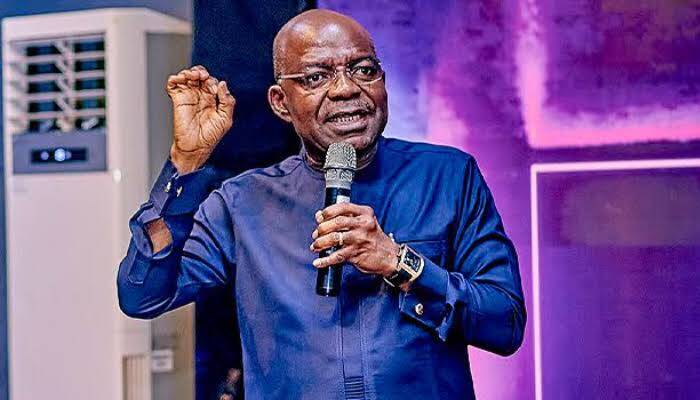
Governor Alex Otti of Abia State has issued an urgent warning that Nigeria's democratic future and economic prosperity are at grave risk as voter apathy reaches alarming levels, with only a small fraction of the population now determining leadership outcomes across the country. Speaking at The Niche annual lecture in Lagos on Thursday, Otti revealed that electoral participation has collapsed dramatically, dropping from 57 percent in 2011 to less than 30 percent in 2023. The governor, who delivered a lecture titled "Governing the Economy: Choices, Trade-offs, and National Priorities," argued that this trend is not merely a statistical concern but a fundamental threat to democratic accountability and national development. He posed a stark question to Nigerians: “What that means is that just about three of us out of 10 decide who governs us,” Otti told the audience at the Nigerian Institute of International Affairs, warning that this imbalance has far-reaching consequences for the entire nation.
Otti traced Nigeria's current economic hardship directly to the kind of leadership that emerges when voters stay home. He maintained that the systemic failures of the past six decades cannot be corrected by quick fixes but require a complete reset in the relationship between citizens and the political process. The governor argued that economic governance is inseparable from politics, warning that citizen apathy worsens institutional decay and deepens economic hardship. “It is impossible to separate incompetent political leadership from the manifestations of economic decline, such as widespread unemployment and reduced investment,” he said, linking poor voter turnout directly to the country's escalating poverty and joblessness figures. He emphasized that the choice of leaders is not merely an electoral exercise but an economic decision with long-term consequences, as leadership quality determines everything from investor confidence to the delivery of public services.
The governor rejected the notion that citizens can love their country while remaining aloof from the process of leadership selection. “You cannot claim to love Nigeria, or your state, or the city where you reside, and yet remain aloof in critical matters such as leadership selection and the debates around it,” Otti said, issuing a stern call to civic responsibility. He stressed that political participation extends far beyond the polling booth, arguing that active citizenship requires vigilance to keep elected officials accountable through legitimate channels of engagement long after elections have concluded. “Political participation, however, is far beyond what happens at the polling booth where the final decision is made,” he explained. “It is about the vigilance to keep the victors on their toes through legitimate channels of engagement.”
Otti specifically warned that electoral malpractice and vote-buying, which thrive when voters are disengaged, have become major drivers of poor governance. He described a vicious cycle where corruption in the political process produces leaders who view public office as a business opportunity for personal enrichment rather than a platform for service. “If we treat election seasons as bazaars, a time to extract and squeeze whatever we can from the system, it becomes inevitable that the primary pursuit of those who win elections will not be to serve the community, but to recoup what has been invested,” he said. The governor argued that this mindset weakens institutions, entrenches poverty, and ultimately leaves citizens with the very leadership failures they sought to avoid by staying away from the polls. He urged Nigerians to interrogate candidates' economic philosophies and track records rather than voting based on sentiment or monetary inducement.
The governor's lecture, which was chaired by the Emir of Kano, Muhammadu Sanusi II, came at a critical time as Nigeria prepares for the 2027 general elections. Recent polls have shown that voter turnout in off-cycle elections has plummeted to record lows, with the February 2026 Federal Capital Territory Area Council elections recording turnout below 10 percent in some wards, a development that rights groups have described as a "disturbing setback for Nigeria's democracy". The Independent National Electoral Commission itself has warned that declining voter participation is evolving from a civic issue into a matter of national security, as electoral apathy can fuel post-election tensions and undermine the legitimacy of elected governments. Civil society organisations have also documented widespread vote-buying during the FCT polls, with the Economic and Financial Crimes Commission seizing millions of naira in cash intended for voter inducement.
Otti challenged the pessimism that often characterises discussions about Nigeria's future, insisting that the country's destiny remains bright if citizens are willing to make the necessary sacrifices and engage actively in political processes at all levels. He argued that Nigerians must accept shared responsibility for the country's condition, noting that the economic difficulties facing the nation today are the accumulated result of political decisions made over decades. “If you have behaved badly in over 60 years, it will take you time to correct yourself. Our country has a great destiny… but whether that day will be in this decade or in the coming century or perhaps never will depend largely on what we do in the days and years that follow,” he reflected. He used Abia State's own trajectory as an example, recalling how the state's economy collapsed under what he called "desperate politics," only to begin recovering when citizens made different choices and elected a leadership committed to transparency and stewardship.
The governor made it clear that the 2027 elections will present voters with a clear choice between poverty and prosperity, between employment and joblessness, between security and anxiety. “Poverty and prosperity, employment and joblessness, security and anxiety, prudence and rascality will all be on the ballot in 2027,” he declared, urging Nigerians to see the upcoming polls as a decisive moment for the nation's future. He argued that the country cannot afford to have only a tiny fraction of eligible voters determining outcomes that will shape the lives of over 200 million citizens. “Things will continue to deteriorate if we insist on staying away from the field of play,” he concluded. “Political processes and decisions require the collective input of every adult member of this society, for they are the ultimate determinants of our social and economic destinies.”
📩 Stone Reporters News | 🌍 stonereportersnews.com
✉️ info@stonereportersnews.com | 📘 Facebook: Stone Reporters News | 🐦 X (Twitter): @StoneReportNew | 📸 Instagram: @stonereportersnews
Add comment
Comments